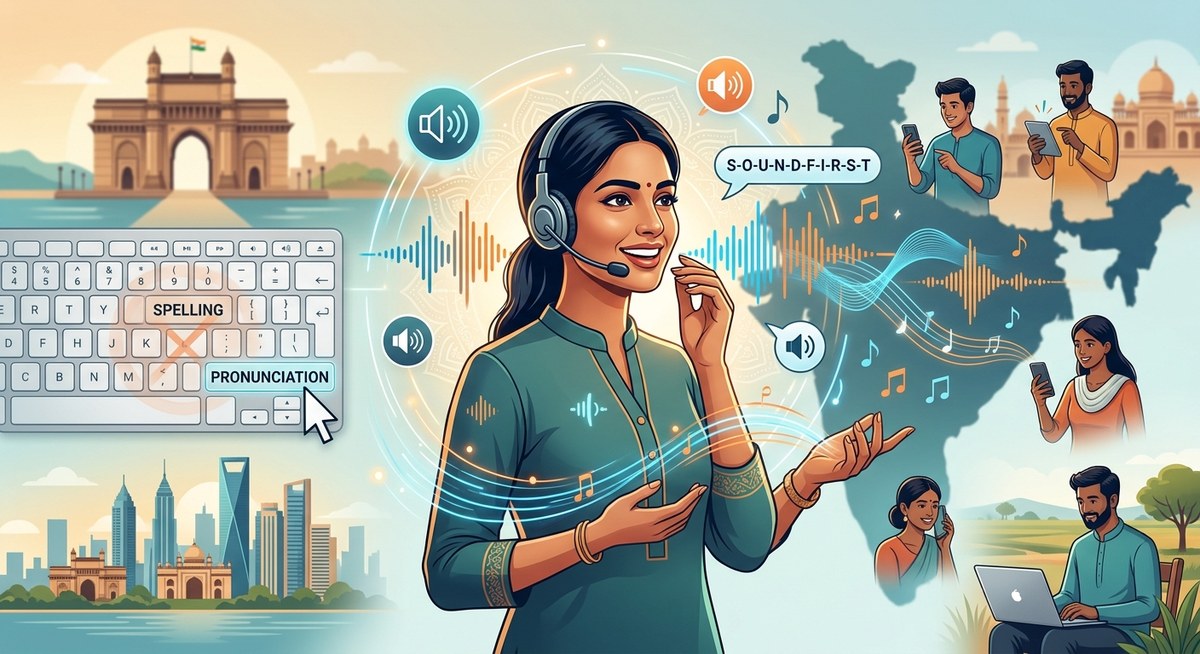
A domain name that looks perfect on screen can become a garbled mess when spoken over chai at a local startup meetup. You put days into finding the right spelling but forget that in India, word of mouth still rules. People share your domain by talking, not by typing URL after URL. If your domain sounds awkward in a Hindi, Tamil, or Bengali accent, you risk losing traffic, trust, and sales.
A domain that is easy to pronounce across Indian languages matters more than its spelling perfection. When your domain trips over regional accents or silent letters, word of mouth breaks down. Choose short, phonetic names that sound the same in Hindi, English, and your target local language. Test the pronunciation with a small group before you buy. A spoken domain is your real brand ambassador.
The real cost of a misspoken domain
Imagine a customer at a kirana store asks for your website. They say “urll dot com” but the domain is actually “U R L” spelled out as three letters. That little pause costs you. Even worse, if your domain has a confusing letter pair like “ph” that sounds like “f” in English but like “p-h” in many Indian languages, the listener ends up on a wrong site.
A few years ago, a Mumbai based ecommerce store launched with the name “BazaarBayan.com”. They thought it was clever. But when customers tried to share it, the word “Bayan” was often mispronounced as “bay-an” instead of the intended “ba-yaan”. People ended up on a real estate site. The business had to rebrand after losing six months of organic growth. That is the cost of ignoring pronunciation.
Why India is especially susceptible
India has 22 official languages and countless dialects. A domain that rolls off the tongue in a Punjab accent may sound completely different to someone in Kerala. English vowels shift dramatically. The letter “v” and “w” are often swapped in many regions. Silent letters confuse everyone.
Take the example of “Knight”. A perfect English spelling for a domain like KnightServices.com. But in spoken Hindi, “knight” becomes “kay-night” or even “knee-ght”. The word “knight” itself is not common in everyday Indian English. Much safer to choose “Nite” or “Night” spelled as “Night” with no silent letters.
Also, many Indians are used to reading English as it is pronounced in their mother tongue. So “Cue” sounds like “queue” only if you know the English word. For a customer who learned English as a second language, “Cue” might sound like “koo-eh”. That confusion makes them less likely to type it correctly later.
Common pronunciation traps and how to sidestep them
Here is a table that shows typical mistakes Indian entrepreneurs make and the smarter alternatives.
| Trap | Example Domain | Why It Fails | Better Alternative |
|---|---|---|---|
| Silent letters | Psychology.co.in | “P” is silent; most Indians will say “P-sychology”. | MindStudy.co.in |
| Ambiguous vowel sounds | BeatBoat.com | “Beat” sounds like “beet” or “bay-at”. No clarity. | BeatBoat (but better: BoatBeat.com) |
| Similar sounding consonants | VizardWorld.com | “V” and “W” often confused; “Vizard” becomes “Wizard”. | WizardWorld.com |
| Hyphen or number substitution | 4UExpress.in | “4U” is read as “four-you” but many say “four-u”. | ForYouExpress.in |
| Long string of consonants | Strngth.com | Impossible to pronounce without a vowel. | StrengthPro.com |
The rule is simple: if a 12 year old in any Indian state can say your domain on the first try, you are safe.
How to test your domain before you buy
Do not rely on your own judgment. Your brain already likes the name because you chose it. Instead, follow this three step process.
-
Say it out loud to five people from different states. Ask a friend from Delhi, one from Chennai, one from Kolkata, one from Mumbai, and one from a smaller town like Lucknow or Coimbatore. Record how they say it. If even one person struggles, rethink your choice.
-
Translate the sounds into Devanagari script. Write your domain in Hindi (even if you do not speak Hindi, use Google Translate). If the Hindi version looks weird or has extra syllables, it will cause confusion for a large part of your audience. For example, “Pixlr” becomes “पिक्सलर” which is fine. But “Flikr” becomes “फ्लिकर” which adds an unnecessary “r” sound at the end.
-
Simulate a WhatsApp voice note situation. Ask a friend to send you a voice note saying your domain as if they are recommending it to someone else. Listen for clarity. Are there any ambiguities? Can you understand it without seeing the spelling? If not, rework.
This test takes less than 30 minutes and can save you lakhs in marketing waste.
What to do if you already own a tricky domain
Maybe you already bought a domain that does not pass the pronunciation test. Do not panic. Here are ways to fix the situation without losing your brand equity.
-
Create a phonetic subdomain or redirect. For example, if your main domain is “RxHealth.in” (and people struggle with “Rx”), buy “HealthRx.in” or “PharmaRx.in” and redirect it. Promote the easier to say version in your ads and verbal pitches.
-
Add a tagline that reinforces the correct pronunciation. Use it in your logo or Onboarding emails. Something like “Visit Mr. K (say Mister Kay) for K films.” This trains customers.
-
Use the domain in audio ads with clear enunciation. If you run radio or YouTube pre roll ads, make sure the voice artist says it slowly with phonetic spelling on screen.
-
Consider a move to a .in or .co.in with a simpler name. If the confusion is too high, a fresh start with a pronounceable domain is often cheaper than constant correction. Check out our guide on should you buy a .co.in or .in domain for your Indian business to see which extension works best.
-
Always secure the misspelled version too. If your domain sounds different from its spelling, at least buy the common mispronunciation as an alias. For instance, if you own “Focuz.com”, also buy “Focus.com” or “Fokus.in” if available.
Choose pronounceable over perfect spelling
The smartest domain investors in India focus on how a name sounds, not how clever it looks on a business card. A pronounced name sticks. It travels faster than a URL that needs to be typed letter by letter.
“In the Indian market, a domain that can be verbally shared without spelling it out is worth ten times more than one that requires a follow up text message. The mouth is the most powerful marketing channel in India.” – Ravi Sharma, Domain Investor and founder of IndiaDomainCorner.
That quote sums it up. When your customer tells a friend “Check out mausam.com” (weather in Hindi), the friend understands immediately. Compare that to “Ma-ugh-s-a-m” typed out on a chat. The latter is dead on arrival.
Your domain is a conversation starter
Think of your domain as the first sentence of your brand story. A spoken domain that is smooth, intuitive, and accent proof will open doors. A clunky one will close them before you get a chance to pitch.
Before you finalise your next domain, do this one thing: stand at a chai stall in your neighbourhood and tell three people your domain verbally. If they can repeat it back to you correctly after one listen, you have a winner. If they ask “kya likha?” (what is written?), go back to the drawing board.
The spelling you choose may win you a SEO point or two. But the way your domain sounds in a crowded WhatsApp group or at a family dinner will win you customers. Give pronunciation the respect it deserves. Your business depends on it.
