
You’ve just registered your first domain name. Exciting times ahead.
Then your registrar offers something called “domain privacy protection” for an extra fee. You pause. Is this actually necessary, or just another upsell tactic designed to squeeze more money from beginners?
Here’s the truth: when you register a domain, your personal contact details become public record by default. Anyone can look them up. That includes your full name, email address, phone number, and physical mailing address. All sitting out there for spammers, scammers, and data miners to harvest.
The question isn’t whether domain privacy sounds useful. The question is whether the risks of going without it matter enough to justify the cost for your specific situation.
Domain privacy protection hides your personal contact information from public WHOIS databases, replacing it with proxy details from your registrar. For most individuals and small businesses, it prevents spam, identity theft attempts, and unwanted solicitations. The service typically costs ₹300 to ₹800 annually. Skip it only if you’re required to show real details for legal compliance or brand transparency purposes.
What exactly gets exposed without domain privacy
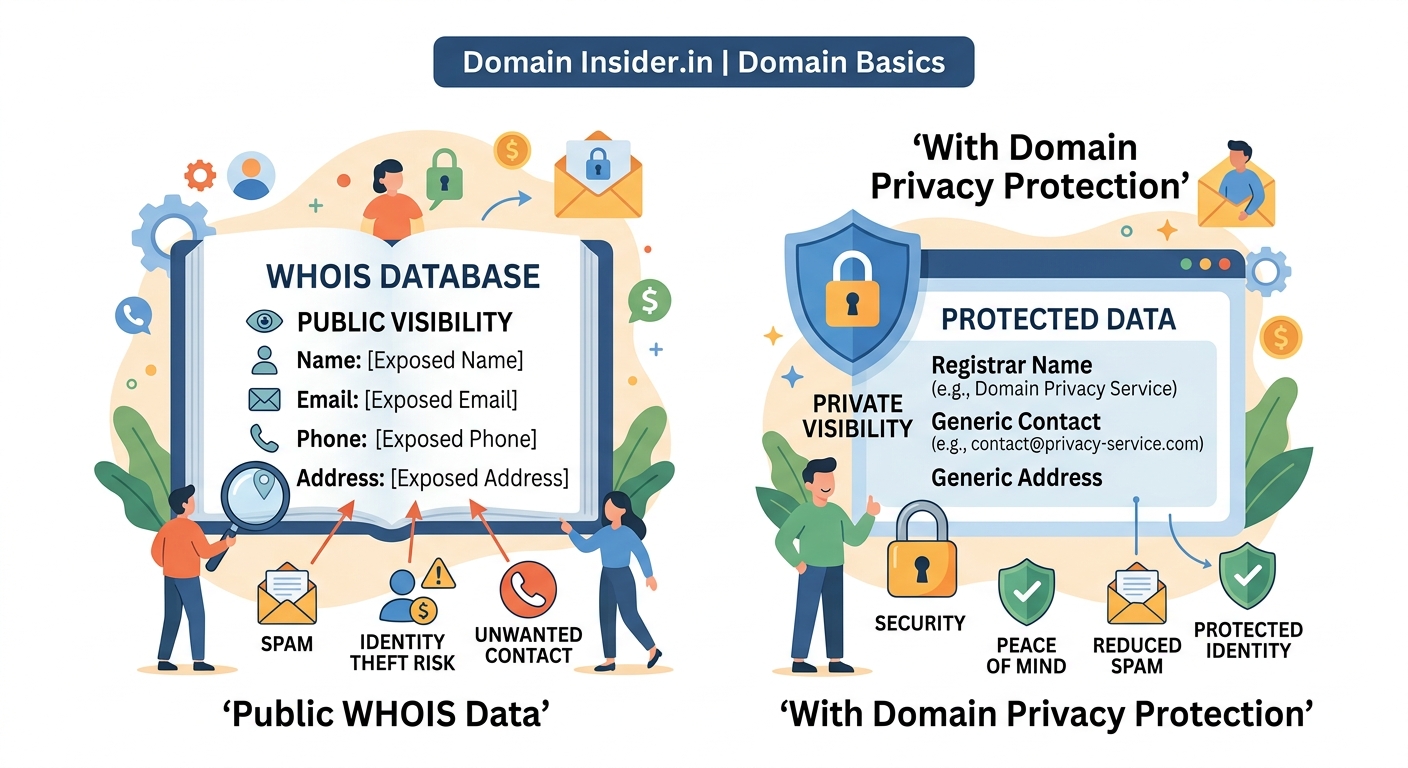
Every domain registration requires contact information under ICANN rules. This data gets stored in a public database called WHOIS.
Without privacy protection, here’s what anyone can see:
- Your full legal name
- Complete physical address including street, city, and postal code
- Email address
- Phone number with country code
- Administrative contact details
- Technical contact information
Think about that for a moment. Your home address. Your personal mobile number. All searchable by anyone who types your domain name into a WHOIS lookup tool.
The system was designed decades ago when the internet was a smaller, more trusted space. Back then, transparency made sense. Today, it creates serious privacy and security problems.
The real risks you face without protection
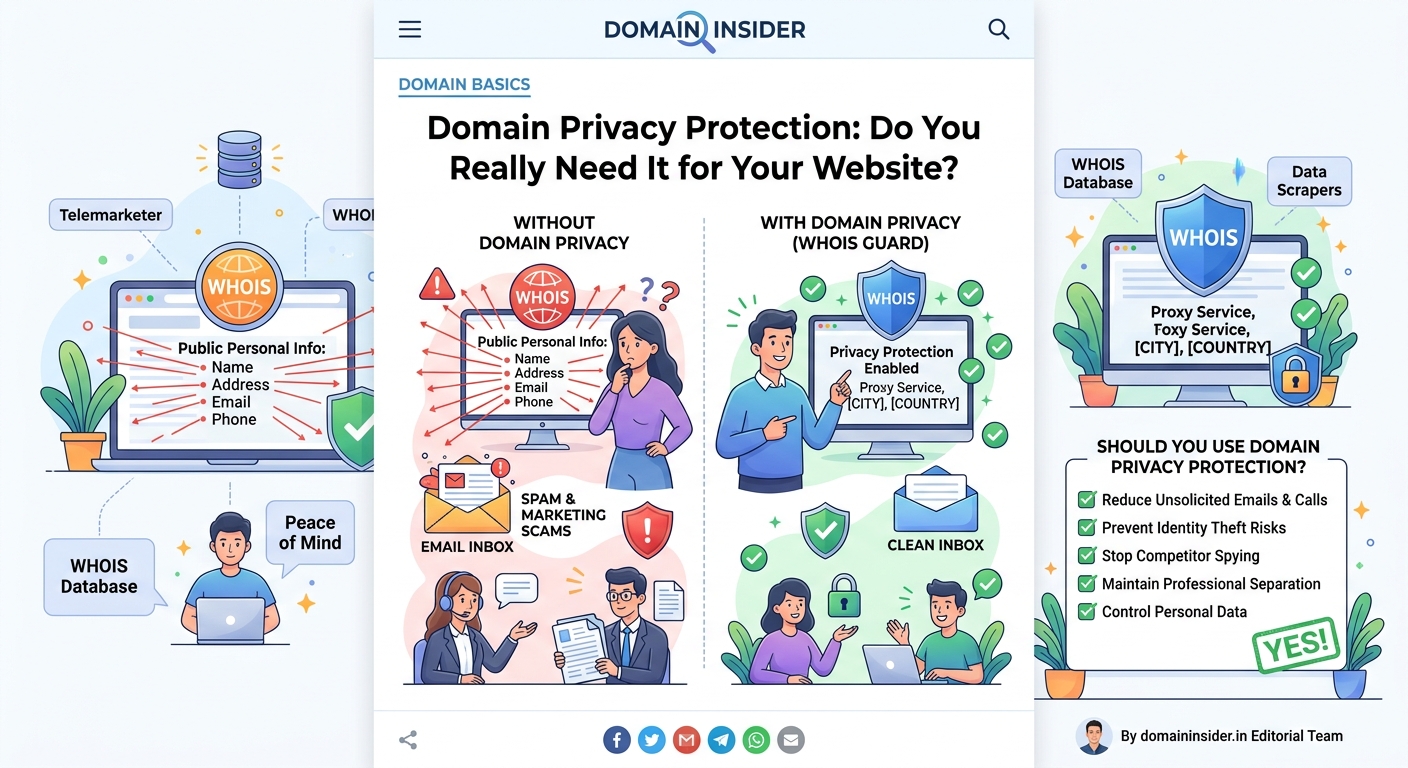
Let’s talk about what actually happens when your details sit in public WHOIS records.
Spam floods your inbox
Within days of registration, automated bots scrape WHOIS databases. Your email gets added to dozens of marketing lists. You’ll receive endless pitches for SEO services, web design packages, and domain transfer offers.
Some of this spam looks legitimate. Some contains phishing attempts designed to steal your credentials or payment information.
Your phone rings with sales calls
Telemarketers love fresh domain registrations. They know you’re starting something new, which makes you a prime target. Expect calls about hosting upgrades, SSL certificates, business listings, and more.
For Indian domain owners, this often means calls during work hours or family time. Blocking numbers helps, but new ones keep appearing.
Identity theft becomes easier
Your WHOIS data provides everything a scammer needs to impersonate you. They can use your name and address to:
- Create fake social media profiles
- Apply for services in your name
- Send convincing phishing emails to your contacts
- File fraudulent trademark complaints
One common scam involves fake domain renewal notices. Scammers send official looking letters to your physical address, claiming your domain will expire unless you pay them immediately at inflated prices.
Competitors gather intelligence
Business rivals can monitor your domain portfolio. They see when you register new names, which reveals your expansion plans or upcoming product launches.
For startups working on stealth projects, this leak can be costly. Competitors might register similar domains, copy your ideas, or adjust their strategies based on your moves.
When domain privacy makes perfect sense
Most website owners benefit from privacy protection. Here are situations where it’s practically essential:
You’re an individual or solopreneur
Running a blog, portfolio site, or small online business from home? Your personal safety matters more than transparency. There’s no good reason strangers should have your home address.
You value peace of mind
Some people simply don’t want their personal information floating around the internet. That’s completely valid. Privacy protection costs less than a decent meal each month.
You’re testing business ideas
Registering multiple domains to test different concepts? Privacy keeps your experiments under wraps until you’re ready to launch publicly.
You’ve experienced harassment before
If you’ve dealt with stalkers, abusive ex-partners, or online trolls, exposing your contact details could put you at genuine risk. Privacy protection adds a crucial layer of security.
When you might skip domain privacy
A few specific situations call for public WHOIS information:
Corporate websites requiring transparency
Large companies often display real contact details to build trust with customers and partners. Public WHOIS records reinforce that transparency.
Government and educational institutions
Organizations in these sectors typically must show legitimate contact information for accountability and compliance reasons.
Domains used for trademark enforcement
If you’re actively defending intellectual property rights, having verifiable ownership details in WHOIS can strengthen your legal position.
Local business building community trust
Some brick and mortar businesses prefer showing real addresses to demonstrate they’re genuine local establishments, not fly by night operations.
“For 90% of new website owners, domain privacy is worth every rupee. The cost is minimal compared to the headaches you’ll avoid from spam, scams, and unwanted attention. Skip it only if you have a specific reason to be publicly listed.”
How domain privacy actually works
The mechanics are straightforward.
When you enable privacy protection, your registrar replaces your personal details in WHOIS with their own proxy information. Searches show the registrar’s address and contact details instead of yours.
Legitimate inquiries still reach you. The registrar forwards emails sent to the proxy address. You remain reachable for genuine business matters while staying hidden from automated scrapers and bad actors.
The protection applies to all contact fields: registrant, administrative, and technical. Your real information stays in your registrar’s private database, accessible only to you and required by legal authorities with proper warrants.
Comparing costs and features across registrars
Not all privacy services work the same way. Here’s what varies:
| Feature | Budget Registrars | Premium Registrars | What It Means |
|---|---|---|---|
| Annual cost | ₹300 to ₹500 | Free to ₹800 | Some include it free with domains |
| Email forwarding | Limited | Unlimited | How many forwarded emails you receive |
| Phone privacy | Sometimes excluded | Usually included | Whether your number gets hidden |
| Auto-renewal | Optional | Standard | Prevents accidental privacy lapses |
| Legal compliance | Basic | Advanced | How they handle legal requests |
Some registrars bundle privacy protection free with every domain registration. Others charge separately. Factor this into your total cost when comparing where to register.
For Indian businesses, choosing between .co.in or .in domains affects both registration costs and privacy options available.
Setting up domain privacy protection
Getting privacy protection activated takes just a few steps:
-
Check during registration: Most registrars offer privacy as an add-on checkbox during the domain purchase process. Tick the box before completing payment.
-
Enable after registration: If you skipped it initially, log into your registrar account, find your domain management panel, and look for privacy protection options. Add it to your cart and complete the purchase.
-
Verify it’s working: After activation, use a public WHOIS lookup tool to search your domain. You should see proxy contact details instead of your personal information. Changes typically appear within 24 hours.
-
Set up email forwarding: Configure how you want forwarded emails delivered. Some registrars let you filter spam or set up custom forwarding rules.
-
Enable auto-renewal: Make sure privacy protection renews automatically with your domain. A lapsed privacy service exposes your details again.
Common mistakes that waste money or expose data
People make predictable errors with domain privacy:
-
Forgetting to renew separately: Some registrars require separate renewal for privacy protection. Your domain renews but privacy lapses, exposing your details again.
-
Assuming it’s permanent: Privacy protection is a recurring service. Stop paying, lose protection. Simple as that.
-
Mixing protected and unprotected domains: You enable privacy on some domains but not others. Scrapers find your details on unprotected domains and connect them to your entire portfolio.
-
Ignoring email forwards: Legitimate business inquiries get lost in spam filters because you never set up proper forwarding rules.
-
Paying for unnecessary extras: Some registrars upsell premium privacy features most people never need. Basic protection covers typical use cases perfectly fine.
What happens if you change your mind later
You can add or remove privacy protection anytime.
Adding protection later works exactly like enabling it during registration. Purchase the service through your registrar, and your details get masked within hours.
Removing protection exposes your information immediately. The WHOIS database updates to show your real contact details. Once exposed, that data gets cached by third-party WHOIS services and may remain visible for weeks or months.
Think carefully before removing privacy. Getting that information off the internet completely becomes nearly impossible once it spreads.
Special considerations for Indian domain owners
A few India specific factors affect your privacy decision:
Data protection laws
India’s digital privacy landscape continues evolving. While current regulations don’t mandate WHOIS privacy, protecting your personal data aligns with emerging privacy standards.
Local scam tactics
Indian domain owners face specific scam attempts, including fake government notices and fraudulent trademark claims. Privacy protection reduces your exposure to these targeted attacks.
Business verification
Some Indian payment gateways and business verification services check WHOIS records. Having privacy enabled rarely causes issues, but be prepared to verify ownership through alternative methods if needed.
Cost sensitivity
For budget conscious entrepreneurs, privacy protection represents a meaningful expense. If you’re building a domain portfolio, factor privacy costs into your total investment calculations.
Privacy protection and domain sales
Planning to sell domains eventually? Privacy affects the process.
Buyers often check WHOIS records to verify ownership before making offers. Privacy protection doesn’t prevent sales, but it changes how negotiations start.
Serious buyers understand privacy services. They’ll contact you through the proxy email to discuss terms. Once you’re ready to proceed, you can share verification details privately.
For domain investors using proven selling strategies, maintaining privacy during the listing phase prevents competitors from tracking your inventory and undercutting prices.
Some marketplaces require temporary privacy removal during escrow transactions. Your registrar can guide you through this process safely.
Making your decision with confidence
So, do you need domain privacy?
For most new website owners, the answer is yes. The protection costs less than ₹70 per month on average. That’s cheaper than a coffee.
What you get in return: no spam floods, no scam calls, no identity theft risks, and genuine peace of mind knowing your personal details aren’t sitting in public databases.
Skip privacy only if you have specific legal, business, or transparency requirements that demand public contact information.
The small investment protects your privacy, security, and sanity. For the vast majority of domain owners, that’s worth every rupee.
Your information deserves protection
Starting a website should feel exciting, not risky.
Domain privacy protection removes the unnecessary stress of exposing your personal details to the entire internet. It’s a simple, affordable safeguard that prevents real problems.
When you register your next domain, tick that privacy protection box. Your future self will thank you when your inbox stays clean, your phone stops ringing with spam calls, and your personal information remains exactly where it belongs: private.
