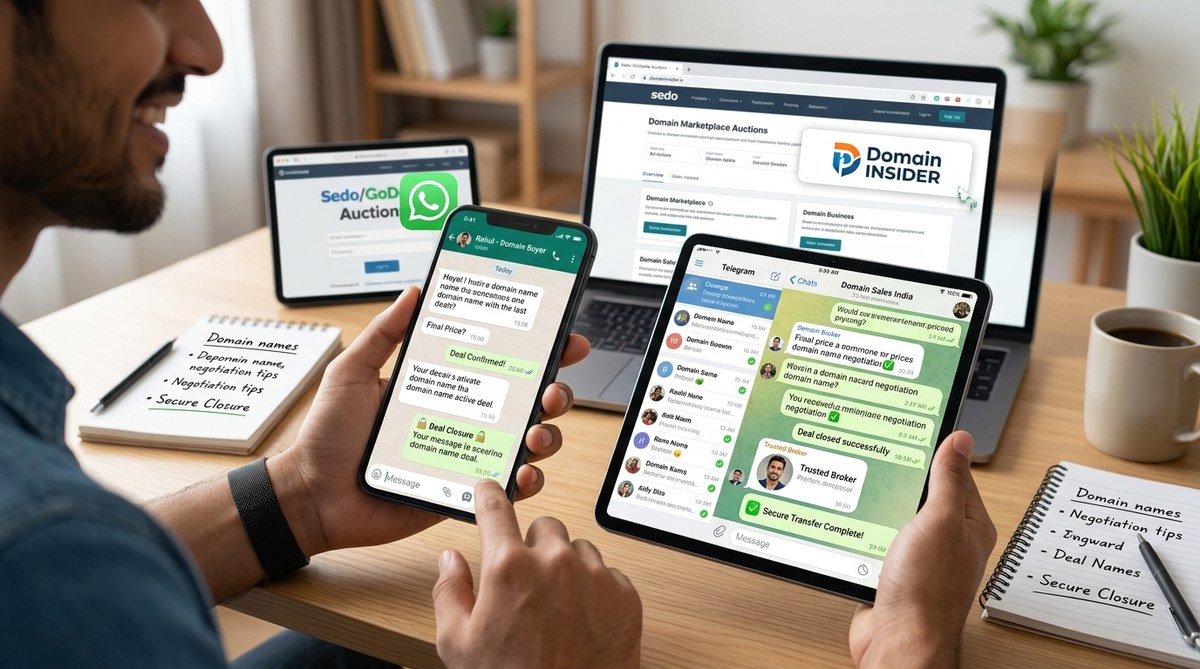
You sent a cold message about a domain you own. The buyer seems interested. Then WhatsApp shows that dreaded double grey tick and never turns blue. Or worse, your account gets restricted for a week.
If you are a domain investor or broker in India, you already know the struggle. WhatsApp and Telegram are where real buyers live. But these platforms also flag anyone who sends too many unsolicited messages. One wrong move and you lose access to your primary sales channel.
The good news? You can absolutely close domain deals on WhatsApp and Telegram without ever triggering a block. You just need to understand how the platforms think, what sets off their spam detectors, and how to build genuine buyer relationships that feel natural, not automated.
Messaging app blocks happen when your outreach looks like spam. To close domain deals safely, warm up your account first, personalise every message, use Telegram groups instead of direct DMs for initial contact, never send payment links until asked, and always move high value negotiations to a phone call or escrow service. This keeps your account safe and your deals alive.
Why Messaging Apps Block Domain Sellers
WhatsApp and Telegram do not hate domain sellers. They hate patterns that look like bots. When you send the same “Hi, I have a premium domain for you” message to fifty people in ten minutes, their systems notice. They see high volume, identical text, and low reply rates. That combination gets you flagged.
Telegram is slightly more forgiving than WhatsApp. It allows larger outreach volumes before triggering limits. But Telegram also has a dedicated spam reporting system. If three people mark you as spam within a short window, your account gets restricted.
WhatsApp is tougher. It uses behaviour analysis. If you forward messages often, if you are not in the contact list of the person you message, or if you send links too early, the algorithm tightens around you. For domain investors who rely on outbound sales, this creates a real problem.
The secret is to make every interaction look like a normal human conversation. That means pacing, variety, and genuine value.
The Three Rules That Keep Your Account Safe
Before you send a single message, internalise these rules. They apply whether you use WhatsApp Business or a personal Telegram account.
Rule one: warm up your account. If you create a fresh account and send fifty messages on day one, you will get blocked. Start with five messages a day. Increase slowly over a week. Let the platform see you as a normal user.
Rule two: vary your message content. Never copy paste. Even if you have a template, change the greeting, the domain name detail, and the closing line every single time. Identical messages across multiple chats is the number one trigger for spam filters.
Rule three: earn replies before you push. A message that gets a response is proof you are a real human. Platforms track your reply rate. If you send twenty messages and get zero replies, you look like a spammer. If you send twenty and get eight replies, you look like a professional.
A Step by Step Process to Close Deals Safely
Here is a practical sequence that works for domain brokers across India, from Mumbai to Delhi to Bangalore.
-
Research the buyer first. Do not send a blind message. Check if the person has mentioned their business on LinkedIn, Twitter, or their website. If they run a digital agency in Pune and you own a domain like “punedigital.in”, you have a reason to reach out. That context protects you.
-
Send a warm up message with zero sales intent. Your first message should introduce yourself and ask a relevant question. For example: “Hi Rohan, I saw your work with local businesses in Jaipur. Are you still looking for brandable domains for your clients?” This is not a sales pitch. It is a conversation starter.
-
Wait for a reply before sharing the domain name. If they respond, you have permission to continue. Now you can mention that you have a domain that might fit their needs. If they do not reply within 48 hours, follow up once. Never more.
-
Share the domain name as text, not a link. Typing “example.com” is safer than sending a clickable URL. Links trigger extra scrutiny, especially on WhatsApp. Let them copy it manually.
-
Move price discussions to a phone call or escrow service. Once they show interest, say: “Let me share the details over a call. Can I send you my number?” This removes the transaction talk from the chat history, which is where most blocks happen.
-
Use Telegram groups for initial discovery. Join niche communities where domain buyers hang out. Indian startup groups, digital marketing forums, and tech entrepreneur circles are goldmines. Engage genuinely for a week. Then DM someone who asked a relevant question.
What Triggers a Block: A Clear Reference Table
The table below shows the specific behaviours that get domain sellers blocked and what to do instead.
| Trigger Behaviour | Why Platforms Flag It | Safe Alternative |
|---|---|---|
| Sending 20+ DMs in 10 minutes | Looks like bot broadcast | Send 5 messages, wait 30 minutes, send 5 more |
| Copy pasting identical text | Pattern recognition detects duplication | Rewrite every message, change at least 30% of words |
| Sharing payment links in first message | High risk for phishing and scams | Only share payment details after buyer explicitly asks |
| Sending messages to people not in your contacts | Low trust signal on WhatsApp | Use Telegram where contact lists matter less |
| Forwarding messages from other chats | Forwarding is tied to spam behaviour | Type fresh responses, never forward |
| Using URL shorteners in domain pitches | Short links hide destinations | Write the full domain as plain text |
Expert Advice on Negotiation Timing
“The moment a buyer says ‘what is your price’, do not answer immediately. Ask them what budget they have in mind for a domain like this. If they say 15,000 and you wanted 25,000, you know you can negotiate up. But if you blurt out 25,000 first, you might scare them away. Keep the conversation on WhatsApp light. Move the money talk to escrow.”
Ravi Mehta, domain broker with 12 years of experience in the Indian market
This advice is crucial because WhatsApp scans message content for financial keywords. Words like “payment”, “transfer”, “bank account”, and “UPI” can trigger additional scrutiny if used too early. Keep the deal flow natural.
How Telegram Differs from WhatsApp for Domain Sales
Telegram offers features that WhatsApp does not. You should use them strategically.
-
Telegram channels and groups let you broadcast domain listings to an audience without sending individual DMs. This is the safest way to showcase your portfolio. People come to you.
-
Secret chats have end to end encryption. Use them only after a buyer shows serious intent. Do not use secret chats for initial outreach because Telegram cannot review them if someone reports you.
-
Username based contact means you can message anyone without sharing phone numbers. This reduces friction for Indian buyers who are hesitant to share their mobile number.
-
Telegram has higher daily limits before triggering spam warnings. You can send around 50 messages per day before Telegram starts restricting you. WhatsApp’s limit is much lower, around 10 to 15 messages to unknown contacts.
Use Telegram for volume outreach and warm leads. Use WhatsApp for existing relationships and follow ups.
Common Mistakes That Get Domain Investors Blocked
Let me walk you through the mistakes I see most often in the Indian domain community.
Sending the same message to every lead. I have seen brokers copy paste “Hi, I have a premium domain that would be perfect for your business” to fifty people. Every recipient gets the identical text. WhatsApp flags this within minutes.
Adding too many people to broadcast lists. WhatsApp Business has a broadcast feature. But if you add people who have not saved your number, your broadcast goes to their “unknown senders” folder. If enough of them report you, your account gets limited.
Asking for payment too early. The moment you say “pay via UPI to this number”, you sound like a scammer. Build trust first. Share a screenshot of your domain portfolio. Offer to use an escrow service. The complete guide to using escrow services when selling domains in India has more details on how to handle payments safely.
Using aggressive follow up sequences. If someone does not reply, sending “Are you still interested?” three times in one day is a fast track to a block. Send one follow up after 48 hours. If they still do not respond, move on.
Building a Safe Outbound Sales System
If you want to close domain deals on WhatsApp and Telegram regularly, you need a system. Here is a bulleted checklist to keep you on track.
- Maintain a dedicated SIM card for domain sales. Never use your personal number.
- Use WhatsApp Business with a complete profile photo and description.
- Warm up any new account for at least 7 days before sending outreach.
- Keep a spreadsheet of who you contacted and when.
- Personalise every message with the recipient’s name and business context.
- Never send more than 15 initial messages per day on WhatsApp.
- On Telegram, stay under 50 messages per day to unknown users.
- Always ask a question in your first message to encourage a reply.
- Track your reply rate. If it drops below 20%, change your approach.
- Use Telegram groups for passive discovery before active pitching.
This system works because it mimics how real people use messaging apps. You are not a bot. You are a domain professional who happens to use WhatsApp the same way everyone else does.
When to Walk Away from a Conversation
Not every lead will turn into a sale. Some buyers will ghost you. Some will lowball you. Some will ask questions but never commit. The key is knowing when to stop messaging.
If a buyer has not replied after two follow ups, let it go. Pushing further increases the chance they report you. Keep the conversation polite and leave the door open. A simple “No worries, reach out anytime if you need a domain for your next project” ends the chat gracefully.
Also, if a buyer asks you to transfer the domain before payment, walk away. This is a common scam. Always use a trusted escrow service. The ultimate domain escrow guide explains how to protect yourself from fraudulent buyers.
Your Permission Based Approach to Domain Deals
The most sustainable way to close domain deals on WhatsApp and Telegram is to be the person people want to hear from. That means sharing value before you ever ask for a sale.
Post in relevant Telegram groups about domain trends. Answer questions about valuation. Share a case study of a domain you sold. When people see you as knowledgeable, they will message you first. That inbound message is worth ten cold DMs.
On WhatsApp, build a list of buyers who have opted in. If someone asks you “Do you have domains in the health space?”, add them to a WhatsApp broadcast list specifically for health domains. Now you can share new acquisitions with them without triggering spam filters, because they asked to hear from you.
This permission based model is slower at first. But it protects your accounts, builds relationships, and leads to higher closing rates.
Making the Final Leap from Chat to Closed Deal
When a buyer is ready, do not keep the full negotiation on chat. The final steps of price agreement, payment, and domain transfer should happen outside the messaging platform. Use email for the invoice. Use a phone call for the final handshake. Use a registrar’s transfer system for the domain.
This protects both you and the buyer. It also keeps your WhatsApp and Telegram accounts clean. If anything goes wrong, the dispute is not inside the messaging app where platform moderators can see it.
For pricing your domain correctly before you start the conversation, check out how to accurately price a domain for the Indian market in 2026. Having a clear price range makes your negotiation smoother and reduces back and forth that could tire out the buyer.
Keeping Your Account Healthy for the Long Run
One successful deal does not mean your account is safe. You need ongoing habits.
- Reply to every message you receive, even if it is a “thanks but not interested”. Engagement signals keep your account in good standing.
- Do not delete chats. Platforms sometimes review conversation history when someone reports you. A long chat history with mixed replies helps your case.
- Update your profile every few months. A stale profile looks abandoned. Abandoned accounts that suddenly send messages look suspicious.
- Backup your chats regularly. If you do get blocked, you lose access to leads. Backups help you recover.
Remember that platforms update their policies often. What works today might not work next year. Stay flexible. If you notice your reply rate dropping or new accounts getting restricted faster, adjust your approach.
Your goal is to be a trusted domain professional, not a spammer who happens to sell domains. That trust shows in every message you send.
Your Next Move as a Domain Investor
Start small. Pick one domain from your portfolio. Research five potential buyers on LinkedIn or Twitter. Write a personalised message for each one. Send them over the next two days. Track who replies.
Then rinse and repeat. Over time, you will build a system that lets you close domain deals on WhatsApp and Telegram without ever worrying about a block.
The platforms are not your enemy. They are protecting their users from actual spam. Show them you are not spam, and they will let you do business freely.
