
You’ve found an expired domain with a catchy name, some backlinks, and a price that seems reasonable. But before you hand over your money, there’s a lot more to consider than just the surface appeal.
Buying an expired domain can jumpstart your SEO and save years of authority building, but only if you thoroughly check its history, backlink profile, and penalty status. Rushed purchases often lead to wasted money on toxic domains that harm rankings instead of helping them. Smart evaluation using free tools and manual checks separates profitable investments from expensive mistakes.
Understanding what makes expired domains valuable
Expired domains are previously registered web addresses that owners didn’t renew. They return to the market carrying whatever history, backlinks, and reputation they built during active use.
The appeal is simple. Instead of starting from zero, you inherit existing authority signals that search engines have already recognised. A domain that earned quality backlinks over five years can give your new project a significant head start.
But here’s the catch. You also inherit any penalties, spam associations, or toxic backlink profiles that came with previous ownership.
Think of it like buying a used car. The mileage might be low and the price attractive, but you need to check what’s under the hood before signing anything.
The potential rewards that attract smart buyers
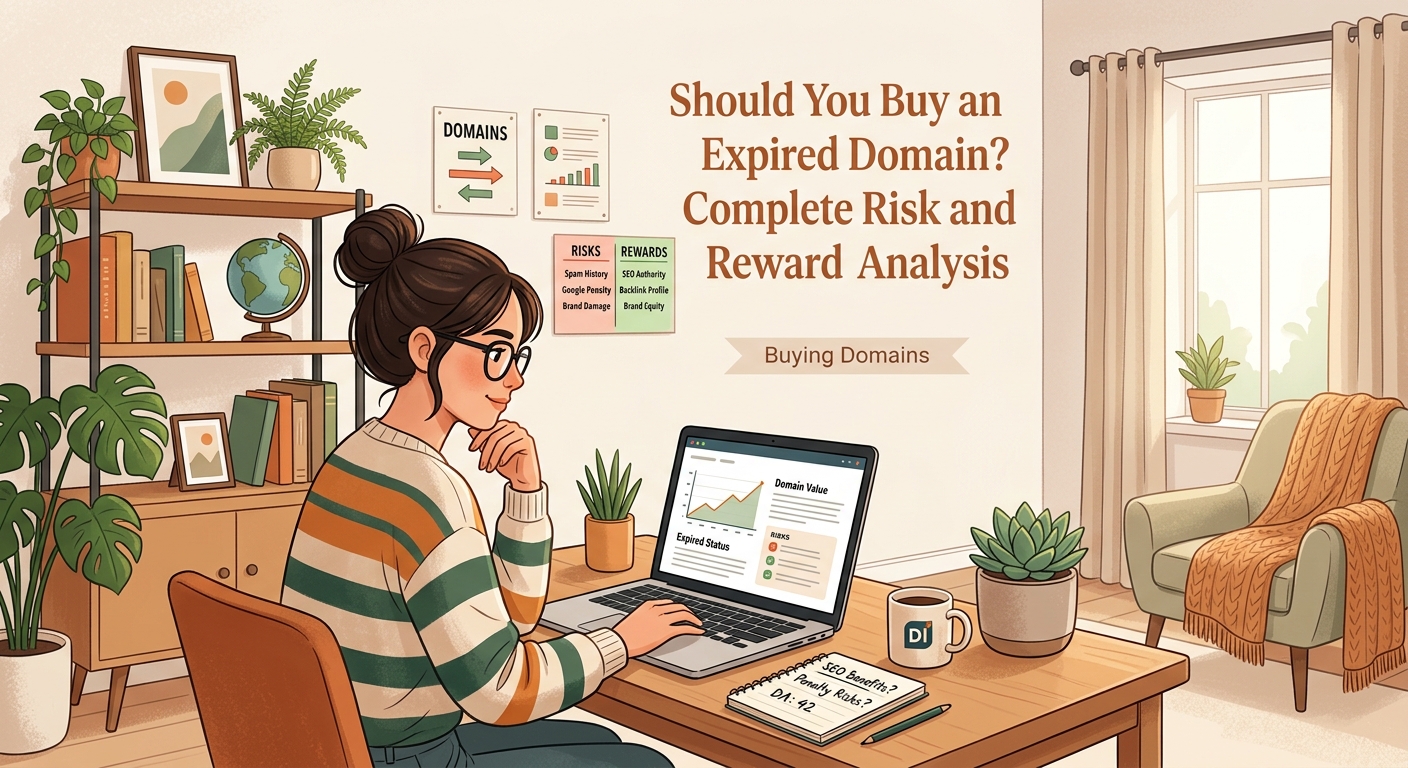
Let’s start with why people chase expired domains in the first place.
Established backlink profiles are the biggest draw. Quality backlinks from relevant websites signal authority to search engines. Building these naturally takes months or years. An expired domain might already have them.
Age matters in domain valuation. Older domains often rank faster than brand new ones, assuming everything else is equal. Search engines tend to trust established web properties more than fresh registrations.
Existing traffic sometimes continues flowing to expired domains. If the previous site had loyal visitors or ranked for valuable keywords, you might capture some of that audience immediately after purchase.
Brand recognition occasionally survives domain expiration. Local businesses, niche communities, or industry resources sometimes let domains lapse despite having built real awareness.
Cost efficiency compared to buying premium domains makes expired options attractive. Instead of paying lakhs for a premium .com, you might snag a quality expired domain for a few thousand rupees.
The serious risks you cannot ignore
Now for the uncomfortable truth. Most expired domains aren’t worth buying.
Google penalties stick to domains, not owners. If the previous owner engaged in link schemes, thin content, or other violations, that penalty transfers to you. Recovering from a manual action takes months of work and isn’t always possible.
Spam associations permanently damage some domains. If a domain hosted malware, participated in link networks, or appeared on blacklists, its reputation might be irreparable.
Irrelevant backlink profiles provide zero value. A domain with 500 backlinks from Mandarin gambling sites won’t help your Hindi recipe blog. Relevance matters more than raw numbers.
Trademark issues create legal nightmares. Some expired domains include brand names, company trademarks, or protected terms. Using them can trigger cease and desist letters or lawsuits.
Technical debt accumulates on neglected domains. Broken redirects, outdated DNS configurations, or messy site structures require cleanup before you can build anything useful.
How to evaluate an expired domain properly
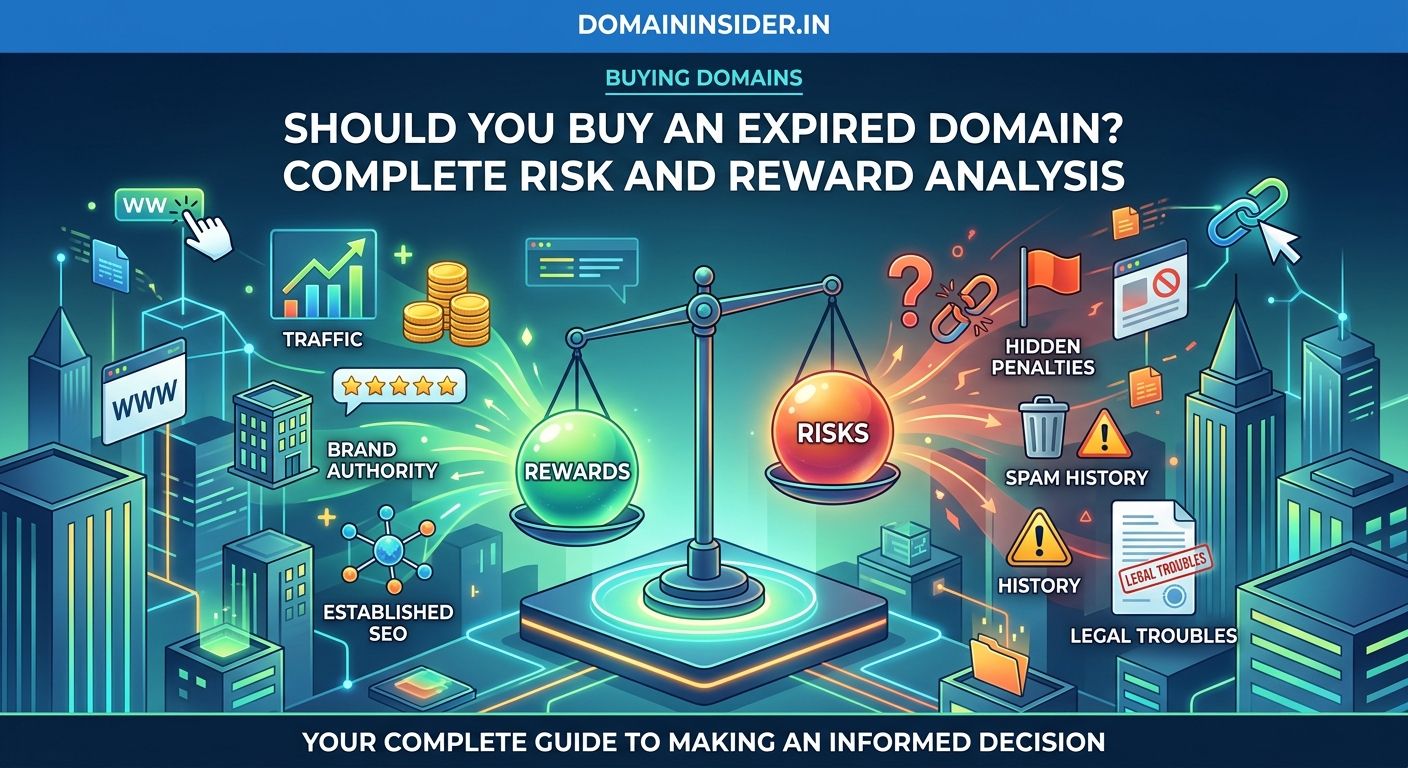
Here’s your step-by-step process for checking whether an expired domain deserves your money.
-
Check the domain’s archive history using the Wayback Machine to see what content it previously hosted. Look for red flags like adult content, pharmaceutical spam, or casino promotions.
-
Analyse the backlink profile thoroughly using tools that reveal linking domains, anchor text distribution, and link quality. Watch for unnatural patterns like identical anchor text across hundreds of links.
-
Verify there are no penalties by checking Google Search Console if possible, or looking for sudden traffic drops in historical data that suggest algorithmic demotions.
-
Research trademark conflicts by searching the domain name against trademark databases and checking if it includes brand names that could cause legal problems.
-
Test the domain’s current status in search engines by doing a site search to see if pages are indexed and checking if the domain appears for its own name.
-
Examine traffic potential using keyword research tools to understand what search terms the domain previously ranked for and whether those keywords still have value.
Understanding what exactly happens when you type a domain name in your browser helps you appreciate why domain history and DNS records matter so much in this evaluation.
Free tools that reveal domain secrets
You don’t need expensive subscriptions to research expired domains properly. These free resources provide most of what you need:
- Wayback Machine shows historical snapshots of the website’s content and design
- Google Search Console reveals indexing status and manual actions if you can verify ownership
- Moz Link Explorer offers limited free backlink checks to spot major issues
- Ahrefs Backlink Checker provides 100 backlinks for free, enough to spot patterns
- Google Transparency Report checks if the domain is flagged for malware or phishing
- Whois History tools show previous ownership and registration patterns
For deeper analysis, you can use 7 free tools to check your domain name value in 2024 to assess whether the asking price matches actual worth.
Common mistakes that waste money
| Mistake | Why It Fails | Smarter Approach |
|---|---|---|
| Buying based on metrics alone | Numbers can be manipulated or irrelevant | Manually review actual backlinks and content |
| Ignoring niche relevance | Backlinks from unrelated sites provide no value | Only buy domains relevant to your project |
| Skipping penalty checks | Inherited penalties destroy your rankings | Always verify clean search engine status |
| Trusting seller claims | Sellers have incentive to hide problems | Do your own independent research |
| Rushing the purchase | Fear of missing out leads to bad decisions | Take time to properly evaluate before buying |
The biggest mistake is treating expired domain purchase like domain registration. They’re completely different transactions with different risk profiles.
When expired domains make perfect sense
Some situations genuinely favour buying expired domains over starting fresh.
Private blog networks built by experienced SEO professionals sometimes use expired domains strategically, though this practice carries risks and requires expertise.
Brand protection justifies buying expired domains that include your company name or product names to prevent competitors or cybersquatters from grabbing them.
Redirecting to existing sites works well when you find expired domains with relevant backlinks pointing to content similar to what you already publish.
Niche authority sites benefit from expired domains that previously covered the same topic and built genuine topical authority through quality content.
Local business domains sometimes make sense if a previous business in your city let their domain expire and you operate in the same service area.
“The best expired domain purchases happen when you find a domain that matches your niche perfectly, has clean backlinks from real websites, and shows no signs of spam or penalties. Anything less than that combination usually isn’t worth the risk.” – Experienced domain investor
Pricing realities in the Indian market
Expired domain prices vary wildly based on perceived value. In India, you’ll typically see:
Budget tier domains sell for ₹500 to ₹2,000. These usually have minimal backlinks and questionable history. Most aren’t worth even these low prices.
Mid-range options cost ₹5,000 to ₹25,000. Some legitimate opportunities exist here, especially for niche-specific domains with decent metrics.
Premium expired domains command ₹50,000 to several lakhs. These should have exceptional backlink profiles, clean histories, and clear value propositions.
Learning how to negotiate domain prices like a pro and save thousands becomes essential when you find a domain worth pursuing but priced above your budget.
Alternative strategies worth considering
Before committing to an expired domain purchase, consider these alternatives:
Building a fresh domain from scratch gives you complete control over your site’s history and ensures no inherited problems. Yes, it takes longer, but the foundation is clean.
Buying aged domains that never hosted websites combines age benefits with clean slates. These domains were registered years ago but never used, avoiding baggage while keeping age advantages.
Acquiring active websites instead of just domains means you get traffic, content, and backlinks all at once. The investment is higher but so is the immediate value.
Focusing on brand building rather than SEO shortcuts often produces better long-term results. A memorable brand on a new domain can outperform a mediocre expired domain.
If you’re specifically targeting the Indian market, consider whether .in domains are becoming the first choice for Indian startups in 2024 makes more sense than chasing expired international domains.
Red flags that scream walk away
Some warning signs should immediately end your interest in an expired domain:
Unnatural backlink patterns like thousands of links from blog comment spam or forum profiles indicate previous black hat SEO that will eventually catch up with you.
Recent traffic crashes visible in historical data suggest the domain got hit with a penalty or algorithmic demotion that makes it worthless.
Blacklist appearances on spam databases, malware lists, or browser security warnings mean the domain’s reputation is permanently damaged.
Trademark conflicts where the domain name clearly references established brands or products create legal liability you don’t want.
Seller pressure tactics like artificial scarcity claims or time-limited offers often hide problems the seller knows about but won’t disclose.
Building value after purchase
If you do buy an expired domain, your work has just begun. Here’s how to maximise your investment:
Clean up the backlink profile by disavowing toxic links and removing any spammy associations that could hurt your rankings.
Create relevant content that matches the domain’s historical topic and the quality backlinks it earned, maintaining topical consistency.
Set up proper redirects from old URLs to new content where appropriate, preserving link equity while improving user experience.
Monitor search performance closely in the first few months to catch any penalty issues or ranking problems early.
Build new quality signals through fresh content, legitimate outreach, and genuine value creation that strengthens the domain’s authority.
For those building multiple domain assets, understanding how to build a profitable domain portfolio with just ₹50,000 provides context for where expired domains fit in a broader strategy.
Making your final decision
So should you buy an expired domain? The answer depends entirely on your specific situation.
Buy if you’ve found a domain with clean history, relevant backlinks, no penalties, and clear alignment with your project. Buy if you’ve done thorough research and the numbers justify the investment.
Don’t buy if you’re rushing the decision, can’t verify the domain’s history, or are attracted mainly by vanity metrics. Don’t buy if the domain’s previous content conflicts with your intended use.
Most importantly, never buy an expired domain just because someone told you it’s good for SEO. The SEO benefit only materialises when everything aligns perfectly, which happens far less often than expired domain marketplaces would have you believe.
Remember that fresh domains with great content eventually outperform mediocre expired domains with questionable histories. Sometimes the boring choice of registering a new domain and building it properly beats the exciting gamble of buying someone else’s abandoned project.
Your next steps start with research
If you’re seriously considering an expired domain purchase, commit to spending at least a few hours on proper evaluation before spending a single rupee.
Check the archives. Review the backlinks manually. Search for penalties. Verify the niche relevance. Calculate the real value, not the marketed value.
And if something feels off during your research, trust that instinct. The expired domain market has plenty of overpriced, overhyped domains that will drain your budget without delivering results. The rare gems worth buying reveal themselves through patient, thorough analysis, not impulse decisions.
Your website’s foundation matters too much to gamble on shortcuts that might backfire. Make the choice that serves your long-term goals, whether that’s a carefully vetted expired domain or a fresh start with a new registration.
