
Starting a domain portfolio doesn’t require lakhs of rupees or insider connections. You can begin with ₹50,000 and build a collection of domain names that generates real returns. The catch? You need to think like a strategic buyer, not a gambler. Every domain you purchase should have a clear path to profitability, whether through resale, development, or parking income.
Building a profitable domain portfolio starts with focused research and budget discipline. Prioritise short, memorable names with commercial appeal. Buy domains at wholesale prices through auctions and expired lists. Diversify across industries but avoid speculative extensions. Track your investments monthly and sell strategically when demand peaks. With ₹50,000 and smart selection criteria, beginners can create a portfolio that generates consistent returns within 12 to 18 months.
Understanding Domain Portfolio Fundamentals
A domain portfolio is a collection of web addresses you own as digital assets. Think of it like owning multiple plots of land in different neighbourhoods. Some appreciate faster than others. Some generate rental income. Others wait for the right buyer.
The portfolio approach spreads risk. One domain might take years to sell. Another could flip in weeks. Your job is to balance both types strategically.
Most beginners make the same mistake. They buy domains they personally like instead of domains the market wants. Your taste doesn’t matter. Market demand does.
Start by understanding the three portfolio types:
Flip Portfolio: Domains bought to resell within 6 to 12 months. These need immediate market appeal.
Development Portfolio: Domains you’ll build into websites that generate traffic and revenue before selling.
Long-term Hold Portfolio: Premium domains that appreciate over years, like digital real estate in growing sectors.
Your ₹50,000 budget should split across all three categories. This creates multiple revenue streams and protects you from market shifts.
Finding Domains Worth Buying
Domain discovery separates profitable investors from those stuck with unsellable names. You need systematic methods, not random brainstorming.
Auction Platforms
Expired domain auctions offer the best value. When owners forget to renew domains, registrars auction them. You’ll find established domains with existing traffic and backlinks.
Check these platforms daily:
- GoDaddy Auctions
- Namecheap Marketplace
- Dynadot Aftermarket
- Flippa
Set up saved searches for your criteria. Bid strategically in the final minutes. Most domains sell below market value because buyers don’t research properly.
Keyword Research Tools
Use Google Keyword Planner to identify high-volume search terms in growing industries. Look for keywords with commercial intent. Someone searching “online grocery Mumbai” has buying intent. Someone searching “what is grocery” doesn’t.
Target keywords with:
- 1,000+ monthly searches
- Clear commercial purpose
- Low to medium competition
- Natural language flow
Combine these keywords with .com or .in extensions. Check availability immediately. High-value keyword domains disappear fast.
Industry Trend Monitoring
Watch emerging sectors in India. Electric vehicles, fintech, edtech, healthtech, and sustainable products are booming. Register domains related to these trends before they saturate.
Read business news daily. When a new government policy launches, related domains spike in value. When a technology gains traction, generic domains in that space become valuable.
Evaluating Domain Quality
Not every available domain deserves your money. Apply strict criteria before purchasing.
| Quality Factor | Good Example | Poor Example |
|---|---|---|
| Length | CarLoan.in (8 chars) | BestCarLoanServicesIndia.com (28 chars) |
| Memorability | FreshMart.com | FrshMrkt.com |
| Spelling | TravelDeals.in | TravlDeelz.in |
| Extension | .com, .in, .co.in | .xyz, .club, .online |
| Brandability | CloudSync | XYZ789Tech |
Length Matters
Keep domains under 15 characters. Shorter is better. Single-word .com domains are gold but expensive. Two-word combinations offer the best value for beginners.
Three-word domains work if the phrase is common. “BestPizzaMumbai” makes sense. “GreatTopPizzaPlace” doesn’t.
Extension Strategy
Stick to .com and .in for Indian markets. These extensions have universal trust and recognition.
.co.in works for local businesses. .net has some value in tech niches. Everything else is speculative and harder to sell.
Avoid new extensions like .club, .xyz, or .space unless you have specific buyer interest. They’re cheap for a reason.
Brandability Test
Say the domain out loud. Can someone remember it after hearing it once? Can they spell it correctly without seeing it written?
If the answer is no, skip it. Brands pay premium prices for memorable domains. Generic but forgettable domains sit unsold.
Budget Allocation Strategy
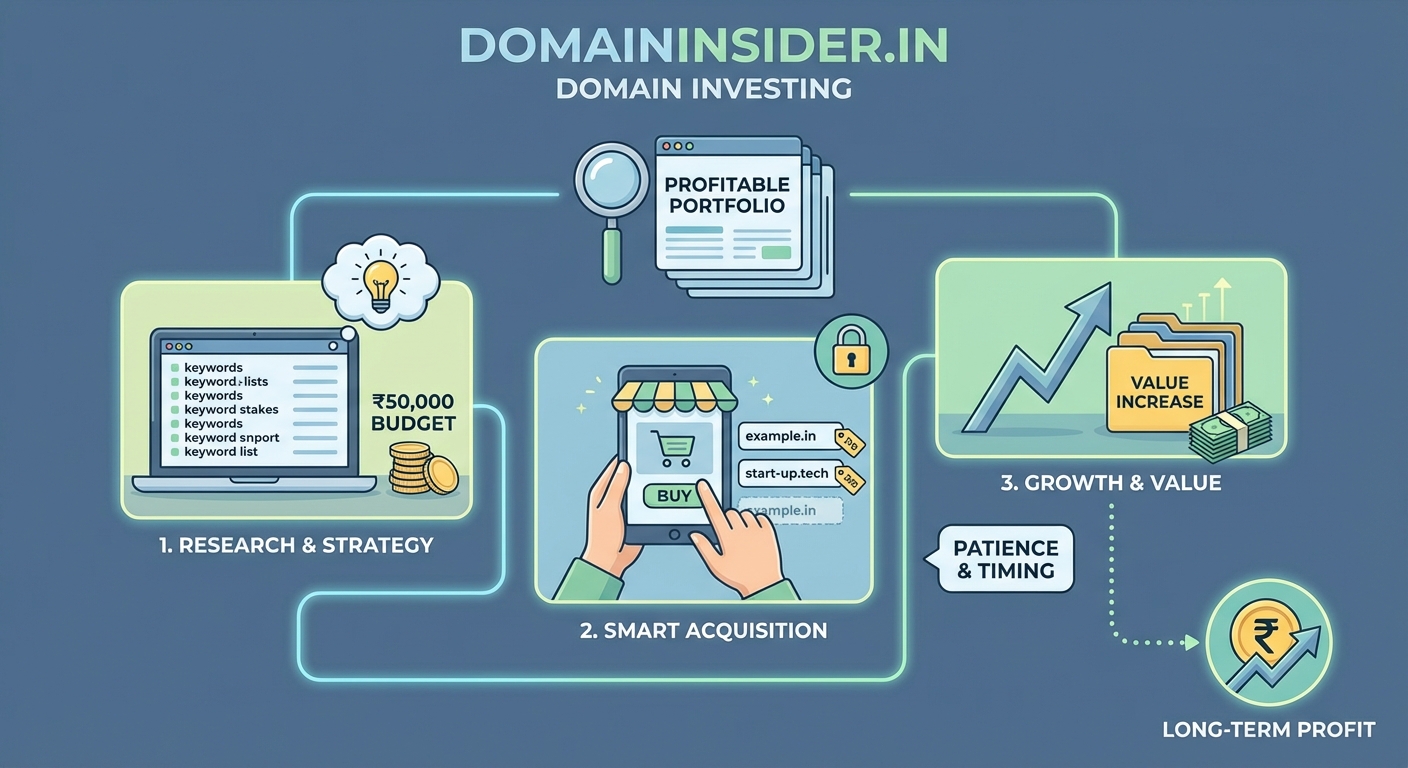
Your ₹50,000 needs strategic distribution. Here’s a proven allocation model:
-
₹20,000 for 10-15 auction domains at ₹1,500-2,000 each. These are your flip candidates with existing metrics.
-
₹15,000 for 5-7 premium keyword domains at ₹2,000-3,000 each. These target high-value commercial keywords.
-
₹10,000 for 15-20 speculative domains at ₹500-700 each. These bet on emerging trends and new sectors.
-
₹5,000 reserve fund for renewal fees and unexpected opportunities.
This distribution balances safety with upside potential. The auction domains provide near-term selling opportunities. Premium keywords appreciate steadily. Speculative names offer lottery-ticket potential.
Never spend your entire budget at once. Market opportunities appear constantly. Keep funds available for exceptional finds.
Buying Process Best Practices
Knowing where and what to buy isn’t enough. You need disciplined buying habits.
Research Before Bidding
Check domain history using Wayback Machine. See what the site looked like when active. Domains with adult content history or spam associations are toxic.
Verify backlink profiles with Moz or Ahrefs free tools. Quality backlinks add value. Spammy links reduce it.
Check trademark databases. Buying a trademarked domain invites legal trouble. Search the Indian Trademark Registry before purchasing brand-related names.
Negotiation Tactics
Many domains have “Make Offer” options. Start at 40-50% of the asking price. Sellers often list high and accept lower offers.
Be patient. Sellers with domains listed for months are motivated. They’ll negotiate more than fresh listings.
Use escrow services for transactions above ₹5,000. Escrow.com protects both parties. Never send money directly to unknown sellers.
Timing Your Purchases
Domain prices fluctuate. End-of-month and end-of-quarter periods see more motivated sellers clearing inventory.
Holiday periods like December and January offer deals. Sellers want cash for expenses and accept lower offers.
Monitor auction patterns. Some days have fewer bidders. You’ll win domains cheaper on Tuesday afternoons than Sunday evenings.
Managing Your Portfolio Efficiently
Ownership is just the beginning. Active management determines profitability.
Organization Systems
Create a spreadsheet tracking:
- Domain name
- Purchase date and price
- Renewal date
- Estimated value
- Marketing status
- Offers received
Update this monthly. You’ll spot patterns in what sells and what doesn’t. This data guides future purchases.
Use portfolio management tools offered by registrars. Most provide dashboards showing all domains, renewal dates, and auto-renewal settings.
Renewal Decisions
Review each domain before renewal. Ask three questions:
Does it still have market potential? Has the industry grown or declined? Have you received any offers?
If a domain hasn’t attracted interest in 12 months and the industry isn’t growing, let it expire. Don’t throw good money after bad.
Calculate your holding costs. A ₹700 domain costs ₹700 annually to renew. If it doesn’t sell for ₹3,000+, you’re losing money after three years.
“The biggest mistake new domain investors make is renewing everything. Your portfolio should constantly evolve. Drop the losers. Double down on winners. Treat it like a business, not a collection.” — Veteran domain investor
Parking for Passive Income
Domain parking displays ads on your unused domains. Visitors clicking ads generate small revenue.
Use parking services like:
- Sedo
- Bodis
- ParkingCrew
Don’t expect much income. Most parked domains earn ₹50-500 annually. But it offsets renewal costs while you wait for buyers.
Park domains with existing traffic. Fresh registrations without visitors earn nothing.
Selling Strategies That Work
Buying smart means nothing if you can’t sell effectively.
Pricing Your Domains
Research comparable sales using NameBio. This database tracks domain sales across marketplaces. Find similar domains and price accordingly.
Price premium domains at 3-5x your purchase price for flip sales. Price long-term holds at 10-20x cost.
List prices high but accept reasonable offers. A ₹50,000 listing that sells for ₹35,000 is better than a ₹30,000 listing that doesn’t sell.
Marketplace Listings
List domains on multiple platforms:
- Sedo
- Flippa
- Afternic
- Dan.com
Each marketplace reaches different buyers. More exposure means faster sales.
Write compelling descriptions. Explain the domain’s commercial potential. Mention relevant keywords, industry growth, and branding opportunities.
Add “Make Offer” options. Many buyers won’t pay listing prices but will negotiate. Offers start conversations that lead to sales.
Outbound Outreach
Identify potential buyers. If you own “MumbaiCatering.com,” contact catering companies in Mumbai without websites or with poor domains.
Send brief, professional emails:
“Hi [Name], I noticed your business uses [CurrentDomain]. I own MumbaiCatering.com, which might better represent your brand. Would you be interested in discussing a purchase?”
Keep it short. Don’t hard-sell. Many businesses don’t know better domains are available.
Common Mistakes to Avoid
Learn from others’ expensive lessons.
Buying too many domains too fast: Quality beats quantity. Ten great domains outperform 100 mediocre ones.
Ignoring renewal costs: Budget for renewals. Domains are annual expenses, not one-time purchases.
Emotional attachment: You’re not building a collection. You’re running a business. Sell when offers make sense.
Following trends blindly: By the time a trend is obvious, domain opportunities are gone. Stay slightly ahead of mainstream awareness.
Neglecting legal checks: Trademark violations can cost you the domain plus legal fees. Always verify before buying brand-related names.
Overvaluing your domains: Just because you paid ₹5,000 doesn’t mean it’s worth ₹50,000. Market determines value, not your investment.
Growing Beyond Your First Portfolio
Once you’ve built initial momentum, scale strategically.
Reinvest profits into higher-value domains. Your second ₹50,000 should target ₹3,000-5,000 domains instead of ₹500-1,000 names.
Specialise in niches where you develop expertise. If you successfully flip three fintech domains, focus on that sector. Expertise helps you spot value others miss.
Build relationships with other investors. Join domain forums and groups. Experienced investors often wholesale domains below market value to trusted buyers.
Consider developing select domains into revenue-generating websites. A developed domain with traffic and income sells for 10-30x more than an undeveloped one.
Track industry news obsessively. Policy changes, funding announcements, and technology shifts create domain opportunities. Being early to these trends multiplies returns.
Your Path to Domain Profits Starts Now
Building a domain portfolio with limited capital is completely achievable. It requires discipline, research, and patience. You won’t get rich overnight, but you can build a valuable asset collection that generates consistent returns.
Start small. Buy your first three domains this week using the criteria outlined here. Track their performance. Learn what works in your target markets. Adjust your strategy based on real results, not assumptions. Your ₹50,000 can become the foundation of a portfolio worth several lakhs within two years if you stay focused and make data-driven decisions.
