Category: India Market

  • Why .in Domains Are Becoming the First Choice for Indian Startups in 2024

    Why .in Domains Are Becoming the First Choice for Indian Startups in 2024

    Choosing the right domain name is one of the first real decisions you’ll make as a startup founder. And if you’re building a business in India, you’ve probably wondered whether to go with the familiar .com or the local .in extension.

    The answer isn’t always obvious. But more Indian entrepreneurs are picking .in domains, and they have good reasons.

    Key Takeaway

    Indian startups are increasingly choosing .in domains for better local recognition, lower costs, and improved trust among Indian customers. The .in extension signals commitment to the Indian market, offers better availability of short names, and provides SEO advantages for local searches. With growing digital adoption and government support, .in domains have become a strategic choice for businesses targeting Indian audiences.

    Cost advantage that actually matters

    Let’s talk money first because that’s what matters when you’re bootstrapping.

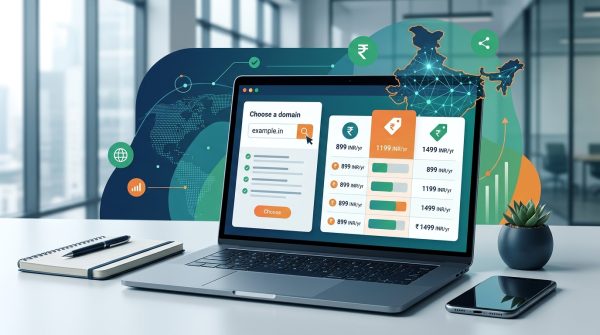
    A .com domain typically costs between ₹800 to ₹1,200 per year from most registrars. Renewal fees can jump even higher.

    A .in domain? Usually ₹400 to ₹700 annually.

    That difference might seem small. But when you’re counting every rupee in your early days, saving ₹500 per year adds up. You can put that money toward hosting, marketing, or hiring your first intern.

    The real savings come when you want a decent name. Popular .com domains are either taken or listed at premium prices. I’ve seen founders pay ₹50,000 or more for a mediocre .com because all the good ones were parked by domain investors.

    With .in, you’ll find far more availability. Short, memorable names that would cost a fortune in .com are often available or reasonably priced in .in.

    Trust signals for Indian customers

    Why .in Domains Are Becoming the First Choice for Indian Startups in 2024 - Illustration 1

    Here’s something most founders miss: your domain extension sends a message.

    When an Indian customer sees a .in domain, they immediately know you’re local. You understand their needs. You probably accept UPI payments. You might offer cash on delivery. Your customer service likely works in their timezone.

    That instant recognition builds trust.

    Think about it from a customer’s perspective. If you’re searching for accounting software for GST compliance, would you trust a generic .com site or one with a .in extension that clearly serves Indian businesses?

    The .in extension acts as a credibility marker for the Indian market. It tells customers you’re not just another international company trying to serve India as an afterthought.

    SEO benefits you can actually measure

    Google has stated multiple times that domain extensions don’t directly impact rankings. But that’s not the whole story.

    The .in extension helps your SEO in indirect but powerful ways:

    • Geo-targeting signals: Google uses your domain extension as one signal for geographic relevance. A .in domain tells search engines your content is meant for Indian users.
    • Click-through rates: Indian searchers are more likely to click on .in results when searching for local services or products.
    • Local backlinks: Indian websites, news outlets, and directories are more willing to link to .in domains because they’re seen as local resources.

    I’ve watched startups rank faster for “India” specific queries with .in domains compared to their .com competitors. The difference isn’t dramatic, but it’s real.

    One fintech startup I know switched from .com to .in and saw their organic traffic from India increase by 23% within four months. Same content, same backlinks, different extension.

    Name availability that doesn’t force compromises

    Why .in Domains Are Becoming the First Choice for Indian Startups in 2024 - Illustration 2

    Try finding a good .com domain today. Go ahead, I’ll wait.

    Frustrating, right?

    Most single-word .com domains were registered decades ago. Even two-word combinations are mostly gone. You end up with awkward options like adding “get,” “try,” or “app” to your brand name.

    The .in namespace is younger and less crowded. You can still find:

    • Single-word domains in Hindi or English
    • Your exact brand name without modifications
    • Short, memorable combinations
    • Industry-specific terms that make sense

    This availability means you don’t have to compromise your brand identity just to get a domain. Your company name and your domain name can actually match.

    Government and institutional backing

    The .in domain has strong institutional support that matters for long-term stability.

    The National Internet Exchange of India (NIXI) manages .in domains. They’ve made registration easier, prices competitive, and policies transparent.

    Government initiatives like Digital India, Startup India, and Make in India have all emphasized the importance of local digital infrastructure. Using a .in domain aligns your startup with these national priorities.

    Some government tenders and programs actually prefer or require .in domains for Indian businesses. If you plan to work with government clients or apply for government-backed startup programs, having a .in domain can be an advantage.

    How to choose between .in and .com

    Not every startup should pick .in. Here’s a practical framework:

    Factor Choose .IN Choose .COM
    Primary market 90%+ customers in India Global or US-focused
    Budget Bootstrapped, cost-conscious Well-funded, premium brand
    Name availability Wanted name taken in .com Wanted name available in .com
    Business type Local services, Indian-focused SaaS International SaaS, global marketplace
    Customer profile Tier 2/3 cities, local businesses International clients, enterprises

    You can also use both. Many successful Indian startups own both extensions and redirect one to the other. This protects your brand and captures traffic from both types of users.

    Real examples from Indian startups

    Let’s look at how actual startups use .in domains:

    Zerodha uses zerodha.com for their main site, but they also own zerodha.in and use it for specific Indian services. The .in version reinforces their local focus.

    PolicyBazaar started with policybazaar.com but heavily promoted their .in presence for insurance comparison, a deeply local service in India.

    Razorpay uses razorpay.com as their primary domain but leverages .in domains for specific Indian payment solutions and compliance pages.

    The pattern? Even startups that use .com recognize the value of .in for connecting with Indian customers.

    Common mistakes to avoid

    I’ve seen founders make these errors when choosing domains:

    1. Picking .in only because .com is expensive: If your business is genuinely global, invest in .com. Don’t let short-term cost savings hurt long-term brand building.

    2. Ignoring trademark issues: Just because a .in domain is available doesn’t mean you can use it legally. Check for trademark conflicts first.

    3. Choosing hard-to-spell names: Indians type domains in English, Hindi, and Hinglish. Make sure your .in domain works across these contexts.

    4. Not securing social media handles: Register matching social media usernames before finalizing your .in domain.

    5. Forgetting email perception: Some international clients still view non-.com email addresses as less professional. Have a plan for this.

    The mobile-first advantage

    India is a mobile-first market. Over 70% of internet users access the web primarily through smartphones.

    This changes how domains work.

    On mobile, users rarely type full URLs. They search, click links, or use apps. The domain extension matters less for direct traffic and more for trust and recognition when they see your link in search results or social media.

    A .in domain looks native in Indian search results. It doesn’t feel foreign or imported. For mobile users making split-second decisions about which link to tap, that familiarity counts.

    Regional and language considerations

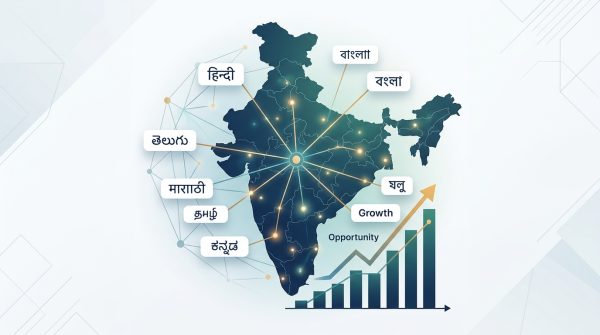
    India isn’t one market. It’s dozens of markets with different languages, cultures, and preferences.

    The .in extension works across all these segments. Whether you’re targeting:

    • Hindi speakers in Uttar Pradesh
    • Tamil speakers in Chennai
    • English speakers in Bangalore
    • Marathi speakers in Mumbai

    The .in domain signals “Indian” without favoring any particular region or language. It’s neutral but local.

    Some startups use subdomains or subdirectories with their .in domain to serve different language versions: hindi.yourstartup.in or yourstartup.in/tamil. This approach combines local credibility with regional customization.

    Payment and regulatory alignment

    Indian payment systems, banking regulations, and compliance requirements are unique. A .in domain signals that you understand and work within this ecosystem.

    Customers looking for:

    • UPI payment options
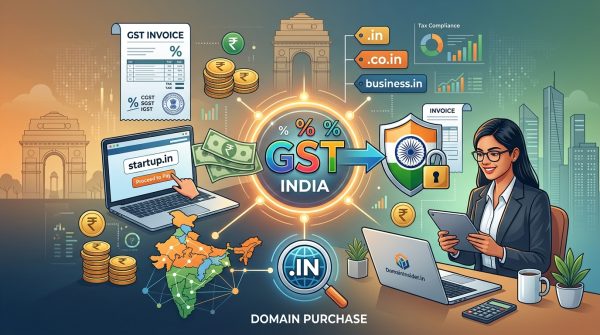
    • GST-compliant invoicing
    • RBI-regulated services
    • Indian rupee pricing

    They expect to find these on .in websites. The domain extension sets the right expectation from the first interaction.

    Building for the next 100 million users

    India’s next wave of internet users will come from smaller cities and rural areas. They’ll be less familiar with English, less exposed to global brands, and more comfortable with local, familiar options.

    For these users, a .in domain will feel more accessible than a .com. It signals that your service is built for them, not adapted from somewhere else.

    “We chose .in because our customers in tier 2 and tier 3 cities told us they trusted local businesses more. The domain extension was a small but meaningful way to show we’re an Indian company serving Indian needs.” – Founder of an edtech startup serving 50+ Indian cities

    Making your decision

    Here’s a step-by-step approach to decide:

    1. Define your primary market: Write down what percentage of your revenue will come from India in the next 3 years. If it’s over 70%, .in makes sense.

    2. Check name availability: Search for your preferred name in both .in and .com. See what’s available and at what price.

    3. Calculate total cost: Include registration, renewal, premium pricing, and the cost of variations you’ll need to protect your brand.

    4. Test customer perception: Ask 10 potential customers which domain sounds more trustworthy for your specific business.

    5. Plan for growth: Consider where you’ll be in 5 years. Will you expand internationally? Will you stay India-focused?

    6. Make the call: Choose the extension that aligns with your market, budget, and brand strategy.

    Your domain is just the beginning

    Choosing between .in and .com matters, but it’s not everything.

    Your product quality, customer service, and execution matter far more than your domain extension. A great company with a .in domain will beat a mediocre company with a premium .com every single time.

    That said, starting with the right domain makes things easier. You’ll spend less money, build trust faster, and align better with your target market.

    For most Indian startups serving Indian customers, .in is the smarter choice. It’s affordable, available, and trusted by the audience you’re trying to reach.

    Pick your domain, register it, and get back to building something people actually want. That’s what will make your startup succeed, regardless of what comes after the dot.