
Expired domains can feel like a goldmine or a minefield depending on who you ask. Some marketers swear by them for instant SEO gains. Others have horror stories about penalties and wasted money. The truth sits somewhere in between, and understanding exactly where can save you thousands of rupees and months of frustration.
Expired domains can offer genuine [SEO value](https://en.wikipedia.org/wiki/Search_engine_optimization) and traffic, but only when chosen carefully. Success depends on verifying backlink quality, checking penalty history, and matching domain relevance to your project. Most investors see positive ROI within 6-12 months if they avoid common red flags and focus on quality over quantity. Budget ₹5,000-₹50,000 for worthwhile domains with real potential.
What makes expired domains attractive to investors
When a domain expires, it doesn’t lose everything overnight. The backlinks pointing to it remain active. Search engines still remember its history. Traffic patterns can persist for months.
This creates an opportunity window.
A domain that previously ranked well might still carry authority signals. If you can acquire it and redirect or rebuild, you inherit some of that strength. This is faster than starting from zero with a fresh registration.
Indian businesses particularly benefit from expired .in domains that already have local recognition. A domain that served a Mumbai-based service for five years carries trust signals that a brand new domain simply cannot replicate.
The cost factor matters too. While premium brandable domains sell for lakhs, many expired domains with decent metrics cost between ₹5,000 and ₹25,000. That price point makes experimentation feasible for small businesses and solo entrepreneurs.
But here’s the reality check: most expired domains are expired for a reason. The previous owner either lost interest, couldn’t monetize, or abandoned a project. Your job is separating diamonds from coal.
Real benefits that actually translate to business value
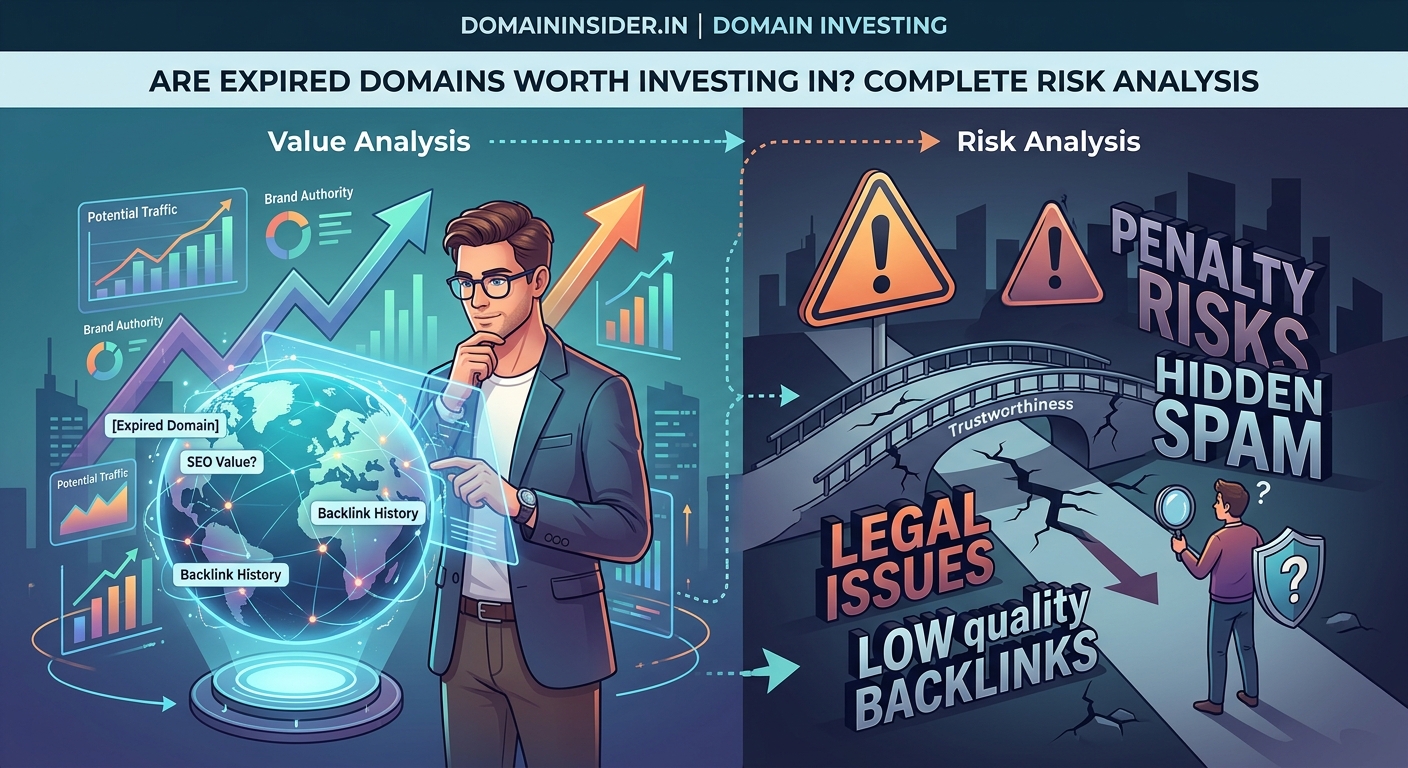
Let me break down what you genuinely gain from a well-chosen expired domain:
Existing backlink profile: Quality backlinks from relevant sites pass authority. A domain with 50 genuine editorial links from Indian news sites or industry blogs gives you a foundation that would take 12-18 months to build organically.
Aged domain authority: Search engines treat older domains with more respect, assuming they’ve earned it. A 7-year-old domain starts with more credibility than a 7-day-old one.
Residual traffic: Some visitors return by habit or bookmark. Others arrive through old references. This traffic is free and immediate.
Brand recognition: If the domain name itself is memorable or keyword-rich, you inherit whatever awareness already exists.
Faster indexing: Established domains get crawled more frequently. Your new content appears in search results faster.
Here’s a practical example. A friend purchased an expired domain about organic farming in Kerala for ₹12,000. It had 80 backlinks from agriculture forums and local news sites. Within three months, his new content ranked on page one for “organic farming Kerala” without any additional link building. The domain’s history did the heavy lifting.
The risks nobody talks about until it’s too late
Now for the uncomfortable part. Expired domains carry baggage you cannot always see upfront.
Google penalties: If the previous owner used spammy tactics, the domain might carry a manual penalty. These don’t always show up in standard checks. Your site inherits the punishment.
Toxic backlink profiles: Thousands of links from sketchy directories or foreign gambling sites hurt more than help. Cleaning these takes months and often fails.
Trademark conflicts: The domain name might infringe on someone’s trademark. You could face legal notices or lose the domain entirely.
Irrelevant history: A domain that sold shoes cannot easily transition to financial services. The backlink context confuses search engines and visitors.
Dropped for good reason: Maybe the niche died. Maybe the business model failed. Maybe competition crushed it. You might be buying someone else’s failure.
I’ve seen marketers spend ₹30,000 on a domain only to discover it was penalized for selling fake products. Six months of work produced zero rankings. The domain was worthless.
Before you buy anything, run these checks yourself or hire someone who knows what they’re doing. Skipping due diligence is the fastest way to waste money.
How to evaluate if a specific expired domain is worth buying

Here’s your step-by-step verification process:
-
Check the Wayback Machine to see what content existed previously. Look for quality, relevance, and red flags like adult content or pharma spam.
-
Analyze the backlink profile using tools like Ahrefs, Moz, or SEMrush. Focus on referring domain quality, not quantity. Ten links from reputable Indian publications beat 1,000 links from random blogs.
-
Search for the domain in Google using “site:domainname.com” to see if it’s indexed and check for any warnings.
-
Look up the domain in Google Search Console if possible, or request access from the auction platform. Check for manual actions or security issues.
-
Verify trademark status using the Indian trademark database. Make sure the name doesn’t conflict with existing brands.
-
Assess traffic potential using estimated metrics. Understand that most tools overestimate, so cut projections by 50%.
-
Calculate the realistic ROI timeline. Factor in purchase cost, development time, and marketing budget needed to make it profitable.
This process takes 2-4 hours per domain. Sounds like a lot? It is. But it’s far less painful than losing ₹20,000 on a dud.
The best expired domain investors spend 90% of their time researching and only 10% buying. Amateurs reverse that ratio and wonder why they fail.
Cost breakdown and realistic return expectations
Let’s talk numbers because vague promises don’t pay bills.
| Investment Component | Typical Cost Range | Notes |
|---|---|---|
| Domain purchase | ₹5,000 – ₹50,000 | Quality domains with real metrics cost more |
| Backlink audit tools | ₹2,000 – ₹8,000/month | Essential for proper due diligence |
| Content development | ₹10,000 – ₹50,000 | Depends on niche and content volume |
| Technical setup | ₹3,000 – ₹15,000 | Hosting, SSL, redirects, cleanup |
| Ongoing maintenance | ₹5,000 – ₹20,000/month | Content updates, link monitoring |
Total first-year investment: ₹50,000 – ₹2,00,000 for a serious project.
Now for returns. A well-chosen expired domain in a monetizable niche can generate:
- Affiliate income: ₹15,000 – ₹1,00,000/month after 6 months
- Ad revenue: ₹5,000 – ₹40,000/month depending on traffic
- Lead generation value: ₹20,000 – ₹2,00,000/month for high-ticket services
- Resale profit: 2x – 10x purchase price if improved and flipped
The catch? Only 20-30% of expired domain projects hit these numbers. Most break even or lose money because of poor selection or execution.
Your best chance of success comes from choosing domains in niches you already understand. If you run a digital marketing agency in Pune, an expired domain about marketing services in Maharashtra makes sense. You know the audience, the keywords, and how to monetize.
Buying random domains because metrics look good is gambling, not investing.
Common mistakes that turn good domains into bad investments
Smart people make dumb mistakes with expired domains. Here are the patterns I see repeatedly:
Buying based on metrics alone: High domain authority means nothing if the links come from irrelevant or spammy sources. Context matters more than numbers.
Ignoring niche relevance: You cannot force a domain about travel to work for a SaaS product. Search engines understand topical authority.
Skipping penalty checks: A manual penalty can hide for months. By the time you discover it, you’ve wasted money and time.
Overpaying at auctions: Auction fever is real. Set a maximum price before bidding and stick to it. Emotional purchases rarely work out.
Neglecting content strategy: Buying the domain is 20% of the work. You still need quality content, proper redirects, and ongoing optimization.
Expecting instant results: Even great expired domains need 3-6 months to show meaningful improvements. Patience is mandatory.
Buying too many too fast: New investors often grab 10 domains hoping one works. Better to buy one quality domain and execute properly.
I learned this the hard way. My first expired domain purchase looked perfect on paper. Strong backlinks, aged history, relevant niche. But I didn’t check for trademark issues. Three months in, I received a legal notice. The domain became worthless overnight.
That ₹18,000 lesson taught me to verify everything before buying anything.
When expired domains make sense for your specific situation
Not everyone should buy expired domains. Here’s when it makes strategic sense:
You’re launching a new project in a competitive niche: Starting from zero takes years. An expired domain with relevant authority cuts that timeline significantly.
You have SEO experience: Understanding technical SEO, link quality, and content strategy is essential. Beginners should start with fresh domains and learn fundamentals first.
You can afford the risk: Only invest money you can lose without stress. Expired domains are speculative assets, not guaranteed wins.
You’re building a portfolio: Domain flipping in India works when you buy multiple domains, improve them, and sell for profit. This requires capital and expertise.
You need faster results: If you’re testing a business idea and need traction within 6 months, a good expired domain accelerates validation.
You understand the niche deeply: Your existing knowledge lets you evaluate relevance and monetization potential accurately.
For most small business owners, a fresh domain with a clear brand makes more sense. Expired domains suit marketers, agencies, and entrepreneurs who understand the technical side and can execute properly.
If you’re just starting your online presence, focus on building something solid from scratch. Learn SEO fundamentals. Create quality content. Build genuine relationships. Once you understand how domains gain value, then consider expired options.
Practical alternatives worth considering
Before you commit to an expired domain, consider these options:
Premium aged domains: Some registrars sell aged domains that never expired. These cost more but carry less risk. You get age benefits without penalty concerns.
Exact match domains in new extensions: A keyword-rich domain in .in or a relevant new extension can work well. Choosing the right domain extension matters for local businesses.
Building authority from scratch: Slower but safer. You control the entire history and avoid inherited problems. For long-term brands, this often makes more sense.
Acquiring active sites: Buying an operating website with traffic and revenue provides immediate value. More expensive but less risky than expired domains.
Strategic redirects: If you already own domains, properly redirecting them can consolidate authority without buying more.
Each approach has trade-offs. Your choice depends on budget, timeline, risk tolerance, and technical capability.
Tools and resources for smart domain evaluation
You cannot make informed decisions without proper tools. Here’s what actually helps:
- Wayback Machine: Free historical snapshots of any domain. Essential for understanding previous content and usage.
- Ahrefs or SEMrush: Paid tools for comprehensive backlink analysis. Worth the investment if you’re serious about expired domains.
- Google Search Console: Request historical data if available through auction platforms. Shows penalty history and search performance.
- Moz Domain Authority: Free basic metrics. Useful for initial screening but not sufficient alone.
- Majestic SEO: Specialized in backlink analysis. Trust Flow and Citation Flow metrics help identify quality.
For Indian domains specifically, check local SEO factors and regional backlink patterns. A domain with strong links from Indian news sites, educational institutions, or government pages carries more local authority.
Free tools to check domain value can help with initial screening, but invest in premium tools before making expensive purchases.
Building a smart domain investment strategy
If you decide expired domains fit your goals, approach them strategically:
Start small: Buy one domain in a niche you know. Learn the process. Measure results. Then scale.
Set clear criteria: Define exactly what metrics matter for your projects. Create a checklist and stick to it.
Budget realistically: Account for purchase price, tools, development, and marketing. Most failures come from underfunding execution.
Track everything: Document what works and what doesn’t. Your data becomes your competitive advantage.
Network with experienced investors: Join domain forums and groups. Learn from people who’ve made mistakes so you don’t repeat them.
Stay updated on algorithm changes: Search engine updates affect expired domain value. What worked last year might not work today.
Consider professional help: If you’re investing serious money, hire an expert for due diligence. A ₹5,000 consultation can save you ₹50,000 in mistakes.
Building a profitable domain portfolio requires patience and discipline. Treat it like any other business investment, not a lottery ticket.
Making your final decision with confidence
So, are expired domains worth it? The honest answer: it depends entirely on your situation, skills, and selection process.
For experienced SEO professionals and digital marketers who understand link quality, can spot penalties, and know how to execute content strategy, expired domains offer genuine advantages. The time savings and authority boost justify the investment when done correctly.
For business owners without technical expertise, the risks often outweigh benefits. You’re better off investing that money in quality content and marketing for a fresh domain you fully control.
For investors and domain flippers, expired domains represent opportunities for profit, but only with proper due diligence and realistic expectations about success rates.
The key differentiator is knowledge. If you’re willing to learn, invest time in research, and approach expired domains as a skill to develop rather than a shortcut to success, they can absolutely work for you.
Start with education before speculation. Understand what makes domains valuable. Learn to spot quality backlinks. Practice evaluating domains before buying any. When you’re confident in your ability to separate good from bad, then start small and grow strategically.
Your first expired domain purchase should be a learning experience, not a bet-the-farm investment. Keep expectations realistic, budget conservatively, and focus on building genuine value rather than gaming systems.
The domains worth buying are the ones you’d be proud to build something meaningful on, not just flip for profit. When you find those, and verify they’re clean, relevant, and fairly priced, then yes, they’re absolutely worth it.
