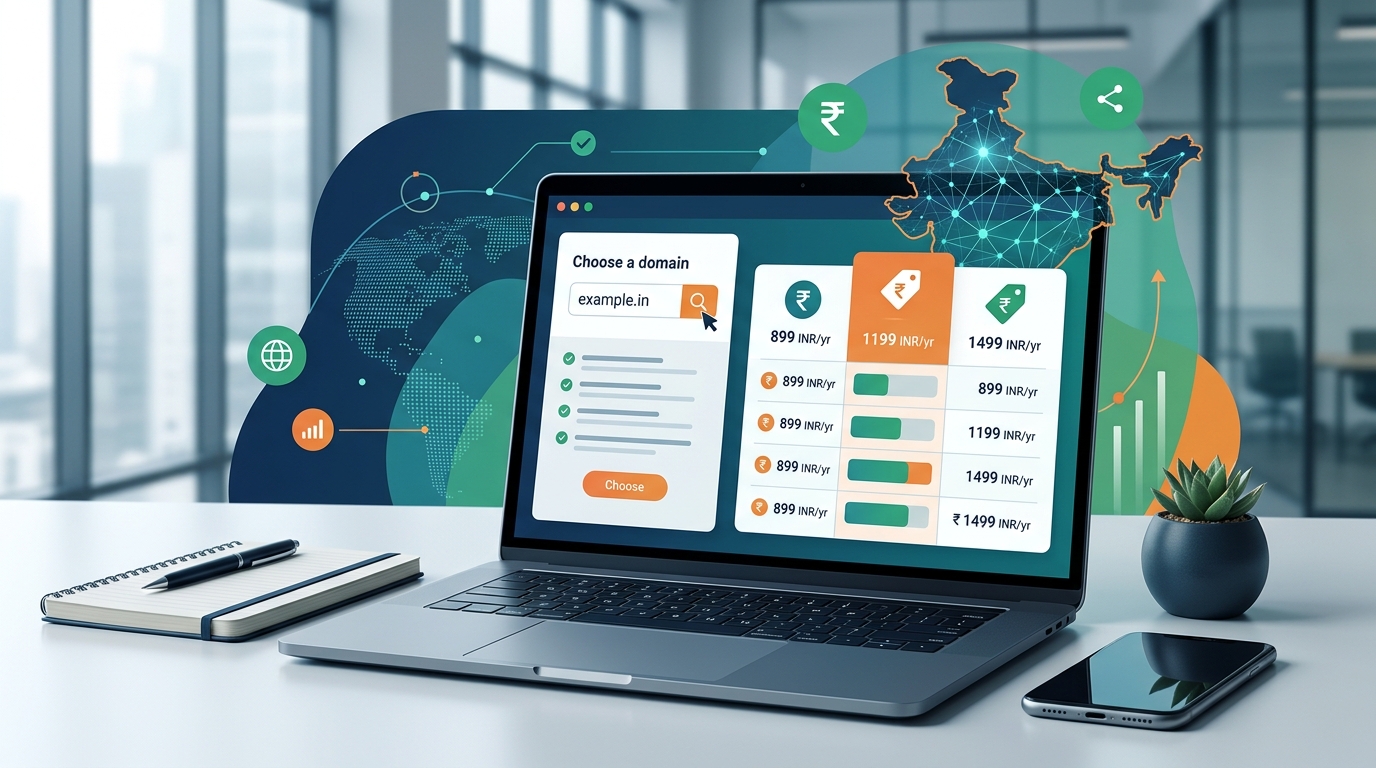
Starting your online business in India begins with one critical decision: choosing and registering the right domain name. Your domain is your digital address, the first thing customers type to find you, and a permanent part of your brand identity. Getting it right matters more than you think.
Registering a domain in India takes less than 10 minutes. Choose a registrar, search for availability, pick your extension (.in, .com, or .co.in), complete payment, and verify your details. Prices start from ₹99 per year. Auto-renewal and privacy protection are optional but recommended. Your domain goes live immediately after payment confirmation.
Understanding Domain Names and Extensions
A domain name is the web address people type to visit your site. Think of it as your storefront location on the internet.
Domain extensions (also called TLDs) come after the dot. Each serves a different purpose.
The .com extension remains the most recognised globally. It works for any business type.
The .in extension signals Indian identity. Local customers trust it. Search engines may prioritise it for Indian searches.
The .co.in extension specifically targets commercial entities in India. Banks, retailers, and service providers often prefer it.
Choosing between these options depends on your audience. If you sell primarily to Indians, choosing between .co.in or .in domains affects your brand perception.
New extensions like .store, .tech, and .online offer creative alternatives. They cost more but provide exact-match branding opportunities.
Choosing the Perfect Domain Name
Your domain name should be memorable, short, and relevant to your business.
Keep it under 15 characters. Shorter names are easier to remember and type.
Avoid numbers and hyphens. They confuse people when spoken aloud.
Make it pronounceable. If customers can’t say it, they won’t remember it.
Check trademark conflicts before committing. The last thing you need is a legal notice after building your brand.
Test it with friends. Say it out loud. Text it. See if people get it right the first time.
Consider future expansion. A name like “MumbaiShoes.in” limits you if you later want to sell accessories or expand to other cities.
Brand names work better than generic keywords. “Zomato” beats “FoodDeliveryMumbai” every time.
Step-by-Step Registration Process
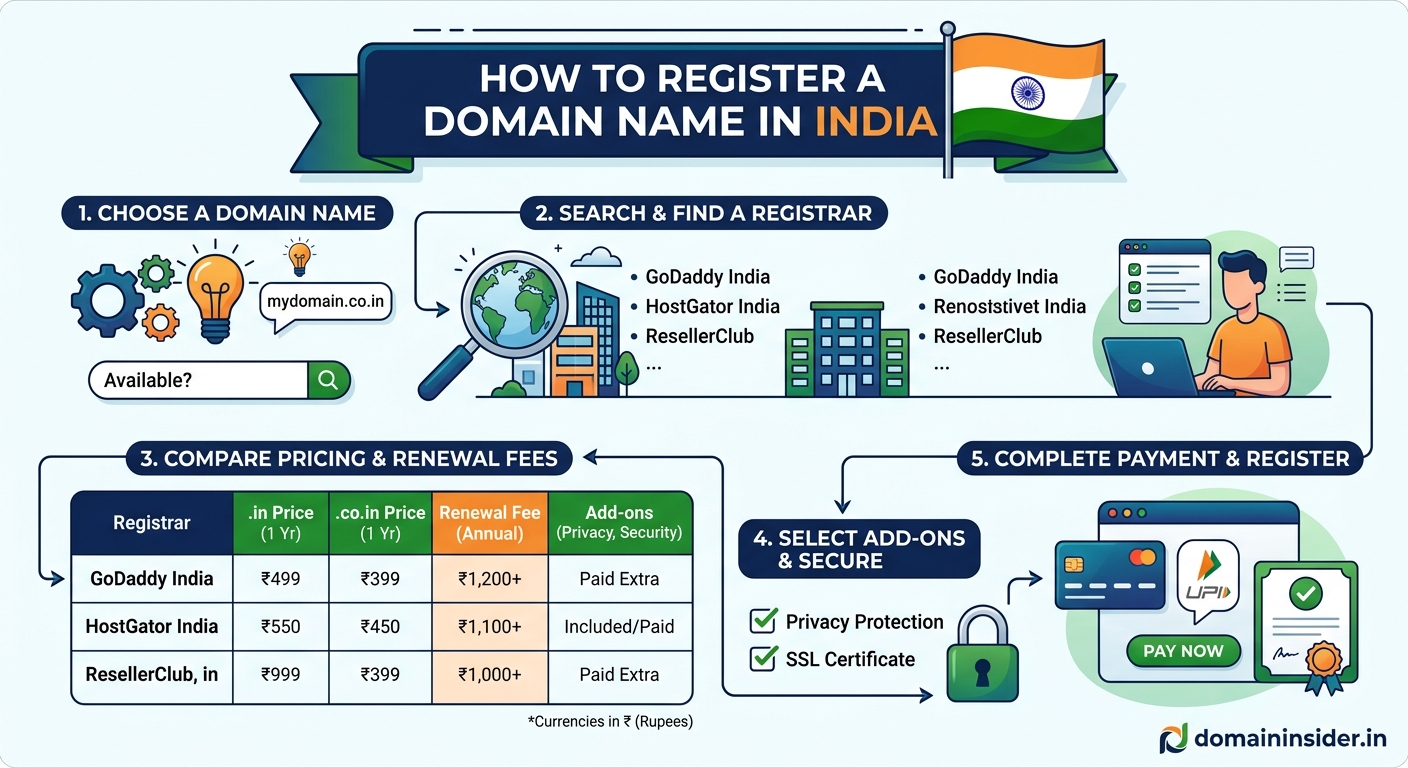
Registering your domain follows a simple sequence. Most registrars use similar workflows.
- Visit a domain registrar website (GoDaddy, BigRock, Hostinger, or Namecheap).
- Use the search bar to check if your desired name is available.
- Select your preferred extension from available options.
- Add the domain to your cart and choose registration duration (1 to 10 years).
- Create an account or log in if you already have one.
- Enter accurate contact information (name, address, phone, email).
- Select additional services like privacy protection or email hosting.
- Proceed to payment and choose your preferred method.
- Complete payment using credit card, debit card, UPI, or net banking.
- Verify your email address by clicking the confirmation link sent to your inbox.
- Access your domain dashboard to configure DNS settings.
The entire process takes 5 to 10 minutes. Your domain becomes active immediately after payment confirmation.
Comparing Popular Indian Registrars
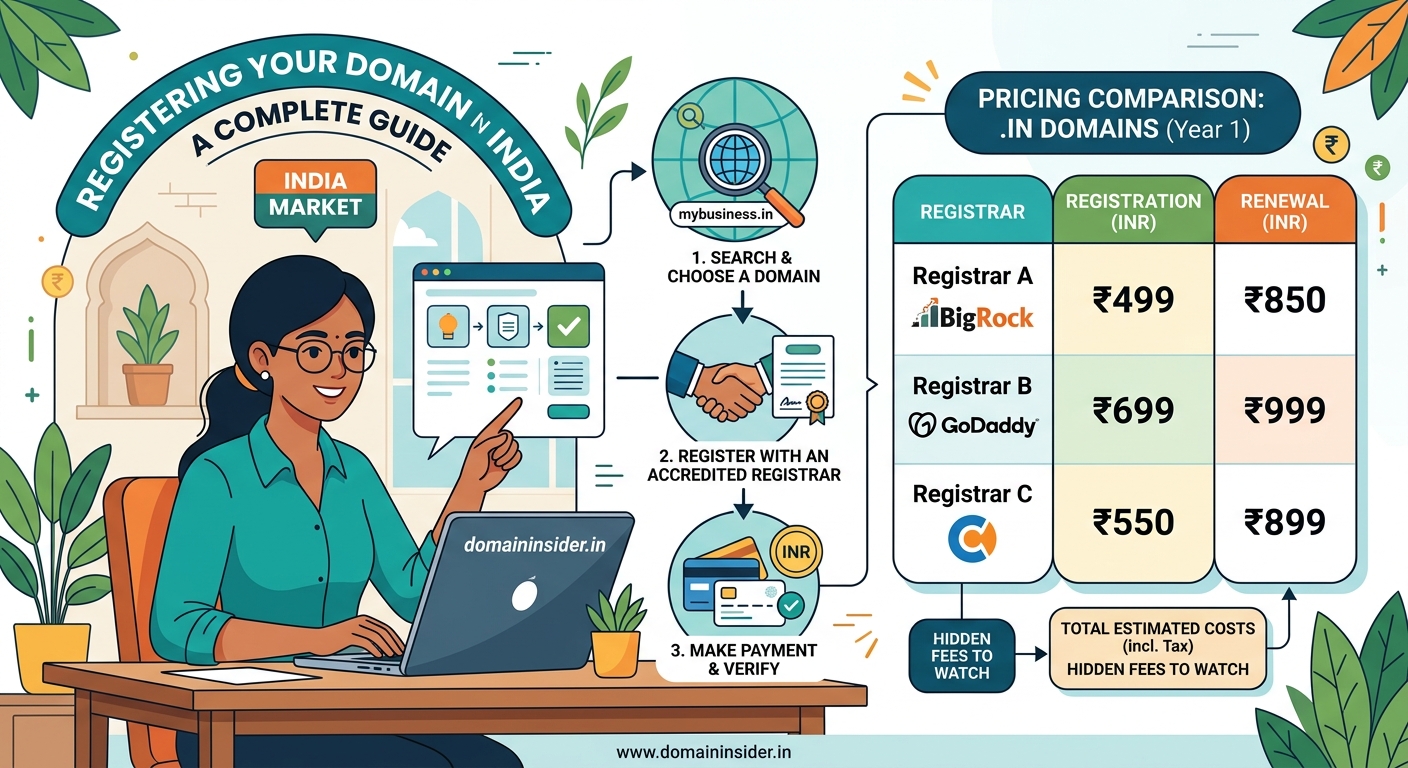
Different registrars offer varying prices, features, and support quality. Here’s how major players compare:
| Registrar | .com Price (Year 1) | .in Price (Year 1) | Free Email | Customer Support | Best For |
|---|---|---|---|---|---|
| GoDaddy | ₹699 | ₹399 | No | 24/7 Phone | Beginners needing hand-holding |
| BigRock | ₹649 | ₹299 | Yes (1 account) | Phone + Chat | Budget-conscious buyers |
| Hostinger | ₹599 | ₹249 | No | Chat only | Tech-savvy users |
| Namecheap | ₹749 | ₹349 | Yes (2 months) | Ticket + Chat | Privacy-focused buyers |
| ResellerClub | ₹699 | ₹199 | No | Email + Chat | Bulk buyers |
Renewal prices typically increase after the first year. Always check the renewal rate before committing.
Some registrars bundle domains with hosting. These packages save money if you need both services.
Customer support quality matters when problems arise. Phone support resolves issues faster than email tickets.
Essential Settings After Registration
Registering the domain is just the beginning. Proper configuration ensures everything works correctly.
DNS Settings: Point your domain to your hosting server. Your hosting provider gives you nameserver addresses. Add these in your registrar’s DNS management panel.
Email Configuration: Set up professional email addresses using your domain. Most registrars offer email hosting as an add-on service.
Privacy Protection: Enable WHOIS privacy to hide your personal contact details from public databases. This reduces spam and protects your information.
Auto-Renewal: Turn on automatic renewal to prevent accidental expiration. Losing a domain after building a business around it creates massive problems.
Contact Information: Keep your email and phone number current. Registrars send renewal reminders and security alerts to these addresses.
Security Settings: Enable two-factor authentication on your registrar account. Add a registrar lock to prevent unauthorised transfers.
Understanding what happens when someone types your domain helps you troubleshoot configuration issues.
Pricing Breakdown and Hidden Costs
Domain registration appears cheap initially. Hidden costs add up over time.
First-year promotional prices lure customers in. Renewal rates jump 50% to 200% higher.
Privacy protection costs ₹200 to ₹500 extra per year. Some registrars include it free.
Email hosting adds ₹500 to ₹2,000 annually depending on storage and features.
SSL certificates cost ₹1,000 to ₹5,000 per year. Many hosting providers now include basic SSL free.
Premium domains (short, memorable names already registered) cost thousands or lakhs. If you’re interested in premium domains, learning how to negotiate domain prices saves substantial money.
Transfer fees apply when moving domains between registrars. Most charge ₹500 to ₹1,000.
Redemption fees kick in if your domain expires and enters a grace period. These range from ₹2,000 to ₹5,000.
Budget for the full renewal price, not the promotional rate. This prevents surprises when your first year ends.
Common Mistakes to Avoid
New domain buyers make predictable errors. Learning from others’ mistakes saves headaches.
Choosing complex names: Domains with hyphens, numbers, or odd spellings confuse customers. Keep it simple.
Ignoring trademark checks: Registering a name similar to an existing brand invites legal trouble. Search the trademark database first.
Using personal email addresses: Registering with temporary or personal emails causes problems during recovery. Use a permanent business email.
Skipping privacy protection: Your phone number and address become public without WHOIS privacy. Expect spam calls and emails.
Forgetting to renew: Expired domains get snapped up by squatters. Set calendar reminders and enable auto-renewal.
Buying from resellers: Third-party resellers add markup and complicate management. Register directly with established registrars.
Neglecting backups: If you lose access to your registrar account, proving ownership becomes difficult. Keep registration emails and payment receipts.
“The biggest mistake I see is people choosing cute, clever names that nobody can spell or remember. Your domain should be so obvious that customers guess it correctly on the first try.” – Rajesh Kumar, Digital Marketing Consultant
Legal Requirements and Documentation
Domain registration in India requires accurate personal or business information.
Individual registrants need:
– Full legal name
– Complete postal address
– Valid phone number
– Active email address
– PAN card details (for .in domains)
Business registrants additionally need:
– Company registration number
– GST number (if applicable)
– Authorised signatory details
False information violates registrar terms and can result in domain suspension.
The .in registry (NIXI) requires Indian presence for .in and .co.in domains. Either the registrant must be Indian, or the domain must be used for India-related purposes.
Keep registration documents accessible. You’ll need them for:
– Domain transfers
– Ownership disputes
– Registrar verification requests
– Legal compliance audits
Protecting Your Domain Investment
Domains represent valuable business assets. Proper protection prevents loss and theft.
Enable registrar lock immediately after registration. This prevents unauthorised transfers to other registrars.
Use strong, unique passwords for your registrar account. Password managers help generate and store complex credentials.
Set up two-factor authentication. This adds a second verification step beyond passwords.
Monitor expiration dates closely. Set reminders 60 days, 30 days, and 7 days before renewal.
Consider registering multiple extensions of your brand name. This prevents competitors from using similar domains.
If you’re building a portfolio, understanding how to build a profitable domain portfolio helps maximise returns.
Keep contact information current. Registrars send critical security alerts to registered email addresses.
Review your account activity regularly. Unusual login attempts or setting changes indicate potential security breaches.
When to Consider Premium or Expired Domains
Sometimes the perfect domain is already registered. You have options.
Premium domains are short, memorable names held by registrars or investors. They cost more but offer instant brand recognition.
Prices range from ₹10,000 to several lakhs depending on demand and quality.
Evaluate whether the premium justifies the cost. A great domain accelerates brand building but doesn’t guarantee success.
Expired domains become available when previous owners forget to renew. These sometimes carry existing traffic and backlinks.
Before buying expired domains, research their history. Check for spam penalties, trademark issues, or questionable content associations.
Tools exist to check domain name value before making premium purchases.
Understanding the risks and rewards of expired domains prevents costly mistakes.
Backorder services let you automatically purchase domains the moment they become available. This works well for competitive names.
Moving Forward with Your Online Presence
Registering your domain is the first step in building your online business. The name you choose today becomes part of your brand identity for years.
Take time choosing wisely. A good domain makes marketing easier and builds customer trust naturally.
Don’t overthink it either. Waiting for the perfect name means delaying your business launch. Sometimes good enough beats perfect.
Register for multiple years if you’re committed to the business. This saves money and eliminates renewal hassles.
Why .in domains are gaining popularity among Indian startups shows the growing preference for local identity.
Start building your website immediately after registration. An unused domain provides zero value.
Your domain represents your business address in the digital world. Choose it carefully, protect it diligently, and build something remarkable around it.
