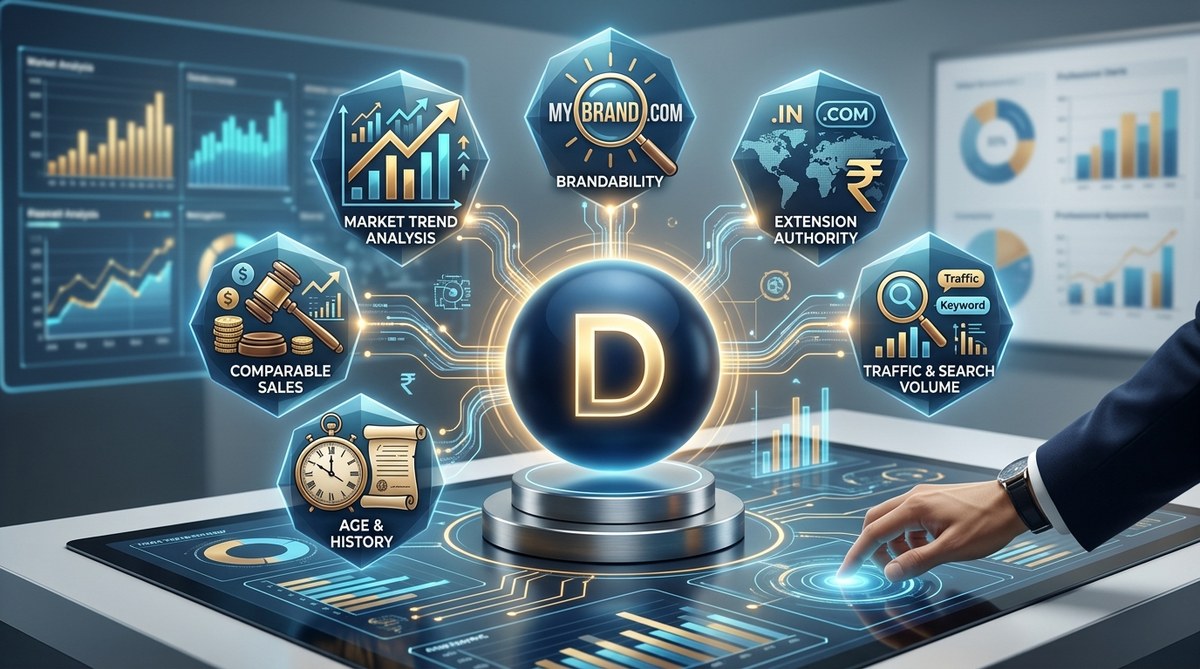
When it comes to buying or selling a domain, understanding what makes a domain valuable can feel overwhelming. Professional appraisers don’t guess their way to a fair price. Instead, they analyze specific factors that influence a domain’s worth. Knowing these hidden appraisal factors can help digital entrepreneurs, investors, and website owners make smarter decisions. Whether you are trying to acquire a premium domain or sell one for maximum profit, grasping these elements is a game changer.
[Domain name appraisal factors include length, keyword relevance, extension, age, backlinks, and market trends](https://en.wikipedia.org/wiki/Domain_name). These elements collectively determine a domain’s true value in the Indian market.
Understanding what influences domain value requires examining several key factors. These appraisal factors are the building blocks that professional appraisers use to evaluate digital assets. Let’s explore each of these in detail and see how they impact the overall valuation.
The Core Factors That Influence Domain Value
1. Domain Length and Memorability
Shorter domains are generally more valuable. They are easy to remember and quick to type. Think of iconic brands like google.com or facebook.com. Their brevity makes them highly desirable. In India, shorter domains also stand out in advertising campaigns and branding efforts.
Longer domains tend to be less attractive. They are harder to recall and more prone to typos. However, some longer domains with strong keywords can still hold significant value, especially if they are highly relevant to a niche industry.
2. Keyword Relevance and SEO Potential
Keywords are the backbone of domain valuation. Domains containing popular keywords relevant to a niche can attract organic traffic. For instance, a domain like bestdeals.in that targets a high-search-volume term in Indian e-commerce can fetch a premium.
Search engine optimization (SEO) factors heavily influence value. Domains with keywords that align with trending industries or queries tend to be more sought after. This relevance boosts both traffic potential and market desirability.
3. Domain Extension (TLD)
The top-level domain (TLD) or extension plays a crucial role. In India, .in and .co.in are popular for local businesses, while .com remains the most authoritative globally. Premium extensions like .ai, .app, or .tech are gaining traction among startups.
A .com domain often commands higher value because of its global recognition and trustworthiness. However, if a local business targets the Indian market, a .in domain may be more relevant and, therefore, more valuable locally.
4. Age of the Domain
Older domains generally carry more trust and authority. Search engines tend to favor established domains with a history of consistent activity. Domain age can influence perceived credibility and backlinks.
In India, a domain that has been active for several years may be seen as more trustworthy. It also implies stability, which is attractive for brand building.
5. Backlink Profile and Domain Authority
Backlinks from reputable websites increase a domain’s authority. A strong backlink profile indicates popularity and relevance. Appraisers analyze backlinks to assess the domain’s reputation.
For example, a domain with backlinks from Indian news portals or industry-specific sites can command a higher price. Backlinks also help in SEO, making the domain more attractive for future growth.
6. Market Trends and Comparables
Market trends dictate what buyers are willing to pay. If similar domains have been sold recently, their prices set benchmarks. Appraisers compare your domain with similar ones to gauge its market value.
The Indian domain market is dynamic. Certain industries like fintech, e-commerce, and SaaS are hot, pushing up the valuation of related domains. Staying updated on recent sales helps in realistic pricing.
7. Brandability and Uniqueness
A domain that is easy to brand and stands out can be highly valuable. Brandability considers how catchy, unique, and relevant the domain sounds. A memorable domain can help a business establish a strong identity.
In India, creative, short, and meaningful domains tend to perform well. They can be used across various marketing channels and resonate with the target audience.
8. Legal and Trademark Considerations
Legal issues like trademarks can greatly affect a domain’s value. Domains infringing on trademarks risk legal disputes and devaluation. Professional appraisers verify the legal status of a domain before appraisal.
A domain free of legal encumbrances is more appealing to buyers. It reduces risk and ensures a smoother transfer process.
How Professionals Appraise Domains
1. Analyzing the Domain’s Technical Profile
The process begins with assessing technical elements like backlinks, age, and traffic. Tools like SEMrush or Ahrefs provide insights into backlinks and traffic estimates. A strong technical profile can boost a domain’s worth.
2. Comparing Market Sales
Looking at recent sales of similar domains helps establish a realistic price range. Platforms like Godaddy Auctions or Sedo showcase actual transactions in India and globally.
3. Evaluating Brand and Niche Relevance
A domain’s relevance to a specific industry or market segment enhances its value. For instance, a domain related to Indian tourism or education can fetch a premium if it aligns with current demand.
4. Considering Domain Extension and Market Trends
Premium extensions and trending keywords influence the valuation. Appraisers stay updated with industry shifts to adjust their estimates accordingly.
5. Using Automated Valuation Tools
Tools like EstiBot or Domaintools provide quick estimates. However, these should be supplemented with manual analysis for accuracy.
6. Verifying Legal and Ownership Status
Ensuring the domain is free of disputes or trademarks is vital. A clean record gives buyers confidence and justifies higher valuation.
Common Mistakes in Domain Appraisal
| Mistake | Explanation |
|---|---|
| Overlooking backlink quality | Backlinks from spammy sites can harm reputation. |
| Ignoring market trends | Failing to consider current demand can lead to undervaluation. |
| Relying solely on automated tools | These tools give rough estimates but miss nuances like brandability. |
| Ignoring legal issues | Domains infringing trademarks risk devaluation or legal trouble. |
| Not considering extension relevance | Extension choice impacts local versus global value. |
“A domain’s true worth hinges on a blend of tangible metrics and market perception. Don’t depend on a single factor or tool. Instead, combine technical analysis, recent sales data, and legal checks for a comprehensive valuation.” — Domain valuation expert in India
Practical Steps to Get Your Domain Appraised
- Gather all relevant data — including backlinks, age, traffic, and legal status.
- Compare recent sales of similar domains in your industry and region.
- Use multiple tools for automated estimates but don’t rely solely on them.
- Assess market demand for your domain’s niche.
- Consult professionals if you want an accurate, detailed appraisal.
How to Maximise Your Domain’s Value
- Improve your domain’s backlink profile by acquiring quality links.
- Keep the domain active and relevant to industry trends.
- Protect your ownership rights by securing trademarks, if applicable.
- Consider renewing your domain well in advance to maintain age and authority.
- Stay aware of market shifts to adjust your pricing expectations accordingly.
Final Words to Keep in Mind
Valuing a domain is both an art and science. It requires understanding technical factors, market dynamics, and legal considerations. By focusing on these appraisal factors, you can confidently determine your domain’s true worth. Whether buying or selling, applying this knowledge helps you make smarter, more profitable decisions. Keep learning and stay updated with industry trends to unlock the full potential of your digital assets.
Harnessing Appraisal Factors for Smart Domain Decisions
Take the time to evaluate your domains carefully. Use the factors discussed here as a checklist. When you understand the secrets behind valuation, you gain confidence in your investments. Remember, every successful digital asset starts with a clear understanding of what makes it valuable. Apply these principles, and your domain journey will become much more rewarding.
