
India’s digital economy is booming, and nowhere is that more visible than in the premium domain market. Cities like Mumbai, Bengaluru, and Delhi are witnessing unprecedented demand for location-specific domains as businesses race to secure their digital real estate. Understanding where this demand concentrates can help you make smarter investment decisions and capture opportunities before they vanish.
Mumbai, Bengaluru, and Delhi NCR lead premium domain demand in India, driven by startup ecosystems, real estate markets, and service industries. Tier-2 cities like Pune, Hyderabad, and Ahmedabad are emerging hotspots. Investors focusing on city-specific domains in high-growth sectors like fintech, edtech, and healthcare can expect strong returns. Understanding local business trends and digital adoption rates is essential for successful domain investing.
Why location matters for premium domains
Geography shapes demand in ways many investors overlook.
A domain like MumbaiProperties.in carries inherent value because Mumbai’s real estate market alone is worth trillions of rupees. Businesses serving local markets need local credibility. That credibility starts with the domain name.
Location-specific domains offer instant recognition. They tell visitors exactly what to expect and where the business operates. This clarity converts better than generic alternatives.
Search engines also reward geographic relevance. Google’s local search algorithms favour domains that match user intent. When someone searches for “Bangalore coworking spaces,” a domain containing “Bangalore” or “Bengaluru” has a natural advantage.
The investment angle is equally compelling. Premium local domains appreciate as their cities grow. A domain tied to a rapidly developing metro can multiply in value as the local economy expands.
Mumbai dominates premium domain transactions
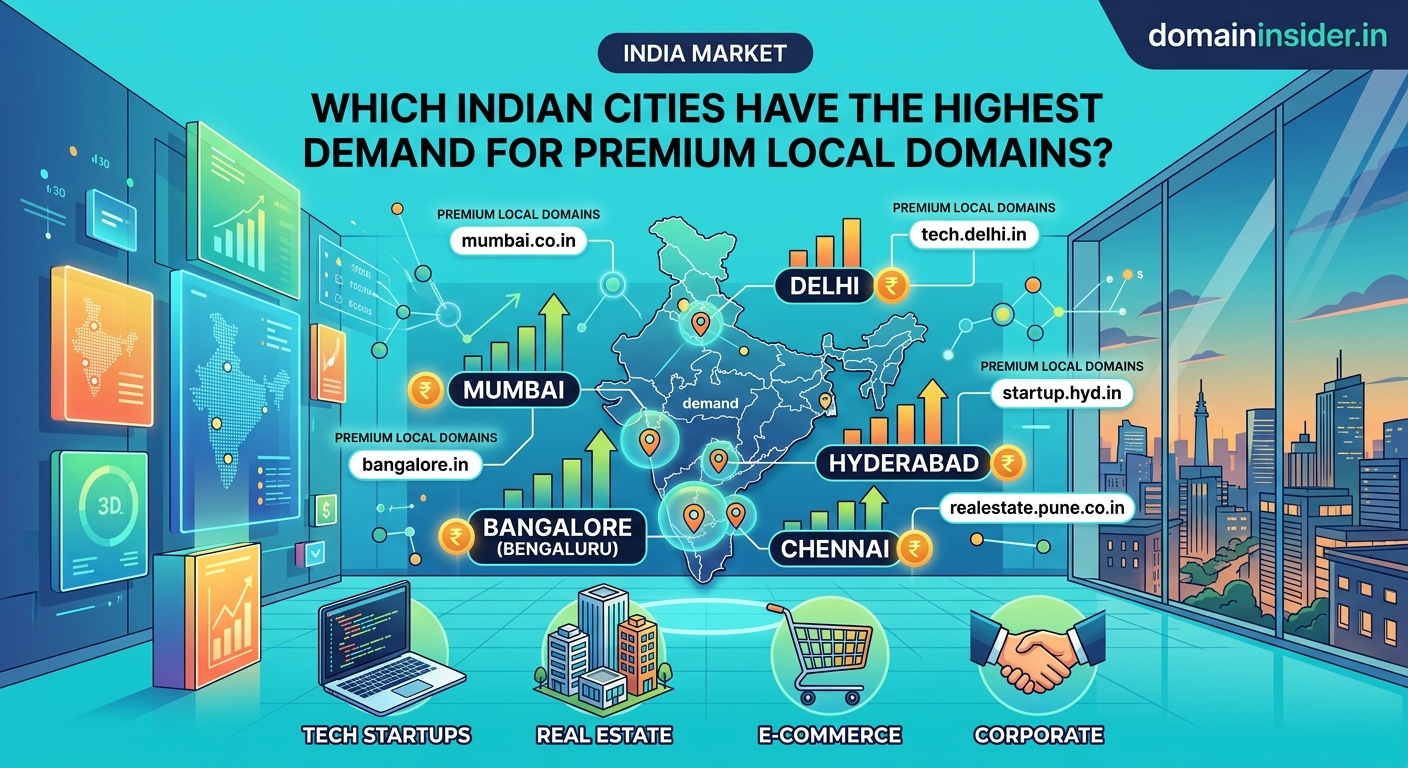
Mumbai consistently ranks first in premium domain demand across India.
The financial capital attracts businesses in banking, finance, media, entertainment, and professional services. Each sector needs strong digital presence, and many are willing to pay premium prices for the right domain.
Real estate domains command particularly high prices in Mumbai. Names related to suburbs like Andheri, Bandra, or Juhu can fetch lakhs because property transactions in these areas run into crores.
Fintech startups cluster in Mumbai’s Lower Parel and BKC districts. They understand brand value and often purchase premium domains even before launching their products. This creates sustained demand for finance-related local domains.
Entertainment and media companies also drive demand. Bollywood production houses, streaming platforms, and digital media agencies all compete for memorable Mumbai-centric domains.
The city’s established investor community means domain sellers find buyers faster here than in other metros. Liquidity is higher, and how to negotiate domain prices like a pro and save thousands becomes essential knowledge for transactions in this market.
Bengaluru’s startup ecosystem fuels domain appetite
Bengaluru’s tech startup scene creates unique domain demand patterns.
The city hosts thousands of SaaS companies, edtech platforms, and enterprise software firms. These businesses prioritize branding from day one, making them active domain buyers.
Investors should focus on domains combining “Bengaluru” or “Bangalore” with tech keywords. Terms like “cloud,” “AI,” “automation,” “learning,” and “software” pair well with the city name.
Whitefield, Electronic City, and Koramangala have become brand names themselves. Domains incorporating these locality names attract businesses targeting those specific markets.
The city’s venture capital ecosystem also influences domain values. Well-funded startups can afford premium domains, and many view them as essential brand assets rather than optional expenses.
Interestingly, Bengaluru shows higher demand for .in domains compared to other cities. Local startups often prefer the Indian extension to emphasize their domestic focus, especially when targeting government contracts or enterprise clients. Understanding why .in domains are becoming the first choice for Indian startups in 2024 helps investors position their portfolios correctly.
Delhi NCR’s diverse economy spreads demand
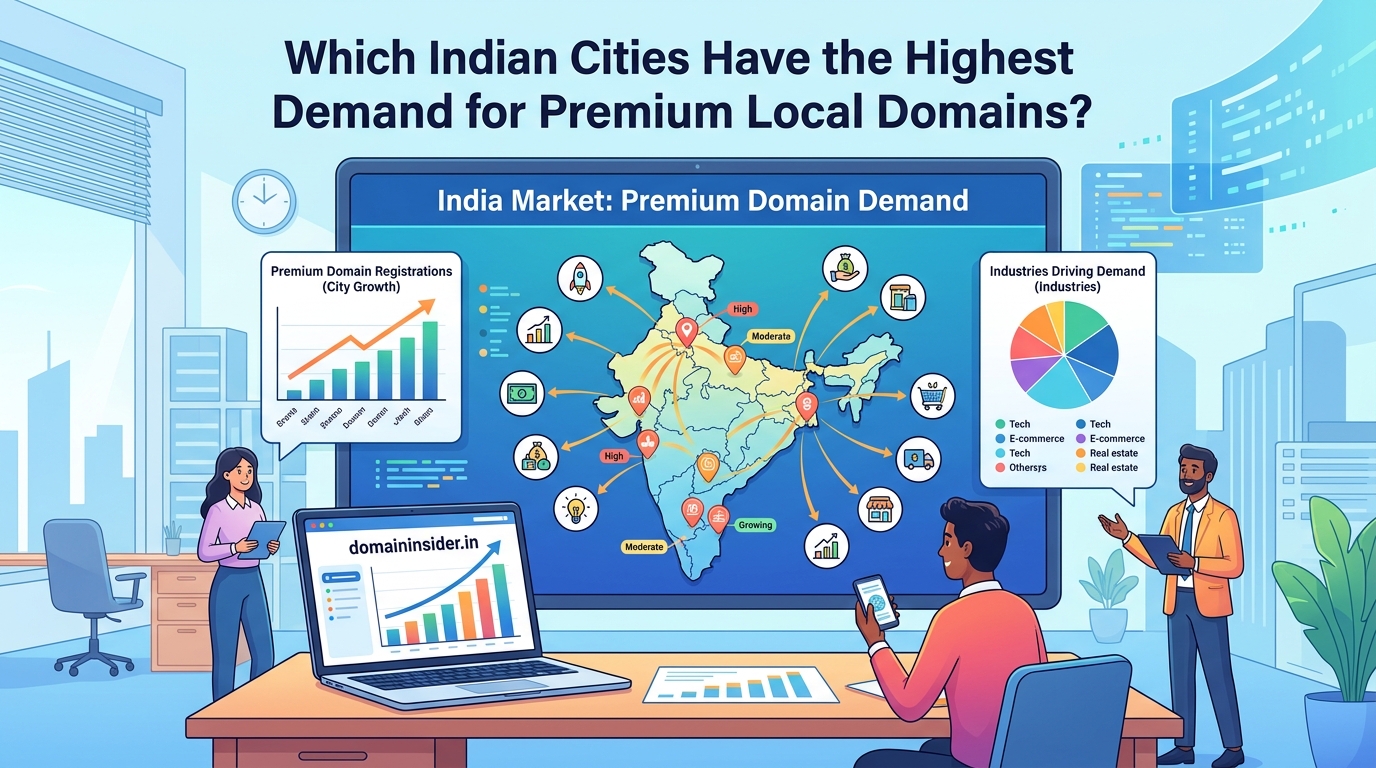
Delhi NCR presents a different demand profile due to its economic diversity.
The region spans multiple cities including Delhi, Gurgaon, Noida, and Faridabad. Each has distinct characteristics that shape domain preferences.
Gurgaon attracts corporate headquarters and multinational companies. Domains related to business services, consulting, and corporate training perform well here.
Noida’s manufacturing and logistics sectors create demand for industrial and supply chain domains. The upcoming Jewar airport is already driving interest in related domain names.
Delhi proper hosts government offices, educational institutions, and tourism businesses. Domains related to these sectors find ready buyers in the capital.
The education sector deserves special attention. Delhi NCR has the highest concentration of coaching centres, universities, and edtech companies in India. Domains combining location with education keywords consistently command premium prices.
Political and policy-related domains also see interest, though this niche requires careful navigation. News portals, policy think tanks, and advocacy groups all operate from Delhi and need relevant domains.
Pune and Hyderabad emerge as tier-2 powerhouses
Tier-2 cities are closing the gap with traditional metros.
Pune’s automotive and manufacturing base creates steady domain demand. The city’s IT sector has grown substantially, with many companies choosing Pune over Bengaluru for cost reasons.
Domains related to education perform exceptionally well in Pune. The city hosts numerous engineering colleges and management institutes, creating demand from coaching centres, student housing providers, and campus recruitment platforms.
Hyderabad’s pharmaceutical and biotech industries drive specialized domain demand. Healthcare domains combining “Hyderabad” with medical terms attract buyers from hospitals, diagnostic centres, and health tech startups.
The city’s growing IT sector, anchored by HITEC City, also fuels demand for tech-related local domains. Many companies view Hyderabad domains as good alternatives to more expensive Bengaluru options.
Both cities benefit from lower domain prices compared to Mumbai or Delhi, making them attractive for investors building portfolios. How to build a profitable domain portfolio with just ₹50,000 becomes more feasible when focusing on these emerging markets.
Understanding demand drivers across Indian cities
Several factors determine premium domain demand in any Indian city.
Startup density correlates strongly with domain purchases. Cities with active startup ecosystems see higher transaction volumes and better prices.
Real estate values influence domain prices. Cities with expensive property markets also have expensive domain markets because businesses operating there can afford premium digital assets.
Industry concentration creates specialized demand. A city known for a particular industry will see higher demand for domains related to that sector.
Digital adoption rates matter more than total population. A smaller city with high internet penetration may show stronger domain demand than a larger city with lower digital engagement.
Local investor awareness affects market maturity. Cities with established domain investor communities see more sophisticated pricing and better market infrastructure.
Here’s how major cities compare across these factors:
| City | Startup Density | Real Estate Premium | Key Industries | Digital Adoption |
|---|---|---|---|---|
| Mumbai | Very High | Highest | Finance, Media, Real Estate | Very High |
| Bengaluru | Highest | High | Tech, SaaS, Edtech | Highest |
| Delhi NCR | High | Very High | Corporate, Education, Government | High |
| Pune | Medium-High | Medium | IT, Automotive, Education | High |
| Hyderabad | Medium-High | Medium | Pharma, IT, Healthcare | High |
| Ahmedabad | Medium | Medium | Manufacturing, Textiles, Startups | Medium-High |
| Chennai | Medium | Medium | Auto, Manufacturing, IT | Medium-High |
Sector-specific demand patterns worth tracking
Different industries show varying appetites for premium local domains.
Real estate consistently pays top prices for city-specific domains. Property developers, brokers, and listing platforms all compete for geographic domains. A domain like DelhiApartments.in or MumbaiVillas.com can command six-figure prices.
Healthcare shows growing demand, accelerated by telemedicine adoption. Hospitals, diagnostic chains, and health tech platforms all seek local credibility through geographic domains.
Education remains a reliable sector for domain investors. Coaching centres, online learning platforms, and skill development companies actively purchase city-specific domains.
Food and hospitality domains perform well in tourist cities. Goa, Jaipur, and Kerala-related domains attract restaurants, hotels, and travel agencies.
Professional services including legal, accounting, and consulting firms prefer city-specific domains to establish local authority. These buyers typically have budgets for premium domains.
Investors should track which sectors are growing in specific cities. A booming fintech scene in Bengaluru creates different opportunities than a growing manufacturing sector in Ahmedabad.
How to identify undervalued city domains
Smart investors spot opportunities before they become obvious.
-
Monitor infrastructure announcements. New metro lines, airports, or IT parks increase demand for related area domains. The Navi Mumbai airport project, for example, makes Navi Mumbai domains more valuable.
-
Track startup funding news. Cities receiving heavy venture capital investment will see increased domain demand within 6-12 months as funded startups build their brands.
-
Watch government policy changes. Special economic zones, smart city initiatives, or industry incentives can transform a city’s domain market.
-
Analyze search trends. Rising search volumes for “city name + industry” indicate growing business interest and potential domain demand.
-
Study demographic shifts. Cities attracting young, educated migrants typically see stronger digital business growth and corresponding domain demand.
Where to find undervalued premium domains in the Indian market provides additional strategies for identifying these opportunities before prices rise.
Common mistakes when investing in city domains
Even experienced investors make predictable errors with location-specific domains.
Overestimating tier-3 city demand is common. While these cities may have potential, current transaction volumes remain low. Domains can sit unsold for years.
Ignoring spelling variations creates problems. Should you buy “Bengaluru” or “Bangalore”? “Mumbai” or “Bombay”? The answer is both if you’re serious, but prioritize the officially recognized name.
Buying too specific locality names limits your market. A domain like “KoramangalaBlock5.in” has a much smaller buyer pool than “KoramanagalaBusiness.in.”
Neglecting mobile search patterns means missing how users actually search. People often search “near me” rather than typing city names, affecting domain value.
Forgetting about language is a critical error. In cities with strong regional identity, local language domains may outperform English ones. Tamil domains in Chennai or Marathi domains in Pune deserve consideration.
Avoiding these pitfalls requires research and local market understanding. 5 common domain name mistakes every first-time buyer should avoid covers broader principles that apply to city-specific investing as well.
Pricing strategies for city-specific premium domains
Valuation requires understanding both domain fundamentals and local market conditions.
Start with comparable sales data. What have similar city domains sold for recently? Marketplace data from Indian domain platforms provides baseline pricing.
Factor in city-specific multipliers. A Mumbai domain typically commands 2-3x the price of an identical domain for a tier-2 city. Bengaluru tech domains often price 1.5-2x higher than similar domains for other sectors.
Consider the target buyer’s economics. A real estate developer working on a ₹500 crore project can afford a ₹5 lakh domain. A local restaurant cannot.
Evaluate the domain’s versatility. Can it serve multiple industries or just one narrow niche? Broader appeal justifies higher prices.
Search volume matters. Domains matching high-volume search queries have measurable traffic potential, increasing their value. 7 free tools to check your domain name value in 2024 can help quantify this aspect.
Set your asking price at 1.5x your target sale price. This gives negotiation room while anchoring buyer expectations high enough to protect your margins. Always be prepared to justify your pricing with data.
Extension choices for Indian city domains
The domain extension significantly affects value and buyer interest.
.in domains work best for most Indian city-specific names. They signal local focus and often rank better for local searches. Businesses targeting Indian customers prefer them.
.com extensions still command premium prices for major metro names. MumbaiJobs.com will always be more valuable than MumbaiJobs.in, but the gap is narrowing.
.co.in domains occupy middle ground. They’re acceptable but not preferred. Use them when .in and .com are unavailable, but expect lower prices. Should you buy a .co.in or .in domain for your Indian business? explores this decision in detail.
New gTLDs like .city, .online, or .tech can work for specific niches but generally command lower prices for Indian city domains. The exception is industry-specific extensions like .realestate or .hospital if they perfectly match the domain name.
Avoid obscure extensions for city domains. A Mumbai domain on .xyz or .club will struggle to find buyers regardless of how good the name is.
Selling strategies for maximum returns
Owning a valuable domain is only half the battle. Selling it profitably requires strategy.
List on multiple marketplaces. Don’t rely on a single platform. Indian marketplaces, international platforms, and direct outreach all play roles. Where should you list your domain? Comparing top marketplaces for Indian sellers helps optimize your listing strategy.
Create a compelling landing page. When potential buyers visit your domain, they should see professional presentation with clear contact information and pricing. Crafting the perfect domain sales page that converts visitors into buyers provides templates and examples.
Target direct outreach. Identify businesses that would benefit from your domain and contact them directly. A Pune education domain becomes more valuable when you reach out to coaching centres expanding in Pune.
Consider instalment options. Premium city domains can command high prices that some buyers struggle to pay upfront. Should you accept instalments when selling premium domains? weighs the risks and rewards.
Time your sale strategically. Sell when your city is in the news positively or when your target industry is booming. A Bengaluru tech domain sells better during a startup funding boom.
Future trends shaping city domain demand
Several emerging trends will reshape the Indian city domain market.
Tier-2 city growth will accelerate. Cities like Jaipur, Chandigarh, Indore, and Kochi are developing robust startup ecosystems. Early investors in these markets will benefit.
Regional language domains will gain traction. As internet users from non-English backgrounds come online, domains in Hindi, Tamil, Bengali, and other languages will find buyers. Are regional language domains the next big opportunity in India? examines this shift.
Hyperlocal business models are expanding. Domains targeting specific neighbourhoods or suburbs within major cities will see increased demand as businesses focus on smaller geographic areas.
Government digital initiatives like smart cities and digital India create opportunities. Cities receiving government investment in digital infrastructure typically see corresponding growth in domain demand.
Remote work redistribution is changing where businesses operate. As companies embrace remote work, they’re establishing presence in multiple cities, creating demand for city-specific domains across more locations.
Building a balanced city domain portfolio
Diversification matters as much in domain investing as in traditional investing.
Allocate across city tiers. Put 50% of your budget in tier-1 cities (Mumbai, Delhi, Bengaluru) for stability and liquidity. Invest 30% in tier-2 cities (Pune, Hyderabad, Ahmedabad) for growth potential. Reserve 20% for speculative tier-3 bets.
Diversify across sectors. Don’t put everything in real estate domains or tech domains. Spread across healthcare, education, services, and commerce.
Mix holding periods. Some domains you’ll flip within months. Others you’ll hold for years as the city develops. Plan your portfolio accordingly.
Balance extensions. Own both .in and .com versions of your best names if possible. This prevents competition and gives pricing flexibility.
Consider domain age and history. How to value expired domains with existing backlinks becomes relevant when building a portfolio that includes aged city domains with SEO value.
The following distribution works well for a ₹2 lakh portfolio:
- Mumbai/Delhi/Bengaluru premium names: ₹1,00,000
- Pune/Hyderabad/Ahmedabad growth plays: ₹60,000
- Tier-3 city speculation: ₹40,000
Risk management for city domain investors
Every investment carries risks. City domains are no exception.
Economic downturns affect premium domain sales. During recessions, businesses cut discretionary spending, and domains become harder to sell. Maintain enough liquidity to hold through down cycles.
City-specific risks include natural disasters, political instability, or economic decline. A city that loses major employers may see domain values drop.
Regulatory changes can impact domain values. New rules around domain ownership, content regulations, or digital business licensing could affect specific domains.
Technology shifts might reduce domain importance. If search behaviour changes dramatically or new technologies replace traditional websites, domain values could suffer.
Competition from new extensions continues. As more domain extensions launch, they fragment the market and potentially reduce premium pricing power.
Mitigate these risks through diversification, research, and maintaining realistic expectations. 7 market indicators every domain investor should monitor in 2024 helps track warning signs.
Tax implications for Indian domain investors
Understanding tax obligations prevents unpleasant surprises.
Domain sales profits are typically taxed as capital gains. Short-term gains (domains held under 36 months) are taxed at your income tax rate. Long-term gains receive preferential treatment.
GST applies to domain transactions in India. When you sell a domain, you may need to collect and remit GST depending on transaction structure and buyer location. GST and domain purchases: what Indian buyers need to know about taxes clarifies these obligations.
Maintain detailed records of all purchases, holding costs, and sales. Annual renewal fees can be deducted from gains, reducing your tax burden.
Consider forming a business entity if you’re investing seriously. This can provide tax advantages and professional credibility when dealing with corporate buyers.
Consult a tax professional familiar with digital asset transactions. Domain investing is still relatively new in India, and tax treatment can be complex.
Your next steps in city domain investing
The Indian city domain market offers genuine opportunities for informed investors.
Start by researching cities you understand. Local knowledge provides an edge that outsiders lack. If you live in Pune, you’ll spot Pune domain opportunities faster than someone in Mumbai.
Build relationships with local businesses. Understanding their needs, budgets, and decision-making processes helps you acquire and price domains appropriately.
Stay informed about urban development. Follow news about infrastructure projects, policy changes, and economic trends in your target cities.
Start small and learn. Buy a few moderately priced city domains, attempt to sell them, and learn from the experience. Domain flipping in India: real case studies of 10x returns shows what’s possible with the right approach.
The cities driving India’s economic growth need digital infrastructure to match. Premium local domains are part of that infrastructure, and smart investors who position themselves correctly can build valuable portfolios while helping businesses establish their digital presence.
