Holding a domain that could fetch ₹5 lakhs today might seem smart, but what if waiting another year drops its value to ₹50,000? Timing your domain sale isn’t about guessing. It’s about reading clear market signals, understanding buyer behaviour, and knowing when your asset has peaked in value.
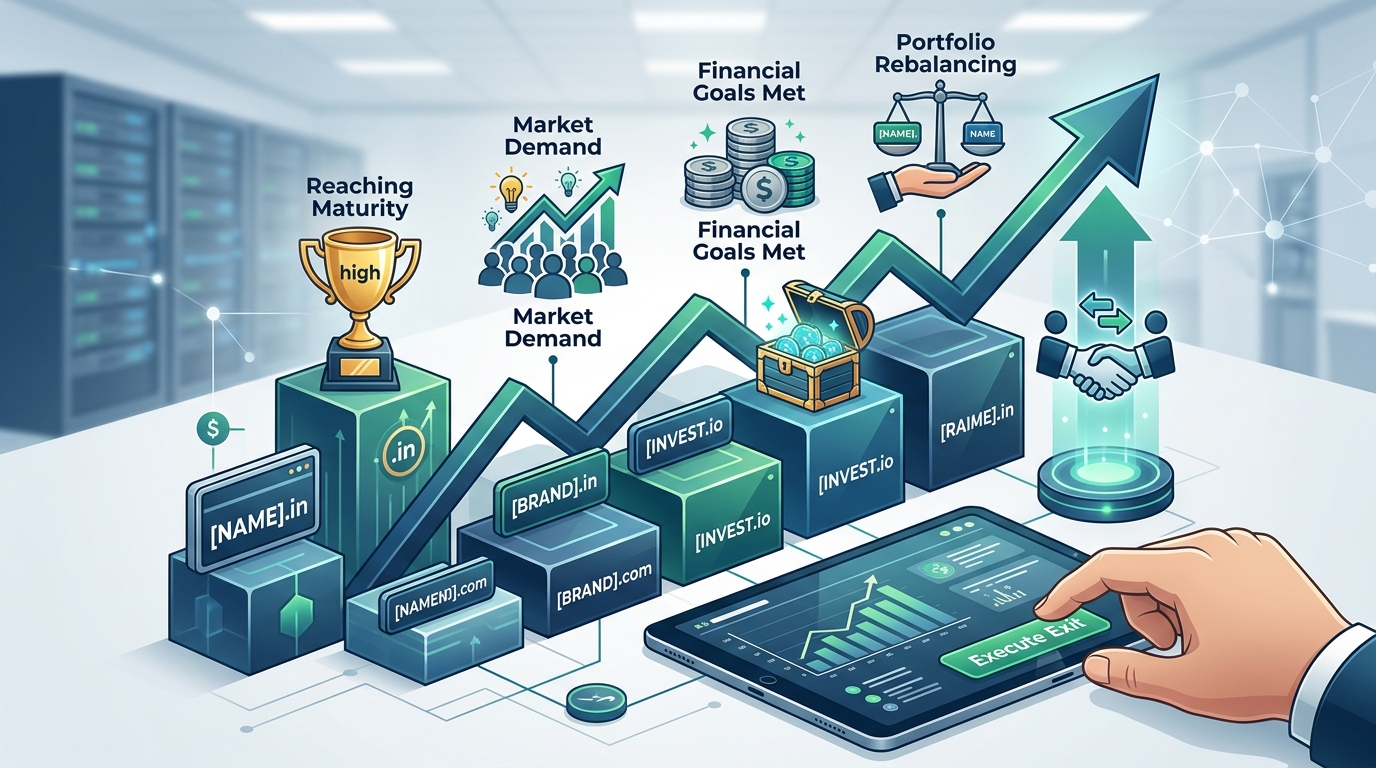
Selling a domain at the right moment requires tracking multiple indicators: incoming buyer interest, market trends for your niche, renewal cost versus potential return, portfolio diversification needs, and personal liquidity requirements. Most successful domain investors sell when they receive unsolicited offers above their target price, when industry trends peak, or when holding costs no longer justify the potential upside. Understanding these triggers helps you exit at maximum value rather than holding assets that depreciate.
Market signals that indicate selling time
Domain values fluctuate based on real-world trends. A domain related to cryptocurrency might surge during a bull market but plummet during regulatory crackdowns. Recognizing these cycles helps you time your exit.
Industry momentum creates buying pressure. When a sector experiences rapid growth, businesses scramble for relevant domains. The fintech boom in India saw payment-related domains sell for multiples of their previous valuations. Catching this wave means monitoring news, funding announcements, and policy changes.
Search volume trends reveal demand shifts. A domain tied to declining search interest loses buyer appeal. Tools like Google Trends show whether your domain’s keywords are rising or falling. If the graph points down consistently for six months, that’s your cue.
Extension popularity matters too. While .com domains continue their dominance, certain markets favour local extensions. The growing preference for .in domains among Indian startups creates selling opportunities for premium .in holdings.
Competitor sales provide benchmarks. When similar domains in your niche sell publicly, you gain pricing intelligence. A comparable domain selling for ₹3 lakhs validates your asking price and confirms market appetite.
Incoming buyer interest patterns

Unsolicited inquiries signal market demand. One inquiry might be random. Three inquiries in two months means your domain sits in an active buyer’s crosshairs.
The quality of inquiries matters more than quantity. A detailed message from a registered business carries more weight than generic “what’s your price” emails. Serious buyers research before reaching out.
Inquiry timing reveals urgency. Multiple contacts from the same party within days suggest deadline pressure. Perhaps they’re launching soon or competing for the same name. This urgency becomes your negotiating leverage.
Auction activity provides another indicator. If you’ve listed your domain and bidding remains stagnant despite good traffic, the market isn’t ready. But rapid bidding wars mean you’ve hit the sweet spot. Domain auction strategies work both ways; understanding buyer behaviour helps you recognize when to accept offers.
“I held a fintech domain for four years with zero interest. Within three weeks of a major bank announcing a new digital product, I received five inquiries. I sold for 8x my purchase price because I recognized the timing.” — Portfolio investor from Mumbai
Portfolio performance and holding costs
Annual renewal fees accumulate silently. A domain costing ₹1,200 yearly seems trivial. But 50 domains mean ₹60,000 in annual costs. If half your portfolio generates no interest after three years, those renewals become dead weight.
Calculate your holding cost ratio. Divide total renewal expenses by your portfolio’s estimated value. If this exceeds 5%, you’re bleeding capital that could work harder elsewhere.
Opportunity cost hurts invisibly. Money tied up in stagnant domains could fund better acquisitions. Building a profitable domain portfolio requires rotating underperformers out and bringing fresh opportunities in.
Here’s a framework for evaluating individual domains:
| Holding Period | Inquiry Count | Renewal Cost | Action Signal |
|---|---|---|---|
| Under 1 year | Any | Low | Hold and market |
| 1-2 years | 0-1 | Medium | Review and reprice |
| 2-3 years | 0 | Any | Consider dropping |
| 3+ years | 2+ | Any | Sell or raise price |
| Any period | 5+ | Any | Sell immediately |
Portfolio concentration creates risk. If 80% of your portfolio value sits in five domains, selling one or two spreads your exposure. Diversification protects against sector downturns.
Personal financial triggers

Life events create legitimate selling reasons. Starting a business, buying property, or funding education might require liquidating domains. There’s no shame in converting digital assets to meet real-world needs.
Tax planning influences timing. Capital gains treatment varies by holding period. Understanding GST implications on domain transactions helps you structure sales efficiently.
Cash flow needs differ from long-term wealth building. If you need ₹2 lakhs within 30 days, accepting a reasonable offer beats waiting for the perfect buyer. Pricing strategies for faster sales help you balance speed against maximum value.
Market cycles affect liquidity. During economic uncertainty, buyers vanish. Selling during stable or growth periods ensures you actually find willing purchasers.
Valuation peaks and comparative analysis
Your domain’s value ceiling depends on buyer budgets and comparable sales. A domain worth ₹10 lakhs to a funded startup might fetch only ₹50,000 from a bootstrapped entrepreneur.
Using free domain valuation tools provides baseline estimates. But automated tools miss context. A domain related to an upcoming IPO might be worth far more than algorithms suggest.
Track sales in your niche religiously. Join domain forums, follow marketplace listings, and note closing prices. This intelligence reveals whether your domain sits below, at, or above market rates.
Age adds value to certain domains. Older domains with clean histories command premiums. But age alone doesn’t justify holding forever. A 10-year-old domain with zero commercial appeal remains worthless regardless of tenure.
Backlink profiles influence buyer interest. Domains with quality existing backlinks attract SEO-focused buyers. Valuing expired domains with backlinks applies equally to aged domains you’ve held long-term.
Strategic exit planning steps
Successful sales follow a process, not random luck. Here’s how to prepare:
- Document your domain’s strengths: traffic stats, keyword search volumes, industry relevance, and any development history.
- Research recent comparable sales to establish a realistic price range backed by data.
- Choose appropriate marketplaces based on your domain type and target buyer location using marketplace comparison insights.
- Create a compelling sales page that communicates value without overselling, following proven sales page techniques.
- Set a minimum acceptable price privately, then list slightly higher to allow negotiation room.
- Respond to inquiries within 24 hours with professional, concise information.
- Use escrow services for transactions above ₹50,000 to protect both parties.
Preparation accelerates sales. Buyers appreciate organized sellers who provide clear information and smooth transaction processes.
Common selling mistakes to avoid
Emotional attachment clouds judgment. That clever domain you registered five years ago might not resonate with today’s buyers. Your affection doesn’t create market value.
Overpricing based on personal investment kills deals. You paid ₹20,000 and spent hours researching. Buyers don’t care. They pay for future utility, not your past effort.
Ignoring buyer feedback wastes opportunities. If three different buyers balk at your ₹5 lakh asking price and suggest ₹2 lakhs, the market is speaking. Listen.
Here are frequent errors and their fixes:
- Mistake: Listing everywhere simultaneously without tracking which platform attracts quality buyers
-
Fix: Test one or two platforms first, measure results, then expand strategically
-
Mistake: Refusing reasonable payment plans for premium domains
-
Fix: Consider instalment arrangements that secure higher total prices
-
Mistake: Neglecting to verify buyer legitimacy before sharing sensitive information
-
Fix: Request business details and use professional communication channels
-
Mistake: Accepting the first offer without negotiation
- Fix: Thank them, ask about their budget ceiling, and counter strategically using negotiation tactics
Poor communication kills deals. Delayed responses, aggressive language, or unclear terms make buyers walk away. Professional courtesy costs nothing but preserves opportunities.
When holding makes more sense
Not every domain should sell immediately. Some situations justify patience.
Emerging trends need time to mature. A domain related to a technology still in development might seem worthless today but valuable in 18 months. Monitoring market indicators helps you spot these early-stage opportunities.
Low holding costs reduce pressure. If renewal fees are minimal and the domain requires no maintenance, holding costs you little. Patience becomes affordable.
Strong conviction based on research deserves respect. If you’ve identified a genuine trend with supporting data, stick with your thesis. Just set a review date to reassess.
Portfolio balance matters. If you’ve recently sold several domains, holding others maintains your market presence and future selling opportunities.
Development potential changes calculations. A domain you’re actively building into a business has different value than a pure investment hold. Revenue-generating domains justify longer holding periods.
Maximizing your sale outcome
Timing isn’t everything, but it’s substantial. The difference between selling during peak interest versus a market lull can be 3x to 5x in final price.
Preparation compounds timing. A well-documented domain with clear value propositions sells faster and higher than a bare listing. Invest time in presentation.
Flexibility creates opportunities. Being open to different deal structures, payment terms, and buyer types expands your potential market. Rigidity limits options.
Network effects accelerate sales. Sharing your available domains with Indian domain investing communities puts your assets in front of active buyers and fellow investors who might know interested parties.
Learning from each transaction improves future results. Track what worked, what didn’t, and how buyers responded to different approaches. This intelligence makes you a better seller over time.
Reading your portfolio’s signals
Your domains communicate their readiness for sale through multiple channels. Inquiry patterns, market trends, holding costs, and personal circumstances all contribute to the decision.
The best time to sell a domain combines strong buyer interest, favourable market conditions, reasonable valuations, and alignment with your financial goals. Missing one element doesn’t disqualify a sale, but having all four maximizes your outcome.
Start reviewing your portfolio today with fresh eyes. Which domains have appreciated? Which attract inquiries? Which drain resources without generating interest? These answers guide your next moves.
Successful domain investing isn’t about holding forever or flipping immediately. It’s about recognizing value cycles and acting decisively when conditions align. Your portfolio holds stories waiting for the right ending. Make sure you’re the one writing it.
