
Sitting on a premium domain without buyers knocking on your door can feel frustrating. The truth is, the best domain sales rarely happen by accident. Most successful investors don’t wait for offers to arrive. They hunt down the right buyers, craft compelling pitches, and close deals proactively.
Finding buyers for your domain requires strategic research to identify businesses that would benefit from your asset. Use trademark databases, social media, competitor analysis, and industry directories to build a targeted prospect list. Reach out with personalised messages that highlight specific value, not generic sales pitches. Follow up consistently, negotiate transparently, and use escrow services to build trust and close deals safely.
Understanding who actually buys domains
Before you start reaching out to random contacts, you need to understand buyer psychology.
Domain buyers fall into three main categories. End users who need the domain for their actual business operations. Investors looking to flip or hold valuable digital real estate. Agencies or developers purchasing on behalf of clients.
End users typically pay the highest prices because the domain solves a direct business problem. They’re launching a new product, rebranding, or protecting their trademark. These buyers see domains as essential business assets, not speculative investments.
Investors operate differently. They evaluate domains based on resale potential, traffic metrics, and historical sales data. They’re more price-sensitive and often negotiate harder. Understanding which type of buyer you’re targeting changes your entire approach.
The sweet spot? Businesses in growth phases. Startups securing funding, established companies expanding into new markets, or brands protecting their online identity. These buyers have both motivation and budget.
Research techniques that reveal ideal prospects
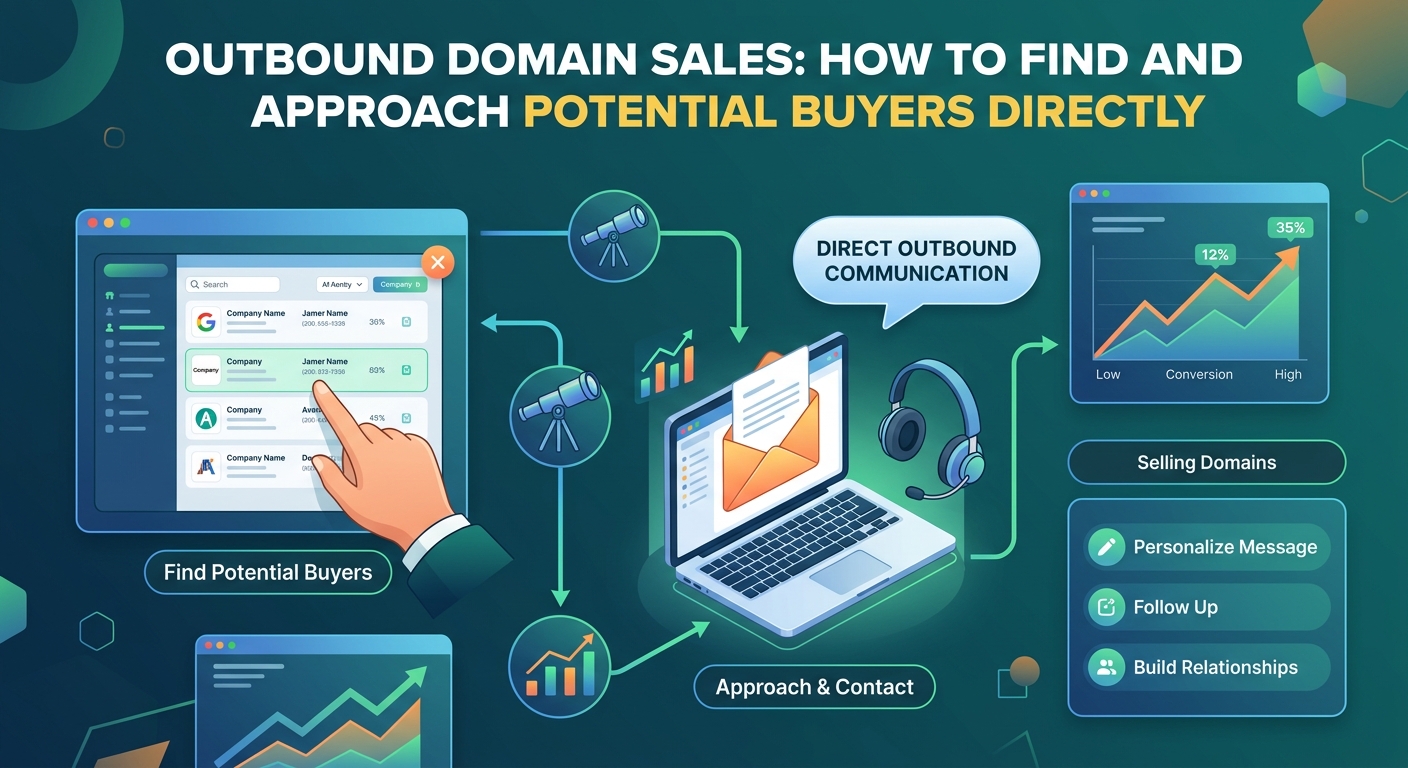
Finding the right buyer starts with detective work. You’re looking for businesses that would benefit most from owning your domain.
Start with trademark databases. If your domain matches or closely resembles a registered trademark, that company is a natural prospect. They have legal and branding incentives to acquire it. The Indian Trademark Registry and international databases like USPTO provide free search access.
Social media platforms offer goldmine insights. Search for businesses using variations of your domain name as handles. Check LinkedIn for companies in relevant industries. Twitter and Instagram reveal brand positioning and growth signals like hiring announcements or product launches.
Google searches uncover competitors and adjacent businesses. Search for keywords related to your domain. Look at who’s advertising for those terms. Check “People also ask” sections for related business categories.
Industry directories and trade associations list potential buyers by sector. Sites like Crunchbase, AngelList, and local startup databases reveal funding rounds and expansion plans. These signals indicate companies with budget and growth ambitions.
Focus your research on businesses showing clear growth signals. Recent funding, new product launches, geographic expansion, or rebranding announcements all indicate companies more likely to invest in premium domains.
Building your prospect list systematically
Random outreach wastes time. A structured prospect list improves your success rate dramatically.
Create a spreadsheet with these columns: company name, contact person, email address, phone number, relevance score, and notes. The relevance score (1-10) helps you prioritise outreach efforts.
Here’s how to score prospects:
- Perfect trademark match: 10 points
- Operating in exact industry: 8-9 points
- Using similar domain variation: 7-8 points
- Adjacent industry fit: 5-6 points
- Generic potential buyer: 3-4 points
Find decision-maker contacts using tools like Hunter.io, RocketReach, or LinkedIn Sales Navigator. Target founders, CEOs, marketing directors, or brand managers. Avoid generic info@ addresses that go nowhere.
Verify email addresses before adding them to your list. Invalid emails damage your sender reputation and waste outreach efforts. Free tools like NeverBounce or ZeroBounce validate email addresses in bulk.
Aim for 50-100 qualified prospects initially. Quality beats quantity. Ten highly relevant prospects outperform 100 random contacts every time.
Crafting outreach messages that get responses
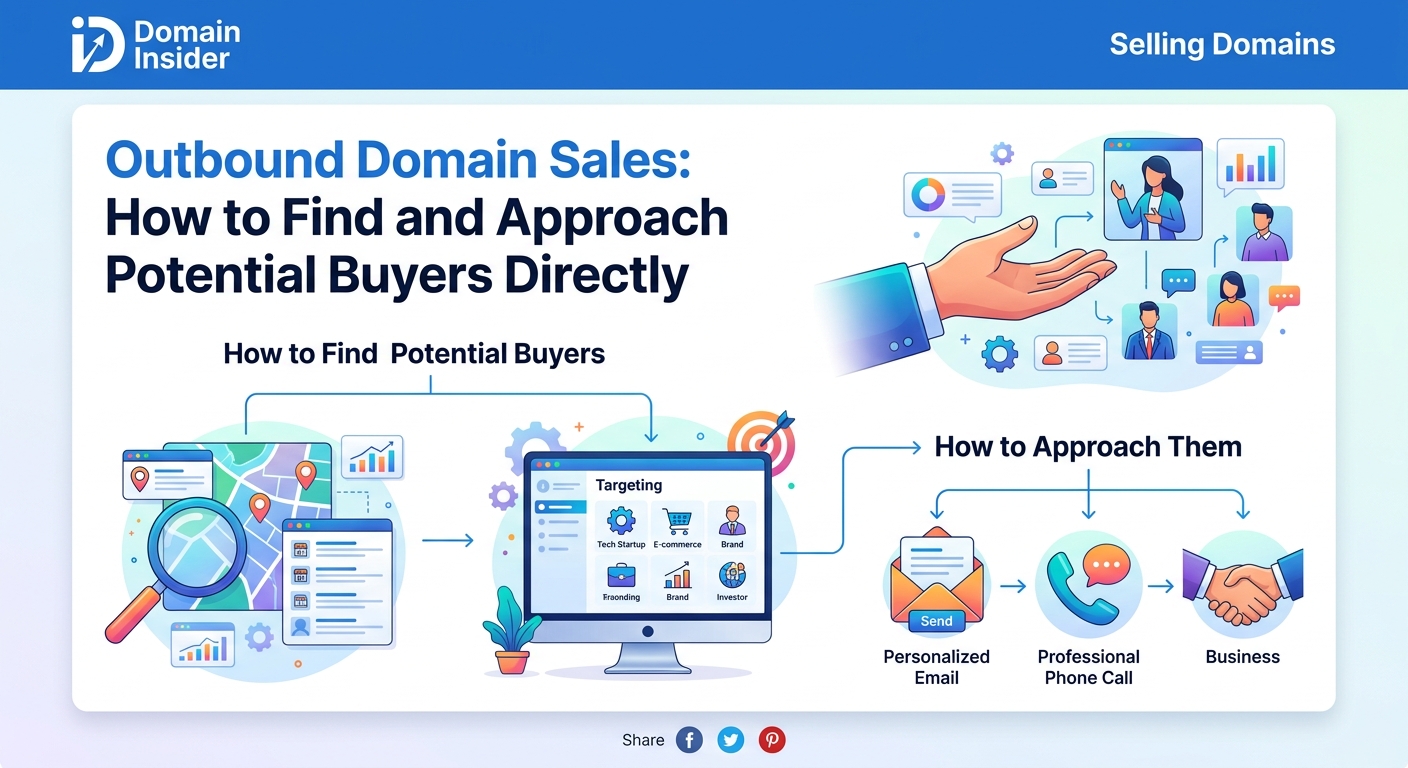
Your first message determines whether you get a reply or get ignored. Generic templates fail. Personalisation wins.
Start with a compelling subject line that mentions their company by name. “Domain opportunity for [Company Name]” works better than “Premium domain for sale.” Make it about them, not you.
Your opening sentence should demonstrate you’ve done research. Reference their recent product launch, funding round, or market expansion. Show you understand their business before pitching your domain.
Explain the specific value your domain offers them. Don’t just say it’s “premium” or “valuable.” Connect it to their business goals. How does it improve their branding? Does it match their product name? Would it prevent customer confusion?
Keep messages short. Three paragraphs maximum. Busy executives don’t read essays. Get to the point fast.
Include a clear call to action. “Would you be open to a brief call this week?” works better than vague “let me know if you’re interested” endings.
Here’s a simple structure that converts:
- Personalised opening that shows research
- Brief value proposition tied to their business
- Soft call to action for next steps
Avoid aggressive sales language. You’re starting a conversation, not closing a deal in the first email. Build rapport before discussing price.
Choosing the right outreach channels
Email isn’t your only option. Different channels work for different prospects.
Email remains the most professional channel for initial contact. It’s non-intrusive and gives prospects time to consider your offer. Use a professional email address from your own domain, not a free Gmail account.
LinkedIn messages work well for connecting with decision-makers. Send a connection request with a brief note first. Once connected, follow up with a longer message. LinkedIn’s professional context makes domain discussions feel more natural.
Phone calls can be effective for high-value domains or urgent situations. Call during business hours, respect their time, and be prepared for gatekeepers. Have a 30-second pitch ready that explains why you’re calling.
Twitter direct messages work surprisingly well for tech startups and digital-native companies. Many founders are more responsive on Twitter than email. Keep messages casual but professional.
Physical mail stands out in a digital world. For extremely high-value domains, a well-designed letter can grab attention. Include your contact details and a simple landing page URL with more information.
Test multiple channels for your top prospects. If email doesn’t get a response after two follow-ups, try LinkedIn or phone. Different people prefer different communication styles.
Follow-up strategies that close deals
Most domain sales happen after multiple touchpoints. One email rarely closes a deal.
Create a follow-up schedule before you start outreach. Plan three to five touchpoints spread over 2-3 weeks. Persistence shows professionalism, not desperation.
Your follow-up sequence might look like this:
- Initial outreach email (Day 1)
- Gentle reminder email (Day 5)
- Value-add follow-up with additional information (Day 10)
- Final check-in before moving on (Day 18)
Each follow-up should add new value or information. Don’t just say “following up on my previous email.” Share a relevant article, mention a new development in their industry, or provide additional domain benefits.
Track all interactions in your spreadsheet. Note response dates, concerns raised, and next steps. This information becomes valuable for future negotiations.
If prospects say they’re not interested, ask why. Their feedback helps refine your pitch for other prospects. Sometimes “not interested” means “not right now.” Stay polite and leave the door open for future conversations.
Presenting your domain’s value effectively
When prospects show interest, you need to justify your asking price convincingly.
Create a simple one-page domain presentation. Include these elements:
- Domain name prominently displayed
- Key benefits specific to their business
- Comparable domain sales in their industry
- Traffic or revenue data if applicable
- Brandability and memorability factors
Use tools like 7 free tools to check your domain name value in 2024 to gather objective valuation data. Third-party assessments add credibility to your asking price.
Visual mockups showing how the domain could be used for their brand create emotional connection. Simple website mockups or logo concepts help prospects envision ownership.
Highlight the cost of alternatives. If they can’t get your exact match domain, what would they pay in advertising to overcome a confusing URL? What’s the lifetime cost of a suboptimal domain?
Be prepared to explain your pricing methodology. Arbitrary numbers kill deals. Show comparable sales, explain the domain’s strategic value, and demonstrate market research supporting your price.
Negotiation tactics that protect your interests
Negotiation separates successful domain sellers from those who leave money on the table.
Start with a price slightly above your target but within reason. Outrageous opening offers damage credibility. Research recent sales of similar domains using NameBio or DNJournal to set realistic expectations.
Never reveal your absolute minimum price early. Leave room for negotiation. If a prospect asks “what’s your bottom line,” respond with “what budget range are you working with?”
Listen more than you talk during negotiations. Prospects often reveal valuable information about their timeline, budget constraints, and decision-making process. Use this information strategically.
Consider creative deal structures beyond straight cash sales. Payment plans, revenue sharing, or lease-to-own arrangements can close deals when buyers lack immediate budget. Learn more about whether you should accept instalments when selling premium domains.
Always use escrow services for transactions. Never accept direct payment without protection. Escrow.com is the industry standard and builds trust with serious buyers. The small fee protects both parties and legitimises the transaction.
Document everything in writing. Email summaries after phone calls. Get agreement terms in writing before proceeding to escrow. Clear documentation prevents misunderstandings and protects you legally.
Common mistakes that kill domain sales
Avoiding these errors dramatically improves your success rate.
| Mistake | Why It Fails | Better Approach |
|---|---|---|
| Generic mass emails | Shows no research, feels like spam | Personalised messages referencing specific business details |
| Overpricing without justification | Scares away serious buyers | Market-based pricing with comparable sales data |
| Aggressive follow-ups | Damages relationship, feels desperate | Spaced follow-ups that add value each time |
| No clear value proposition | Buyers don’t understand why they need it | Specific benefits tied to their business goals |
| Refusing to negotiate | Kills deals over small differences | Flexible approach with room for compromise |
| Skipping escrow services | Creates trust issues and risk | Always use reputable escrow for protection |
Being too attached to your domain clouds judgment. If multiple prospects say your price is too high, the market is telling you something. Adjust accordingly.
Ignoring timing kills deals. A prospect might love your domain but lack budget this quarter. Stay in touch and circle back when their situation changes.
Poor communication responsiveness signals unprofessionalism. Reply to inquiries within 24 hours. Slow responses make buyers question your seriousness and give them time to find alternatives.
Tools and resources that streamline the process
The right tools make prospecting and outreach more efficient.
For finding prospects, use:
- Hunter.io for email address discovery
- LinkedIn Sales Navigator for decision-maker targeting
- Crunchbase for startup funding and growth data
- Google Alerts for monitoring company news and developments
For outreach management, consider:
- Streak CRM (integrates with Gmail for tracking)
- HubSpot (free CRM with email tracking)
- Mailtrack (shows when prospects open your emails)
- Calendly (simplifies scheduling calls with interested buyers)
For domain valuation and market research:
- NameBio for historical sales data
- EstiBot for automated valuations
- DNJournal for industry news and recent sales
- GoDaddy Appraisal for free basic valuations
Automate where possible but maintain personalisation. Templates save time but customise each message with prospect-specific details. The goal is efficiency without sacrificing authenticity.
Building long-term relationships beyond single sales
The domain industry is smaller than you think. Reputation matters enormously.
Treat every prospect professionally, even if they don’t buy. Today’s “no” might become tomorrow’s “yes” when their situation changes. Burning bridges costs you future opportunities.
Stay connected with serious prospects who couldn’t buy immediately. Add them to a quarterly newsletter sharing domain market insights. Position yourself as a knowledgeable resource, not just a seller.
Join domain investor communities and forums. NamePros, DNForum, and regional groups connect you with other investors, potential buyers, and industry insights. Networking opens doors to private sales and partnership opportunities.
Share success stories (with permission) to build credibility. Case studies showing how your domains helped businesses grow attract similar buyers. Social proof accelerates trust and shortens sales cycles.
Consider specialising in specific industries or domain types. Becoming known as “the person who has premium fintech domains” or “the expert in Indian regional domains” attracts targeted buyer interest. Specialisation builds authority and referrals.
Understanding how to price your domain for a sale without leaving money on the table helps you make informed decisions about when to hold and when to sell.
Measuring and improving your outreach performance
Track metrics to understand what’s working and what needs adjustment.
Monitor these key performance indicators:
- Response rate (replies per 100 emails sent)
- Meeting conversion rate (calls booked per responses)
- Offer rate (actual offers received per meetings)
- Close rate (deals closed per offers)
A healthy response rate falls between 5-15% for cold outreach. Lower rates signal problems with targeting or messaging. Higher rates indicate strong prospect research and personalisation.
Test different variables systematically. Try different subject lines, message lengths, or value propositions. Change one element at a time so you know what impacts results.
Review lost deals quarterly. Why didn’t they close? Was price the issue? Timing? Lack of perceived value? Patterns in lost deals reveal opportunities for improvement.
Celebrate wins but analyse them too. What made successful deals close? Can you replicate those conditions with other prospects? Success patterns are as valuable as failure lessons.
Adjust your approach based on data, not hunches. If LinkedIn messages consistently outperform email for your target market, shift resources accordingly. Let results guide strategy.
Staying compliant and ethical in your outreach
Professional conduct protects your reputation and keeps you on the right side of regulations.
Respect anti-spam laws like CAN-SPAM in the US and similar regulations in India. Include your physical address in emails. Provide clear unsubscribe options. Honor opt-out requests immediately.
Never misrepresent domain ownership or value. Inflating metrics or making false claims can lead to legal trouble and destroys trust. Transparency builds long-term success.
Avoid trademark infringement issues. If your domain contains someone’s trademark, understand the legal landscape before approaching them. Consult with a legal professional for high-stakes situations to avoid costly mistakes.
Be honest about domain history. If a domain has penalties, previous adult content, or other baggage, disclose it upfront. Buyers will discover the truth during due diligence anyway. Honesty prevents deals from falling apart late in the process.
Protect prospect data responsibly. Don’t share or sell contact lists. Use secure systems for storing business information. Professional data handling builds trust and complies with privacy regulations.
Consider learning about common domain name mistakes every first-time buyer should avoid to better understand buyer concerns and address them proactively in your outreach.
Scaling your outreach without losing personalisation
As your portfolio grows, you need systems that maintain quality while increasing volume.
Create modular templates with customisable sections. Write standard paragraphs explaining domain benefits, but leave placeholders for prospect-specific research. This approach balances efficiency with personalisation.
Batch similar prospects together. If you’re reaching out to ten fintech startups, research the industry once and adapt insights for each company. Batching reduces redundant research time.
Use virtual assistants for research tasks. Outsource prospect list building, email verification, and initial research. Focus your time on crafting personalised messages and handling responses. Delegation multiplies your capacity without sacrificing quality.
Set daily outreach limits to maintain consistency. Twenty personalised messages daily beats 100 generic emails weekly. Consistent effort compounds over time and keeps your pipeline full.
Automate follow-ups carefully. Tools can schedule reminder emails, but review and customise each message before it sends. Automation should support your process, not replace human judgment.
Turning cold prospects into warm opportunities
The best buyers often aren’t actively looking for domains when you first contact them.
Your goal is to plant seeds that grow into future sales. Even if prospects aren’t ready to buy today, you want them thinking of you when their situation changes.
Provide value beyond your sales pitch. Share relevant industry articles, introduce them to useful contacts, or offer insights about their market. Generosity builds goodwill and keeps you top of mind.
Create a content strategy that attracts buyers organically. Blog posts, case studies, or social media content about domain strategy position you as an expert. Prospects who find you through content arrive warmer and more receptive.
Host or participate in industry events where potential buyers gather. Conferences, webinars, and networking events create relationship-building opportunities that cold emails can’t match.
Build a simple landing page for your premium domains. Include benefits, comparable sales data, and contact information. A professional presentation makes prospects take you more seriously than a parked page with “For Sale” text.
Consider listing on marketplaces like Sedo, Afternic, or where you should list your domain when comparing top marketplaces for Indian sellers to capture passive buyer interest while you focus on active outreach.
Making your domain irresistible to the right buyer
Sometimes the difference between a sale and a pass comes down to presentation.
Show, don’t just tell. Create a simple mockup showing how the domain could be used for their brand. Visual representations help prospects emotionally connect with ownership.
Demonstrate traffic or revenue potential if applicable. Domains with existing traffic, backlinks, or search rankings have quantifiable value. Use tools to document these metrics professionally.
Explain the competitive advantage your domain provides. How does it help them outrank competitors? Does it capture type-in traffic? Will it reduce their customer acquisition costs?
Address objections before they’re raised. If your domain has a less common extension, explain why it’s actually advantageous for their market. If it’s a premium price, justify it with market data and strategic value.
Create urgency ethically. Mention other interested parties if true, but never fabricate competition. Highlight time-sensitive factors like their upcoming product launch or competitor activity in the space.
Understanding why .com domains still dominate despite hundreds of alternatives helps you position different domain types effectively based on buyer priorities.
Handling objections and concerns professionally
Every sale faces obstacles. How you handle objections determines whether deals move forward or stall.
Common objections include:
- “The price is too high”
- “We’re not ready to buy right now”
- “We’ll just use a different extension”
- “Our current domain works fine”
For price objections, reframe the conversation around value and long-term cost. What’s the lifetime value of a perfect-match domain versus ongoing marketing costs to overcome a suboptimal URL?
For timing objections, stay engaged without being pushy. Ask when they might be ready and follow up accordingly. Offer to hold the domain with a small deposit if they’re genuinely interested but need time.
For alternative extension objections, educate about user behavior and trust factors. Most users default to .com or country-specific extensions. Alternative extensions often require more marketing spend to overcome confusion.
For “current domain works fine” objections, acknowledge their point while highlighting opportunity costs. Working fine and optimal are different. What growth are they leaving on the table with a less-than-perfect domain?
Listen to underlying concerns behind objections. Sometimes “too expensive” really means “I don’t understand the value” or “I need to convince my business partner.” Address the real issue, not just the surface objection.
Creating urgency without pressure tactics
Ethical urgency accelerates decisions without damaging relationships.
Genuine scarcity works. If you have other interested parties, mention it factually. Don’t fabricate competition, but do communicate real interest from others.
Time-sensitive business factors create natural urgency. Is their product launching soon? Are they rebranding? Is a competitor expanding? Connect your domain to their timeline.
Market trends can drive urgency. If domain prices in their industry are rising, historical data demonstrates this. Waiting costs more as premium domains appreciate.
Limited-time incentives work when used sparingly. Offering a small discount for closing within a specific timeframe can tip undecided prospects toward action. Keep discounts modest to maintain perceived value.
Avoid manufactured urgency that feels manipulative. “This price expires tomorrow” tactics damage credibility when prospects know you’ve been trying to sell for months. Authenticity builds trust that closes more deals long-term.
Your path from portfolio holder to active seller
Finding buyers for your domain names transforms you from passive portfolio holder to active dealmaker.
The strategies in this guide work because they’re built on research, personalisation, and genuine value creation. You’re not spamming random contacts. You’re identifying businesses that would genuinely benefit from your domains and presenting compelling reasons why ownership makes business sense.
Start small. Pick your three most valuable domains and identify ten highly qualified prospects for each. Craft personalised outreach messages. Track responses and refine your approach based on results.
Success in domain sales comes from consistent effort over time. Most deals don’t close in days or weeks. They develop through multiple touchpoints, relationship building, and patience. Stay professional, provide value, and let your research and preparation do the heavy lifting.
The domain market rewards those who take proactive action. Your perfect buyer exists. Now you have the tools and strategies to find them, reach them effectively, and close deals that benefit both parties. Put these methods into practice and watch your portfolio transform from static assets into profitable sales.
