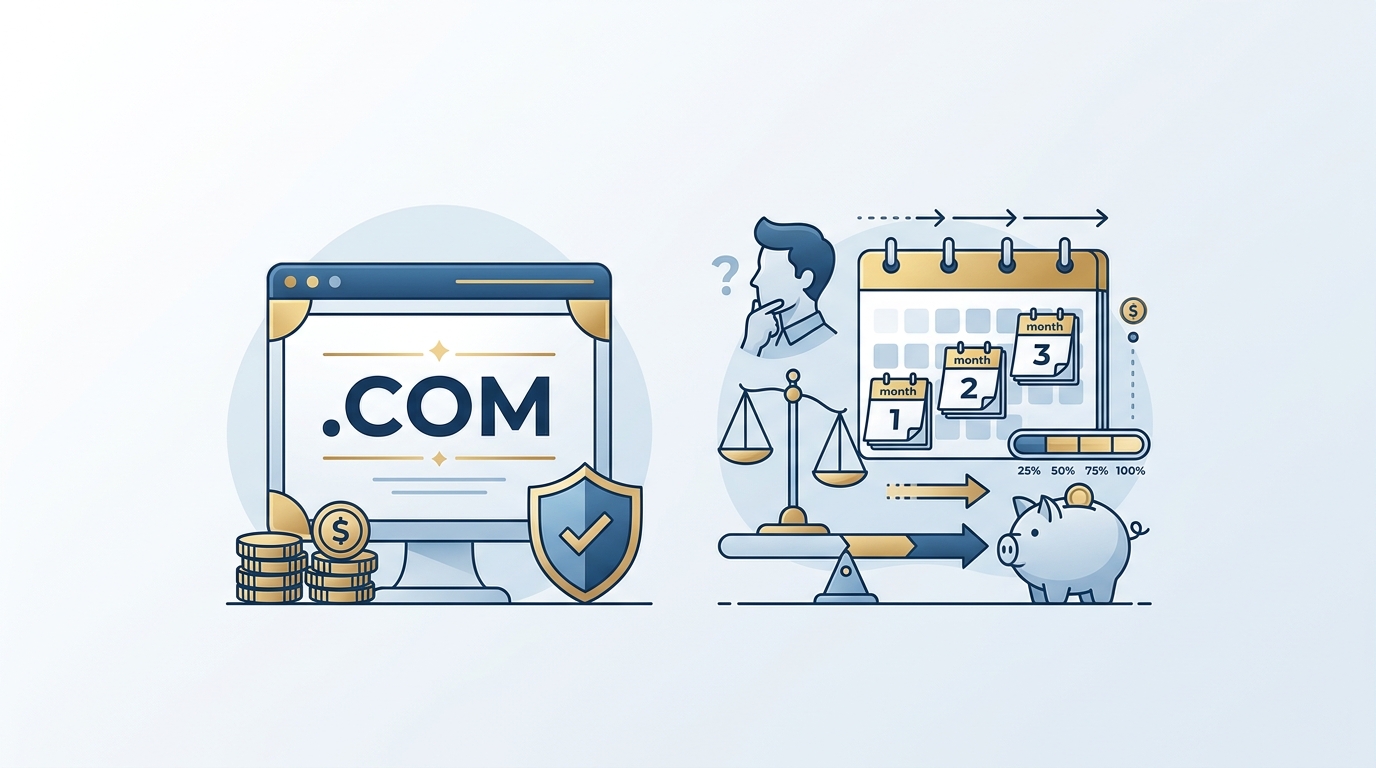
Selling a premium domain for ₹5 lakhs sounds great until your buyer asks if they can pay in instalments. Your first instinct might be to say no. Cash upfront feels safer. But turning down every payment plan request could mean losing serious buyers who simply cannot afford a lump sum payment right now.
The truth is that offering instalment options can actually help you sell faster and at better prices. But only if you do it right. Get the terms wrong, and you could end up chasing payments for months or losing your domain entirely.
Selling domains on payment plan can accelerate sales and attract serious buyers who lack immediate capital. Success requires proper legal agreements, secure [escrow services](https://en.wikipedia.org/wiki/Escrow), domain ownership retention until full payment, clear default terms, and careful buyer vetting. Payment plans work best for domains priced above ₹2 lakhs with motivated buyers who have verifiable business credentials and reasonable payment timelines.
Why payment plans make sense for premium domain sales
Most domain buyers are startup founders or small business owners. They see the value in your premium domain. They know it will help their brand. But they also have limited cash flow.
A founder with ₹8 lakhs in funding might hesitate to spend ₹3 lakhs upfront on a domain. That same founder would happily pay ₹3.3 lakhs over six months. The extra ₹30,000 compensates you for the wait and the risk.
Payment plans expand your buyer pool significantly. Instead of waiting months for someone with full cash, you can close deals with buyers who have strong business plans but tight budgets right now.
The approach works particularly well in the Indian market. Many startups here bootstrap their way to success. They prioritise cash flow over everything else. Offering flexible payment terms positions you as a seller who understands their reality.
When you should absolutely avoid instalment agreements
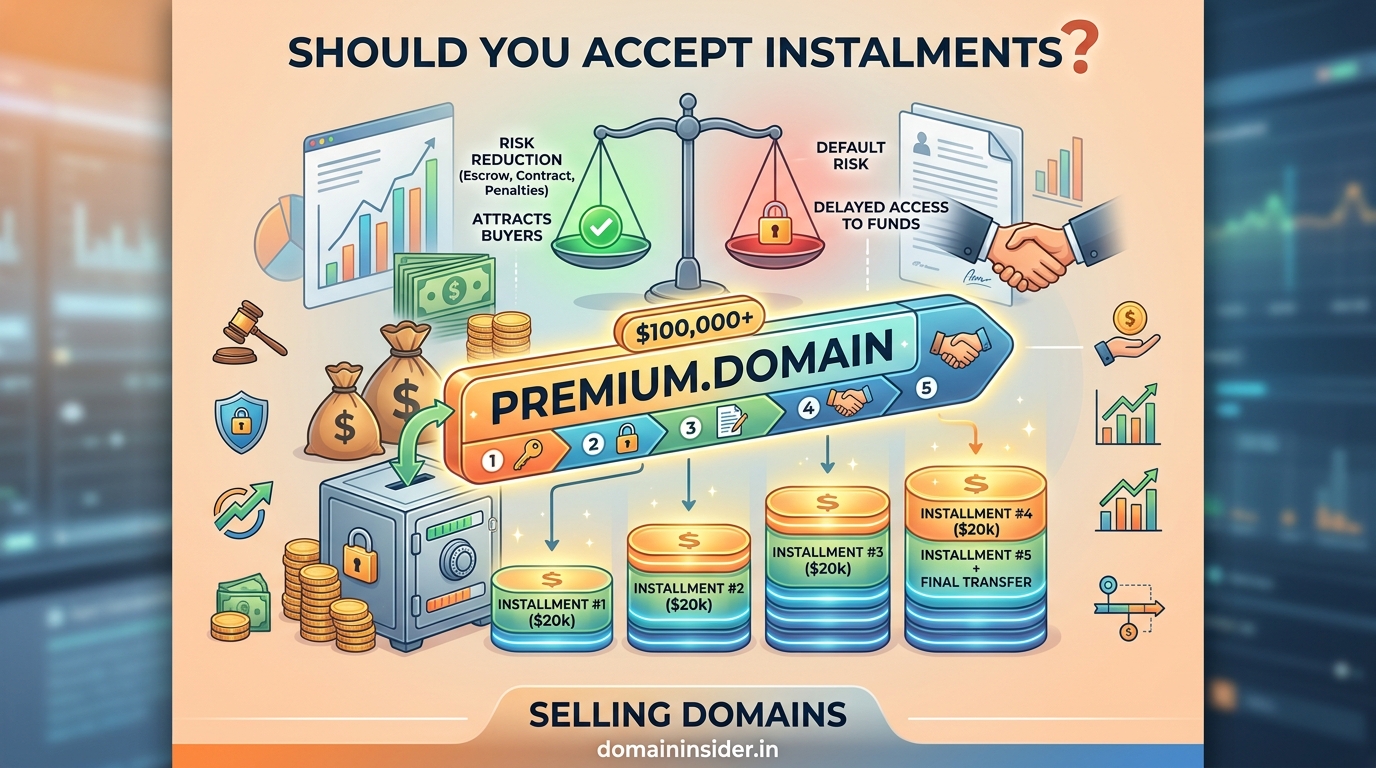
Not every domain sale deserves a payment plan. Some situations carry too much risk.
Avoid payment plans for domains under ₹1 lakh. The administrative overhead is not worth it. The legal costs of drafting agreements could eat up your profit margin. Just wait for a cash buyer.
Skip payment plans when the buyer has no online presence. No website. No LinkedIn profile. No business registration. These are red flags. You need verifiable information about who you are dealing with.
Never offer instalments to buyers who want anonymous transactions. Legitimate businesses have nothing to hide. They will happily share company details, founder information, and business plans.
Pass on payment plans when buyers request unreasonably long timelines. A 24-month payment plan for a ₹2 lakh domain makes no sense. The risk compounds over time. Stick to shorter durations.
Avoid deals where buyers want immediate full access before completing payments. This is the biggest mistake sellers make. Once the buyer has full control, your leverage disappears completely.
The right way to structure domain payment plans
A proper payment plan protects your interests while giving buyers the flexibility they need. Here is how to set one up correctly.
Keep ownership until final payment
This is non-negotiable. The domain stays in your registrar account until the buyer pays every rupee. You can allow the buyer to use the domain by pointing nameservers to their hosting. But you retain registrar-level control.
This arrangement gives buyers what they need to build their business. They can launch their website. They can print business cards. They can run marketing campaigns. But you still own the asset.
If they default on payments, you simply point the domain elsewhere. No legal battles. No complicated recovery process.
Use escrow services for every transaction
Never handle payments directly. Use established escrow services that specialise in domain transactions. Escrow.com and Dan.com both support payment plans.
The escrow service holds the domain. They collect payments from the buyer. They verify each instalment. Once the final payment clears, they transfer the domain automatically.
This protects both parties. Buyers know you cannot disappear with their money. You know buyers cannot claim the domain without paying in full.
Charge interest or a premium
Payment plans cost you money. Your capital is tied up. You take on default risk. You deserve compensation.
Add 10-15% to your asking price for payment plans. A domain you would sell for ₹4 lakhs cash becomes ₹4.4 lakhs over six months. Most buyers accept this as reasonable.
Alternatively, structure it as monthly interest. Calculate 1.5-2% monthly interest on the outstanding balance. This approach feels more transparent to buyers.
Set clear milestone payments
Break the total into logical chunks. Avoid equal monthly instalments if possible. Front-load the payments instead.
For a ₹3 lakh domain over six months, consider this structure:
- ₹1 lakh upfront (30%)
- ₹60,000 in month two (20%)
- ₹50,000 in month three (17%)
- ₹40,000 in month four (13%)
- ₹30,000 in month five (10%)
- ₹30,000 in month six (10%)
This structure reduces your risk progressively. By month three, the buyer has paid 67% of the total. They have significant skin in the game. Default becomes less likely.
Draft a proper legal agreement
Never rely on email exchanges or verbal promises. Get everything in writing with a proper contract.
Your agreement should specify:
- Total purchase price and payment schedule
- Interest or premium charges
- Domain access terms during the payment period
- Default consequences and cure periods
- Jurisdiction for dispute resolution
- Escrow service details
- Domain transfer timeline after final payment
Hire a lawyer familiar with domain transactions. The ₹10,000-15,000 you spend on legal fees protects a much larger investment. Many domain investors use the same template agreement for all their payment plan sales, which reduces costs over time.
Vetting buyers before offering payment terms
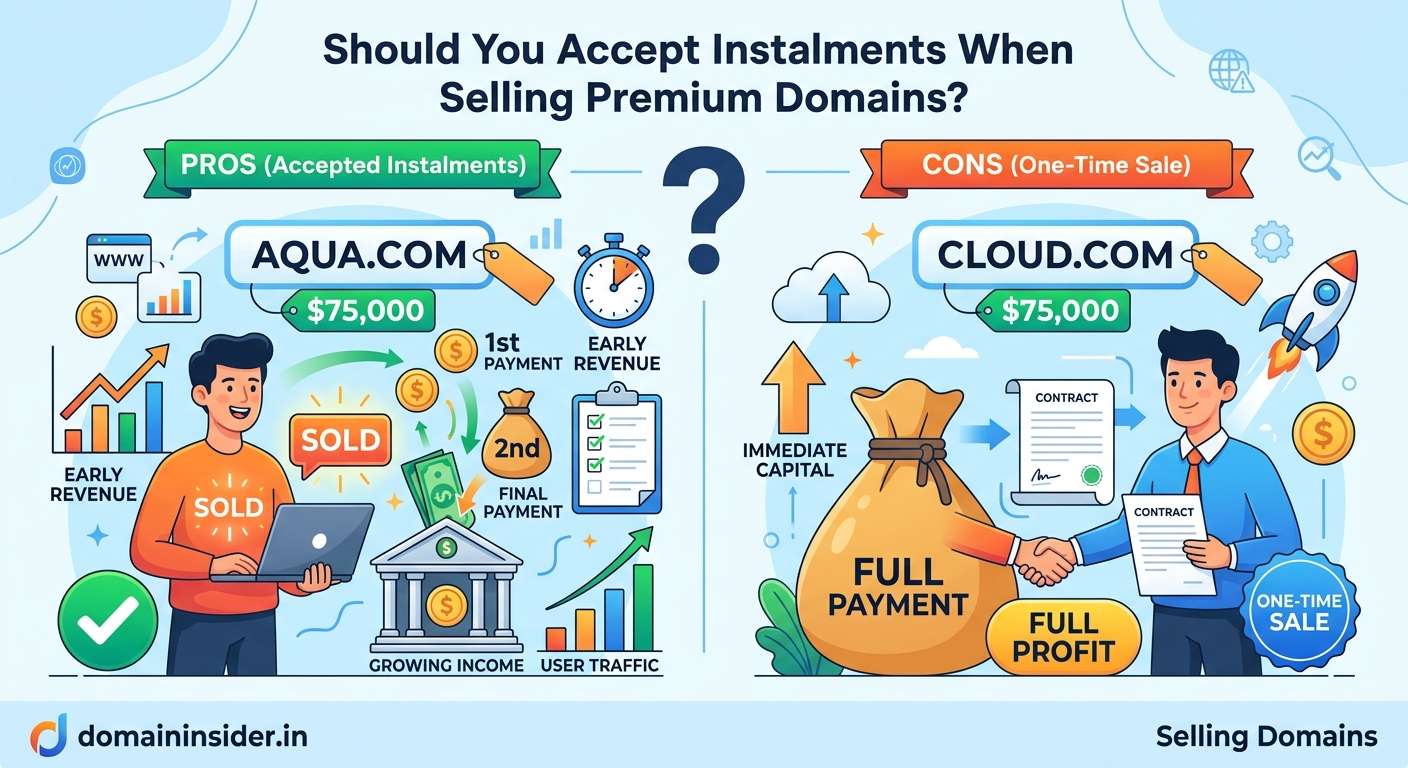
Not everyone who asks for a payment plan deserves one. Proper vetting separates serious buyers from time wasters.
Check their business legitimacy
Ask for company registration documents. In India, this means CIN or LLPIN for registered companies. For sole proprietors, ask for GST registration or similar documentation.
Look up their business online. Check their website. Read their LinkedIn profiles. Search for news mentions or funding announcements.
A legitimate startup will have a digital footprint. They will have team members with real profiles. They will have some traction or at least a coherent business plan.
Verify their ability to pay
Request bank statements or funding proof. You need confidence they can actually make the payments.
For funded startups, ask about their runway. A company with 18 months of funding can safely commit to a six-month payment plan. A company with three months of runway cannot.
For bootstrapped businesses, look at revenue. A company making ₹5 lakhs monthly can handle ₹50,000 monthly domain payments. A company with no revenue cannot.
Assess their commitment level
Serious buyers will negotiate professionally. They will ask intelligent questions. They will respond promptly to your communications.
Red flags include buyers who:
- Disappear for days between messages
- Ask for payment plans longer than their business has existed
- Refuse to share basic business information
- Try to negotiate every single term
- Want to start with tiny payments
Trust your instincts. If something feels off, it probably is. Plenty of other buyers exist who will appreciate reasonable payment terms.
Common payment plan structures that actually work
Different situations call for different approaches. Here are proven structures that work for selling domains on payment plan.
| Structure | Best For | Example Terms | Risk Level |
|---|---|---|---|
| 50/50 Split | Domains ₹1-3 lakhs | 50% upfront, 50% in 30 days | Low |
| Quarterly | Domains ₹3-8 lakhs | 40% down, then 20% each quarter | Medium |
| Six Month | Domains ₹5-15 lakhs | 30% down, then declining monthly | Medium |
| Annual | Domains ₹15 lakhs+ | 25% down, then quarterly for 12 months | Higher |
The 50/50 split works brilliantly for mid-range premium domains. The buyer pays half immediately, proving they have resources. They pay the remainder within 30 days. You only wait one month for full payment.
Quarterly payments suit larger transactions where buyers need more breathing room. Four payments over nine months feels manageable to buyers while keeping your waiting period reasonable.
Avoid monthly payment plans longer than 12 months. The risk compounds too much. Businesses change direction. Funding dries up. Founders lose interest. Keep timelines tight.
What happens when buyers default
Despite your best efforts, some buyers will miss payments. Having a clear process protects you.
Include a grace period
Give buyers 7-10 days past the due date before taking action. Business bank transfers sometimes delay. Founders travel. Small delays happen.
Send a friendly reminder email on the due date. Send a firmer notice three days later. Most buyers will pay within this window.
Define default clearly
Your contract should specify exactly what constitutes default. Missing one payment by 10 days? Missing two consecutive payments? Failing to respond to payment reminders?
Be specific. Vague terms create disputes later.
Outline consequences
When default occurs, you need predetermined steps. Typically:
- Send formal default notice via email and registered post
- Provide 15-day cure period for buyer to catch up
- If uncured, reclaim full domain control
- Retain all payments made as liquidated damages
- Relist domain for sale
This might sound harsh, but remember the buyer agreed to these terms upfront. Clear consequences actually prevent defaults. Buyers take their obligations seriously when they know exactly what happens if they fail to pay.
Keep all payments
When buyers default, you keep everything they have paid. This compensates you for the opportunity cost. While your domain sat in escrow, you could have sold it to someone else for cash.
Some sellers feel guilty about this. Do not. The buyer entered the agreement voluntarily. They understood the terms. They chose to default.
Your contract should explicitly state that payments are non-refundable in case of default. This protects you legally and sets clear expectations.
Platforms and tools for managing payment plans
You do not need to manually track payments and send reminders. Several platforms handle the entire process.
Escrow.com
The most established option for domain transactions. They support custom payment schedules. They handle international transactions. Their fees are reasonable at 3.25% for transactions under $5,000.
They hold the domain securely. They collect payments. They send automatic reminders. They transfer the domain when payments complete.
The platform is overkill for small transactions but perfect for premium domains above ₹2 lakhs.
Dan.com
This platform specialises in domain sales and includes built-in payment plan features. Sellers can offer lease-to-own arrangements directly through the marketplace.
Dan.com handles the entire transaction. Buyers make payments through the platform. You get paid automatically. The domain transfers when complete.
Their fee structure is higher than Escrow.com but the convenience factor is significant. Everything happens in one place.
Afternic with instalment billing
Afternic allows sellers to enable instalment billing for domains. Buyers can request payment plans during the purchase process.
The platform is less flexible than Dan.com or Escrow.com but works well if you already list domains there. Integration with GoDaddy makes transfers seamless.
Custom contracts with payment tracking
For sellers who prefer more control, draft custom contracts and track payments manually. Use a simple spreadsheet with payment due dates, amounts received, and outstanding balances.
Set calendar reminders for each payment date. Send payment requests via email. Verify receipt before updating your records.
This approach requires more work but gives you complete flexibility. You can negotiate any terms you want without platform limitations. Just ensure you still use escrow for the actual domain transfer.
Making payment plans attractive to buyers
The way you present payment options affects buyer response. Frame them as benefits, not concessions.
Lead with the monthly amount
Instead of saying “₹6 lakhs with payment plan available,” say “Own this premium domain for just ₹1 lakh monthly over six months.”
The monthly figure sounds more accessible. It helps buyers visualise the expense within their budget. Many businesses can absorb ₹1 lakh monthly much easier than ₹6 lakhs upfront.
Emphasise immediate use
Buyers worry that payment plans mean delayed access. Clarify that they can start using the domain immediately for their website, email, and marketing.
This removes a major objection. They get the benefits of ownership while spreading the cost. You maintain security until they finish paying.
Offer a cash discount
Create a price anchor by showing both options. List the payment plan price, then offer a discount for full payment.
“₹5.5 lakhs over six months, or ₹5 lakhs if paid in full today.”
This makes the payment plan feel like the standard option rather than a special request. It also incentivises buyers who can pay upfront to do so. You might be surprised how many choose the cash option when presented this way.
Share success stories
If you have successfully sold domains on payment plans before, mention it. Buyers feel more confident when they know others have done this successfully.
“I have helped seven startups acquire their perfect domains through payment plans. All completed their payments on schedule and are now thriving businesses.”
Social proof reduces anxiety. It positions payment plans as normal and trustworthy.
Tax and accounting considerations
Selling domains on payment plan creates accounting complexity. Plan ahead to avoid tax surprises.
Income recognition timing
In India, income tax typically applies when you receive payment, not when you make the sale. This means you will recognise income across multiple financial years for longer payment plans.
Consult a chartered accountant about proper income recognition for your specific situation. Rules vary based on your business structure and accounting method.
GST implications
Domain sales may attract GST depending on how you structure the transaction. If you are a registered business selling to another registered business, GST likely applies.
Payment plans do not change GST obligations. You may need to issue invoices for each instalment and collect GST accordingly. Again, consult a tax professional for specific guidance.
Maintaining proper records
Keep detailed records of every payment received. Note the date, amount, payment method, and buyer information. Store all contracts and correspondence.
Good records protect you if buyers dispute payments later. They also make tax filing much simpler. Consider using accounting software that can track instalments automatically.
Alternatives to traditional payment plans
Payment plans are not the only way to help buyers afford premium domains. Consider these alternatives.
Lease-to-own arrangements
Instead of selling immediately, lease the domain to the buyer with an option to purchase later. They pay monthly lease fees that apply toward the eventual purchase price.
This works well when buyers need the domain now but expect funding or revenue growth soon. After 12 months of leasing, they exercise the purchase option.
You maintain ownership throughout the lease period. If they never purchase, you keep all lease payments and still own the domain.
Partial payment with domain parking
Accept a significant down payment (60-70%) and park the domain with monetisation pointing to your account. The remaining balance accrues from parking revenue over time.
This only works for domains with decent type-in traffic. The buyer gets to use the domain for redirects or basic pages. You earn parking revenue that pays down the balance. When parking revenue covers the remainder, you transfer the domain.
Revenue sharing agreements
For buyers with promising businesses but limited capital, consider revenue sharing. They pay a smaller upfront amount plus a percentage of revenue for a set period.
This aligns your interests with theirs. If their business succeeds, you earn more. If it fails, you at least got the upfront payment.
Structure these carefully with clear revenue definitions, audit rights, and maximum payout caps. They are complex but can work well for the right situations.
Real examples of successful payment plan sales
Understanding how other sellers have structured deals helps you design your own terms.
A domain investor in Bangalore sold a premium .in domain for ₹8 lakhs using a six-month payment plan. The buyer, a funded edtech startup, paid ₹3 lakhs upfront and ₹1 lakh monthly thereafter.
The seller used Escrow.com to manage payments. The buyer got immediate DNS control but the seller retained registrar access. All six payments arrived on schedule. The domain transferred in month seven.
Another investor sold a three-word .com domain for ₹12 lakhs to an e-commerce company. They structured it as four quarterly payments of ₹3 lakhs each. The buyer needed the domain for a major rebranding campaign but had most capital tied up in inventory.
The seller drafted a custom contract and used bank transfers with email confirmations. Each payment triggered a signed receipt. After the final payment, they transferred the domain through the registrar’s standard process. The entire transaction took nine months and both parties were satisfied.
These examples show that payment plans work when you choose the right buyers, set clear terms, and protect yourself properly. Understanding how to negotiate domain prices like a pro and save thousands helps you structure win-win deals.
Building payment plans into your sales strategy
Rather than treating payment plans as exceptions, build them into your standard selling process. This accelerates sales and positions you as a flexible, professional seller.
Create standard terms
Develop template payment plan terms for different price ranges. Having predetermined structures saves negotiation time and ensures consistency.
For example:
– Domains under ₹2 lakhs: 50/50 split over 30 days
– Domains ₹2-5 lakhs: 40% down, then three monthly payments
– Domains ₹5-10 lakhs: 30% down, then six monthly payments
– Domains ₹10 lakhs+: Custom terms negotiated case-by-case
Post these terms on your domain sales page so buyers know payment plans are available before they even contact you.
Screen buyers efficiently
Create a simple questionnaire for payment plan requests. Ask about their business, funding status, timeline, and why they need this specific domain.
Their answers tell you whether they are serious. Detailed, thoughtful responses indicate genuine interest. Vague or rushed answers suggest they are not committed.
This screening process saves time. You only invest effort in buyers who are likely to complete the transaction.
Follow up systematically
Many buyers who inquire about payment plans do not commit immediately. They need time to discuss with co-founders, check their budget, or explore alternatives.
Set up a follow-up sequence. Send a gentle reminder after three days. Check in again after a week. Offer to answer any questions.
Persistent but respectful follow-up converts fence-sitters into buyers. Just remember to stop if they explicitly decline or stop responding.
Track your success rate
Monitor which payment plan structures work best. Record which buyer types complete payments versus which ones default.
Over time, you will identify patterns. Maybe funded startups complete payments more reliably than bootstrapped ones. Maybe six-month plans work better than 12-month plans. Maybe certain industries are better bets.
Use this data to refine your approach. Double down on what works. Eliminate what does not. Selling domains successfully requires continuous improvement, just like building a profitable domain portfolio does.
Protecting yourself from payment plan fraud
Unfortunately, some buyers enter payment plans with no intention of completing them. They want temporary access to the domain for fraudulent purposes.
Watch for these warning signs
Buyers who insist on immediate full access before any payment should trigger alarms. Legitimate businesses understand that sellers need protection.
Buyers who provide inconsistent information across different communications are suspicious. Their company name changes. Their business description shifts. Their contact details do not match.
Buyers who rush you to finalise terms without proper documentation want to exploit loopholes. Professional buyers take time to review contracts and ask questions.
Verify domain usage during payment period
Periodically check how buyers are using the domain during the payment period. Visit the website. Check the WHOIS privacy settings. Look for anything suspicious.
If you spot concerning activity like phishing pages, malware distribution, or illegal content, you have grounds to terminate the agreement immediately. Your contract should include provisions for this.
Require personal guarantees for company purchases
When selling to a company, require personal guarantees from founders or directors. This makes individuals personally liable if the company defaults.
Many buyers resist this initially. Explain that it is standard practice for instalment agreements. Serious founders will sign. Those with something to hide will not.
Personal guarantees dramatically reduce default rates. People protect their personal credit and reputation much more carefully than corporate obligations.
A domain investor with 15 years of experience shared this advice: “I have done over 30 payment plan sales. The ones that succeeded all had three things in common: significant down payment, short timeline, and buyers who were transparent about their business. The ones that failed lacked at least one of these elements. Trust the pattern.”
When payment plans help you sell faster
Payment plans are not just about accommodating buyers. They can actually accelerate sales in specific situations.
Domains priced just above market comfort
If your domain is priced at ₹7 lakhs but similar domains sell for ₹5 lakhs, buyers will hesitate. The premium feels too steep for a lump sum.
Offer payment plans and suddenly the decision becomes easier. Buyers focus on monthly affordability rather than total price. They justify the premium by spreading it over time.
Competitive situations
When multiple sellers have similar domains, payment plan availability differentiates you. Buyers choose the seller who offers the most flexible terms.
This is especially true in niche markets. If you own the perfect domain for a specific industry, offering payment plans can win the sale over competitors who demand cash only.
Seasonal buying patterns
Domain buying follows patterns. Startups raise funding in certain months. Companies plan rebrands around fiscal years. Festivals and holidays affect budgets.
Offering payment plans during slow periods keeps deals flowing. Buyers who cannot afford purchases in June might commit to payment plans that start in July. You maintain sales velocity year-round.
Converting long-time prospects
You might have prospects who have been interested for months but never pulled the trigger. Payment plans give them a new reason to reconsider.
Reach out to old leads with a payment plan offer. Frame it as a limited-time opportunity. Many will convert because the barrier to entry just dropped significantly. This approach works particularly well when combined with insights from strategies to sell your domain name faster.
Setting yourself up for payment plan success
Selling domains on payment plan requires preparation. Set up proper systems before you need them.
Create contract templates with your lawyer. Establish relationships with escrow services. Build a payment tracking system. Develop buyer vetting criteria.
Having these elements ready means you can respond to payment plan requests immediately. Speed matters. Buyers who ask about payment plans are often close to making a decision. Delays give them time to reconsider or find alternatives.
Start with smaller transactions to build experience. Offer a payment plan on a ₹1.5 lakh domain before trying it with a ₹10 lakh domain. Learn the process. Refine your approach. Build confidence.
Track everything meticulously. Every inquiry, every agreement, every payment, every outcome. This data becomes invaluable as you scale your payment plan sales.
Why flexibility wins in domain sales
The domain market rewards sellers who adapt to buyer needs. Cash-only sellers limit their opportunities. Flexible sellers close more deals at better prices.
Payment plans are just one form of flexibility. Combined with smart pricing, professional presentation, and proper buyer qualification, they become a powerful tool for accelerating sales.
The key is protecting yourself while genuinely helping buyers. Structure terms that work for both parties. Use proper legal and escrow protections. Choose buyers carefully. Follow through professionally.
When you get it right, payment plans transform from risky experiments into reliable revenue streams. You sell domains faster. You access buyers who would otherwise pass. You build a reputation as a seller who understands business realities.
Start small. Test different structures. Learn from each transaction. Before long, selling domains on payment plan will feel as natural as any other sales method. Your portfolio will move faster and your returns will grow accordingly.
