
Selling a domain name isn’t rocket science, but it does require strategy. Whether you’re sitting on a premium .com or simply want to offload an unused asset, understanding the process can mean the difference between a failed listing and a profitable sale. Many domain owners make the mistake of listing their names without proper preparation, leading to months of silence and eventual disappointment.
Successfully selling a domain requires accurate valuation, strategic pricing, and choosing the right marketplace. Park your domain with a for-sale notice, research comparable sales to set realistic expectations, and use [escrow services](https://en.wikipedia.org/wiki/Escrow) for secure transactions. Optimise your listing with clear descriptions, promote across multiple channels, and be prepared to negotiate. Most domains sell within three to twelve months when priced correctly and marketed effectively.
Understanding what makes domains valuable
Not every domain is worth thousands of rupees. The market rewards specific characteristics that make names memorable and brandable.
Short domains typically command higher prices. A five-letter .com will almost always outperform a fifteen-letter alternative. Length matters because shorter names are easier to remember, type, and share.
Extension plays a crucial role too. While .com remains the gold standard, country-specific extensions like .in can fetch excellent prices within Indian markets. Newer extensions like .io or .ai have carved out niches in tech sectors.
Keyword relevance determines whether businesses will pay premium prices. A domain containing high-value search terms related to insurance, finance, or real estate naturally attracts more interest than obscure combinations.
Brandability separates memorable names from forgettable ones. Names that roll off the tongue, avoid complex spellings, and create mental images tend to sell faster. Think of successful brands and notice how their names feel natural.
Determining your domain’s actual worth
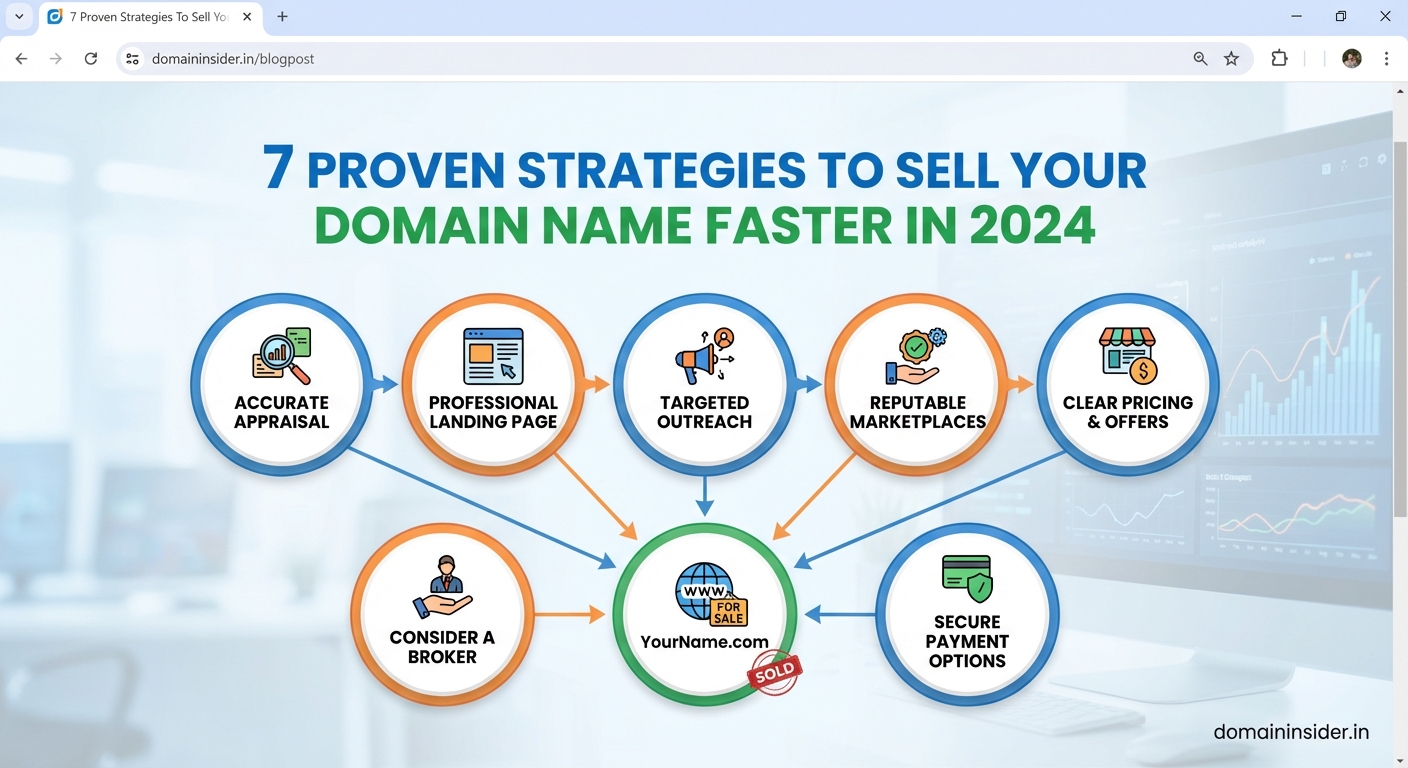
Valuation tools provide starting points but shouldn’t be your only reference. Free automated appraisals often produce wildly different figures because they rely on algorithms that can’t account for market nuance.
Start by researching comparable sales. Check recent transactions for domains with similar characteristics. Look at length, extension, keyword relevance, and sale dates. Markets shift, so a sale from 2019 may not reflect current values.
Consider these valuation factors:
- Length and memorability: Shorter is almost always better
- Extension type: .com and .in dominate Indian markets
- Search volume: Domains matching popular search terms carry premium value
- Commercial intent: Business-focused keywords outperform hobby terms
- Spelling simplicity: Avoid numbers and hyphens that confuse buyers
- Age and history: Older domains with clean records add credibility
Manual research beats automated tools every time. Spend an afternoon reviewing actual sales data from marketplaces. You’ll develop a feel for realistic pricing that no algorithm can match.
The biggest mistake domain sellers make is overvaluing their assets based on emotional attachment rather than market data. A domain is only worth what someone will actually pay for it.
Choosing where to list your domain
Multiple selling channels exist, each with distinct advantages and trade-offs. Your choice depends on domain quality, timeline, and how much effort you want to invest.
Domain marketplaces offer the widest exposure. Platforms like Sedo, Flippa, and Dan.com connect sellers with active buyers. These sites handle listing creation, buyer communication, and often provide escrow services. Commission rates typically range from 10% to 20%.
Auction sites create urgency through time-limited bidding. If your domain has obvious commercial appeal, auctions can drive competitive bidding. However, weak domains may fail to attract bids, leaving you with wasted listing fees.
Direct outreach works well for premium domains targeting specific industries. Research companies that could benefit from your domain and craft personalised pitches. This approach requires more effort but eliminates middleman fees.
Broker services handle everything for a higher commission, usually 15% to 30%. Brokers have industry connections and negotiation experience that can justify their fees for valuable domains.
Here’s how different selling methods compare:
| Method | Best For | Timeline | Effort Required | Commission |
|---|---|---|---|---|
| Marketplace | General domains | 3-12 months | Low | 10-20% |
| Auction | Premium domains | 7-14 days | Medium | 10-15% |
| Direct Sale | Industry-specific | 1-6 months | High | 0% |
| Broker | High-value domains | 3-18 months | Very Low | 15-30% |
Setting a price that attracts serious buyers
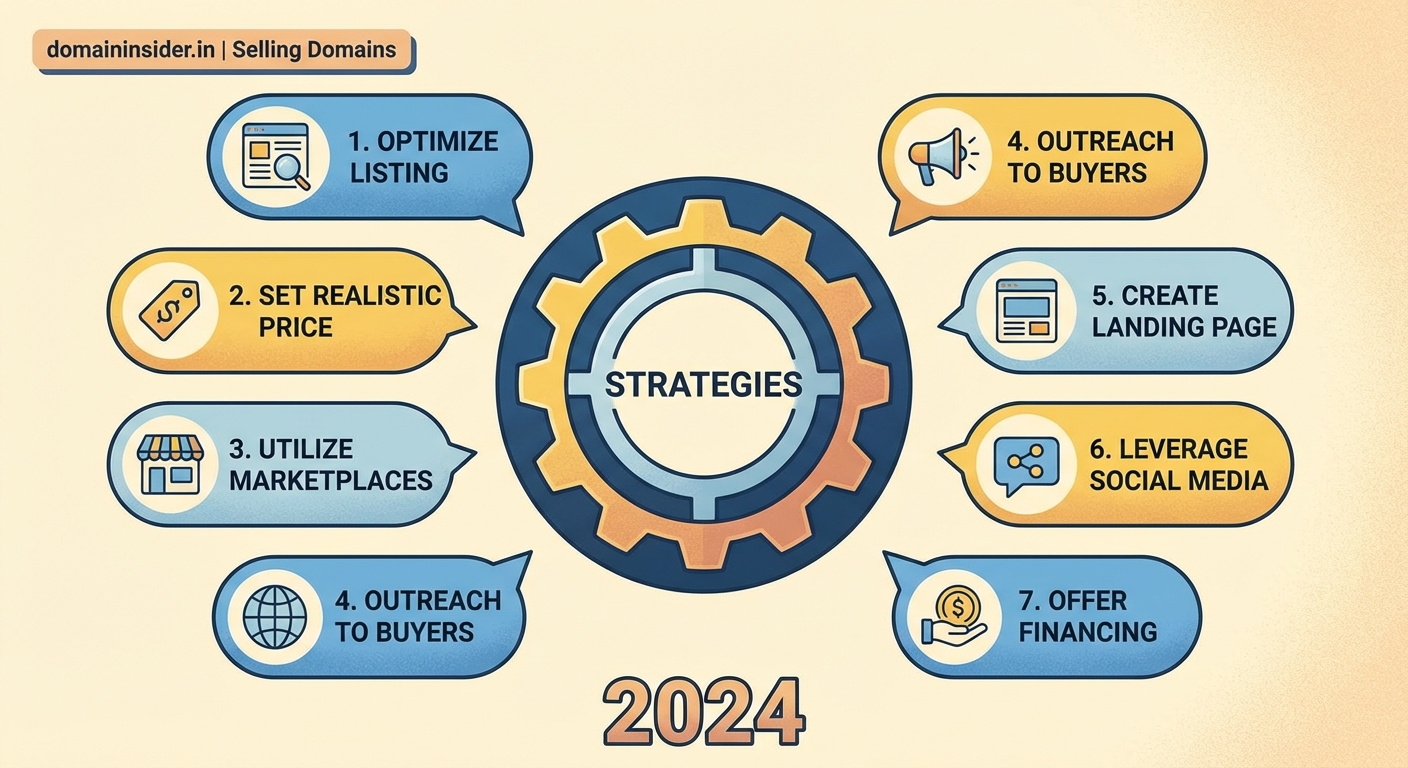
Pricing strategy makes or breaks your sale. Price too high and you’ll scare away legitimate buyers. Price too low and you’ll leave money on the table.
Fixed pricing works when you know your domain’s market value and want to avoid lengthy negotiations. Set a fair price based on comparable sales and stick to it. This approach filters out time-wasters who want to haggle endlessly.
Make offer pricing invites negotiation. List your domain without a visible price and let buyers submit offers. This strategy works well when you’re unsure of value or want to gauge market interest before committing to a number.
Starting bid pricing applies to auctions. Begin with a reserve price that represents your minimum acceptable sale price. Set it too high and bidders won’t engage. Set it too low and you risk selling below value if bidding stalls.
Consider these pricing tactics:
- Research three to five comparable domains that sold recently
- Calculate the average sale price of those comparables
- Adjust based on your domain’s unique strengths or weaknesses
- Add 10-15% for negotiation room if using make offer pricing
- Be willing to adjust after 60 days if you receive no serious inquiries
Creating listings that convert browsers into buyers
Your listing is your sales pitch. Weak descriptions and missing information kill deals before they start.
Write clear, benefit-focused descriptions. Explain why the domain matters rather than just listing features. Instead of “short domain with keyword,” try “memorable name perfect for fintech startups targeting Indian millennials.”
Include relevant metrics when applicable. If your domain receives type-in traffic, mention monthly visitor counts. If it has existing backlinks, highlight domain authority scores. Numbers provide credibility.
Add professional visuals. Create a simple logo mockup showing how the domain looks in branding contexts. Visual representations help buyers imagine using the name for their business.
Specify your preferred transaction method. Mention escrow services to reassure buyers about security. Clear payment terms reduce friction during negotiations.
Respond promptly to inquiries. Buyers often contact multiple sellers simultaneously. Fast, professional responses increase your chances of closing deals before competitors do.
Promoting your domain beyond marketplace listings
Passive listings rarely produce optimal results. Active promotion expands your buyer pool significantly.
Park your domain with a professional for-sale landing page. Include contact information, asking price, and key benefits. Many registrars offer free parking services that display your contact details to visitors who type the domain directly.
Share your listing across social media platforms. LinkedIn works particularly well for business-focused domains. Join domain investor groups on Facebook and Reddit where buyers actively search for opportunities.
Reach out to potential end users directly. Identify companies that could benefit from your domain and send personalised emails. Keep messages brief, professional, and focused on how the domain solves their branding challenges.
Consider paid advertising for premium domains. A small Google Ads or Facebook campaign targeting relevant industries can generate qualified leads. Calculate potential ROI before investing in promotion.
Network within domain investor communities. Attend virtual meetups, participate in forums, and build relationships with other investors who might know interested buyers.
Negotiating deals that satisfy both parties
Negotiation skills directly impact your final sale price. Approach discussions strategically rather than emotionally.
Establish your walk-away price before negotiations begin. Know the minimum you’ll accept and don’t budge below it regardless of buyer pressure. Desperation shows and buyers exploit it.
Let buyers make the first offer when possible. Their initial bid reveals their budget and interest level. You gain valuable information without showing your hand.
Justify your asking price with data. Reference comparable sales, traffic statistics, or commercial potential. Buyers respect sellers who base prices on evidence rather than wishful thinking.
Be willing to compromise on payment terms. Accepting instalments or cryptocurrency can close deals with buyers who lack immediate liquidity. Use escrow services that support flexible payment structures.
Stay professional regardless of lowball offers. Some buyers test sellers with insultingly low bids. Respond politely with your counteroffer rather than taking offense. Today’s lowballer might return with a serious offer later.
Using escrow services for secure transactions
Never transfer a domain before receiving payment. Escrow services protect both parties by holding funds until transfer completes successfully.
Established platforms like Escrow.com provide insurance and dispute resolution. Fees typically range from 2% to 5% of the sale price, split between buyer and seller or paid by one party as negotiated.
The escrow process follows these steps:
- Buyer and seller agree on price and terms
- Buyer deposits funds with escrow service
- Seller receives notification that funds are secured
- Seller initiates domain transfer to buyer’s registrar
- Buyer confirms receipt and domain functionality
- Escrow releases payment to seller
This process typically takes five to ten days depending on registrar transfer speeds. Never skip escrow for high-value sales, even if buyers seem trustworthy.
Some marketplaces include built-in escrow as part of their service. These integrated solutions streamline transactions and reduce coordination hassles.
Transferring domains without complications
Domain transfers involve technical steps that confuse inexperienced sellers. Follow proper procedures to avoid delays and disputes.
Unlock your domain at your current registrar. Domains are locked by default to prevent unauthorised transfers. Access your registrar’s control panel and disable the transfer lock.
Obtain the authorisation code, also called an EPP code or transfer key. Your registrar provides this unique code that authorises the transfer to another registrar. Keep it secure and share only with verified buyers.
Disable WHOIS privacy temporarily. Some registrars require visible contact information during transfers. Re-enable privacy protection after the transfer completes if desired.
Verify the domain has at least 15 days remaining before expiration. Most registrars won’t process transfers for domains approaching expiration dates.
Confirm the buyer’s receiving registrar. Different registrars have varying transfer procedures. Knowing where the domain is headed helps you provide accurate guidance.
Communicate clearly throughout the process. Send the buyer detailed instructions and respond promptly to questions. Smooth transfers lead to positive reviews that help future sales.
Common mistakes that prevent sales
Understanding what kills deals helps you avoid these pitfalls.
Overpricing based on personal attachment rather than market data tops the list. Your domain might feel valuable to you, but buyers only care about commercial potential and comparable sales.
Neglecting to renew domains before they expire signals lack of seriousness. Buyers question your commitment when listings show expired domains.
Providing incomplete contact information frustrates interested buyers. Check that email addresses work and respond within 24 hours to inquiries.
Using registrars with complicated transfer processes creates unnecessary friction. Consider moving valuable domains to transfer-friendly registrars before listing them for sale.
Refusing reasonable offers out of stubbornness costs money. If multiple buyers offer similar amounts below your asking price, the market is telling you something about your valuation.
Skipping escrow to save fees exposes both parties to fraud risk. The small percentage you save isn’t worth the potential loss of your domain or payment.
Timeline expectations for domain sales
Patience separates successful domain investors from frustrated quitters. Understanding realistic timelines prevents premature disappointment.
Premium domains with obvious commercial appeal often sell within three to six months when priced correctly. These names attract serious buyers who recognise value immediately.
Average quality domains typically take six to twelve months to find the right buyer. These sales require more marketing effort and price flexibility.
Marginal domains may take years to sell or never find buyers. If you’ve received zero inquiries after twelve months despite competitive pricing, reconsider whether the domain has genuine market appeal.
Market conditions affect timelines significantly. Economic downturns slow domain sales as businesses reduce discretionary spending. Bull markets accelerate transactions as companies invest in branding.
Seasonal patterns influence certain domain types. Domains related to tax services sell better in early months. Education-related names see increased interest before academic years begin.
Building credibility as a domain seller
Reputation matters in domain transactions. Buyers prefer dealing with established sellers who have track records of honest dealings.
Complete your marketplace profiles thoroughly. Add profile photos, contact information, and brief backgrounds explaining your experience. Incomplete profiles raise red flags.
Accumulate positive feedback through smaller sales. If you’re new to domain selling, start with lower-value domains to build transaction history and reviews.
Respond professionally to all inquiries, even those that don’t result in sales. Today’s browser might become tomorrow’s buyer or refer someone else to you.
Join domain industry associations and forums. Participation demonstrates commitment and provides networking opportunities that lead to sales.
Maintain updated listings with accurate information. Outdated prices or incorrect details damage credibility and waste everyone’s time.
Turning domain sales into ongoing income
One-off sales provide immediate cash, but strategic domain investing creates recurring revenue streams.
Build a portfolio of complementary domains rather than random acquisitions. Focus on specific industries or niches where you develop expertise and buyer relationships.
Reinvest sale proceeds into new acquisitions. Use profits from successful sales to purchase additional domains with strong potential. Compound growth accelerates portfolio value over time.
Develop relationships with repeat buyers. Business owners who purchase one domain often need others as they expand. Staying in touch with past buyers generates future sales.
Learn from each transaction. Track which domains sell quickly and which languish. Analyse successful sales to identify patterns that inform future purchases.
Consider offering domain leasing for premium names. Monthly lease payments generate income while retaining ownership. Lease-to-own arrangements can eventually produce full sales at higher total prices.
Your next steps in domain selling
Selling domains successfully combines research, strategy, and patience. Start by accurately valuing your assets using comparable sales data rather than automated tools. Choose selling platforms that match your domain quality and timeline expectations. Create compelling listings that highlight commercial benefits, and promote actively rather than waiting for buyers to find you.
Price strategically with room for negotiation, but know your minimum acceptable amount before discussions begin. Always use escrow services for transactions, and follow proper transfer procedures to avoid complications. Remember that most domains take several months to sell, so maintain realistic expectations and avoid panic pricing.
The domain market rewards sellers who treat their assets as business inventory rather than lottery tickets. Apply these methods consistently, learn from each transaction, and build a reputation for fair dealing. Your next domain sale could happen tomorrow or next quarter, but proper preparation ensures you’ll maximise value when the right buyer appears.
